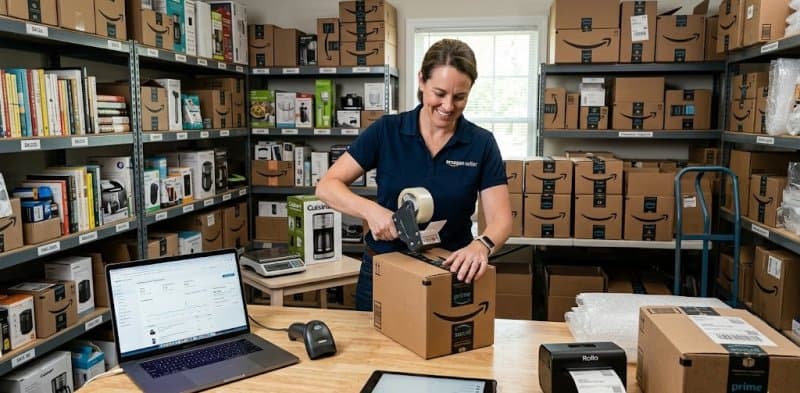
What is FBA and How to Do It? A Comprehensive Guide
Learn answers to what FBA is and how to do it in our guide that explains Amazon's storage and shipping system step by step.


The question of what FBA is and how to do it ranks among the fundamental topics everyone selling on Amazon must address. For e-commerce-focused businesses like marca world, FBA is a powerful system that reduces logistics burden and enables Amazon to deliver products directly to customers. In this comprehensive guide, we explain in detail what FBA is, its role in the Amazon ecosystem, how to send products to the FBA warehouse, and how to manage the process in practice. The content is structured simply, clearly, and designed to directly address search intent, optimized for snippet inclusion.
What is FBA? How Does Amazon's Logistics System Work?
In this section, we explain the basic logic of FBA, its place in the Amazon ecosystem, and why it's so widely used. FBA (Fulfillment by Amazon) is a service that allows Amazon to handle storage, packing, shipping, and customer service for products. In other words, the seller sends their products to Amazon's warehouse, and Amazon manages all remaining operations.
The FBA system provides sellers with significant speed and security advantages. Thanks to Amazon's powerful logistics infrastructure, products are delivered extremely quickly, and customer satisfaction increases. Additionally, for sellers who want to be part of the Amazon Prime service, FBA is nearly a mandatory step.
How FBA Works
The basic operational steps of the FBA system are quite straightforward:
Seller prepares products
Sends them to Amazon's warehouse
Amazon stores the products
Packages and ships them when orders arrive
Also manages return processes
Through this mechanism, the seller can focus only on product sourcing and listing.
Why FBA is Popular
The main reason FBA is popular is that it provides reliable, fast, and customer-focused infrastructure. Amazon's high customer satisfaction standards help FBA sellers increase their sales rates.
How to Do FBA? Step-by-Step Implementation Process
In this section, we explain step-by-step how to implement the FBA process. When the process is managed correctly, it provides significant advantages in both cost and time.
1. Preparing Your Amazon Seller Account
To do FBA, you first need to have a professional Amazon seller account. Businesses like marca world typically start operations by opening this account in the European or American market.
Configuring Account Settings
Payment information, identification details, and address information must be completely entered in the seller account. An FBA shipment plan cannot be created until account verification is complete.
2. Preparing Products for FBA
At this stage, products must be prepared to comply with Amazon's packaging and labeling standards. Details such as barcoding products, using transparent packaging, and protective wrapping are important parts of this process.
Packaging According to FBA Standards
Amazon requires every product to be packaged in a secure, transportable manner. Extra protection for glass items, transparent packaging for textiles, and protective wrapping for electronics are requirements.
3. Creating a Shipment Plan
The heart of the FBA process is the shipment plan. The shipment plan is created through the "Send to Amazon" step in Seller Central. The system asks you for product information and warehouse address.
Ship From Address
The Ship From address is the warehouse location from which products are sent to Amazon. Entering this address correctly is essential for the FBA plan to proceed smoothly.
4. Labeling and Barcoding
Every product must have a barcode that Amazon recognizes. This barcode is typically in FNSKU or UPC format.
Barcode Errors
Incorrect barcode application can lead to problems ranging up to products getting lost in Amazon's warehouse.
5. Sending Products to Amazon's Warehouse
After the preparation process is complete, products are sent to a warehouse designated by Amazon. In Europe, warehouses in Germany, Poland, or the Czech Republic are typically used.
Choosing a Shipping Company
For products to be safely transported, palletized shipments or express shipping can be preferred.
Advantages of Using FBA
This section explains the strong points that the FBA system provides to sellers.
Advantages offered by FBA:
Faster delivery
Prime eligibility
Amazon customer service
High conversion rate
Increase in seller ratings
These advantages are particularly critical for businesses that want to build brand awareness.
Prime Badge Effect
Products displaying the Prime logo typically have higher click-through and sales rates.
Customer Trust
Amazon's return policy, customer service, and fast delivery standards provide confidence to the seller.
Things to Consider When Using FBA
This section focuses on common mistakes that users make and important points to pay attention to.
Most errors in the FBA process occur during the preparation stage. Labeling deficiencies, incorrect shipment plans, wrong warehouse addresses, or packaging that doesn't comply with Amazon standards are the most frequently encountered issues.
Product Size and Weight Compliance
In FBA, product size categories are decisive in terms of cost.
Oversized Product Errors
Sellers sending large products often miscalculate costs.
FBA Preparation and Warehouse Management Table
| Process Step | Description | Critical Point |
|---|---|---|
| Product preparation | Packaging and labeling | Amazon standards |
| Shipment plan | Created through Seller Central | Warehouse address |
| Barcoding | FNSKU label applied | Scannable quality |
| Warehouse shipment | Delivery to Amazon's selected warehouse | Shipping selection |
FBA's Contribution to the Amazon Ecosystem
This section explains why Amazon developed the FBA model and why it directs sellers toward this model.
The Amazon FBA system provides significant efficiency for sellers, customers, and Amazon alike. Transaction speed increases, packaging becomes standardized, and customer satisfaction rises. Brands like marca world gain a more competitive position in the global market by using this system.
Strategic Advantage for FBA Sellers
Through FBA, sellers can reach higher sales volumes in shorter timeframes.
Business Efficiency
Delegating storage, packaging, and shipping processes to Amazon reduces the business's operational burden.