Turkish Trade Center Support
A professional overview of the scope, conditions, and implementation processes of incentives that enable companies to expand into international markets under the Turkish Trade Center Support program.
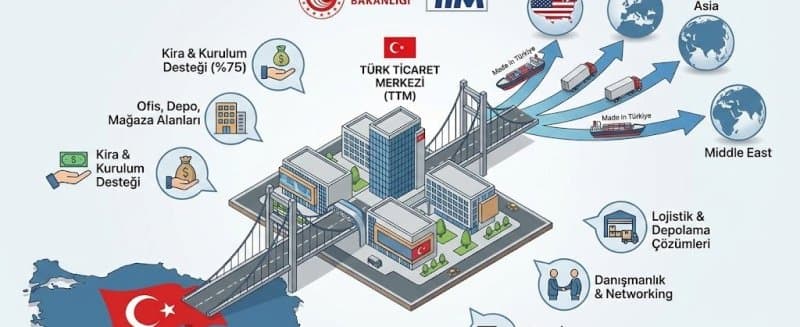

Turkish Trade Center Support is a strategic export incentive mechanism that enables Türkiye-based companies to establish a permanent presence in international markets by covering a significant portion of their rent, promotion, personnel, logistics, and operational expenses. By reducing cost-related risks, this mechanism allows companies to build sustainable international operations.
Turkish Trade Centers provide exporters with an integrated ecosystem comprising offices, showrooms, warehouses, and shared-use areas. This structure both accelerates the branding process and builds trust in target markets. Particularly in highly competitive sectors, maintaining a physical presence significantly increases decision-makers’ propensity to purchase. International marketing research shows that on-site representation increases sales conversion rates by an average of %30. The support is therefore not merely a financial contribution, but a strategic growth tool that deepens market penetration.
What Are the Key Components of Turkish Trade Centers?
Turkish Trade Centers consist of operationally sustainable spaces established according to specific standards. These components are designed to reduce barriers to entry into target markets for companies.
Physical Infrastructure
Showroom areas make it easier for prospective buyers to make decisions by experiencing products firsthand. Warehousing shortens order delivery times and reduces logistics costs, while office space enables company representatives to manage operations locally.
Shared Services
The centers provide services such as legal consulting, marketing support, local market analysis, and operations management under one roof. This approach streamlines compliance processes, one of the most critical challenges companies face when entering foreign markets.
Networking and Business Development
Establishing points of contact with local stakeholders enables companies to integrate into the market more quickly. Trade missions, matchmaking events, and industry meetings are regularly held at the centers.
What Does Turkish Trade Center Support Cover?
The support categories cover nearly every stage of companies’ international activities. Proper management of each category ensures that the total incentive amount is used efficiently.
Rental Support
A significant percentage of rental expenses is covered for a specified period. This reduces cost pressure while facilitating the establishment of a long-term presence. The generally high rental rates at overseas trade centers make the impact of these incentives even more apparent.
Promotion and Marketing Support
Promotional activities, which play a fundamental role in brand-positioning strategies, increase visibility in the target market. Digital advertising, catalogs, and launch events are among the activities covered. Because brand awareness is known to influence purchasing decisions in international markets, using the support for promotional activities generally delivers rapid returns.
Personnel Support
Employing local staff is critical to international operations. Familiarity with cultural dynamics, commercial negotiation styles, consumer behavior, and local regulations facilitates the sales process. Salary support is therefore provided for certain positions.
Operating Expenses
Support for shared expenses such as electricity, water, security, and cleaning enables companies to operate at sustainable cost levels. These shared expenses are often among the most frequently overlooked cost items in international operations.
Warehousing and Logistics Facilities
Supporting warehousing facilities creates a competitive advantage in sectors that require rapid delivery. For example, in fast-moving industries such as textiles and ready-to-wear apparel, shorter shipping times directly increase order volumes.
Who Can Benefit from Turkish Trade Center Support?
The support mechanism is available to businesses with export potential that aim to become recognized brands in international markets. Manufacturer-exporters, trading companies, industry associations, and certain consortium structures may qualify.
Sectoral Priorities
Sector-based clustering may be more effective in some markets. Turkish manufacturers are known to be particularly strong in sectors such as furniture, ready-to-wear apparel, technical textiles, machinery, food, and healthcare products. At centers established for these sectors, companies can create synergies and benefit from joint promotional activities.
Level of Organizational Maturity
It is important to have the financial, logistical, and organizational capacity required to conduct international operations. This capacity may need to be documented to qualify for support. Export volume, product range, and market objectives also influence the assessment process.
How Does the Process of Opening a Turkish Trade Center Work?
The process of opening a Turkish Trade Center begins with location selection and concludes with the establishment of its operational structure. When properly managed, this process maximizes the benefits available under the support program.
Location Analysis
Market size, logistics infrastructure, sectoral clustering, competitive intensity, and commercial regulations are assessed together. Competition is known to be high in hubs such as Dubai, London, Chicago, and Seoul, for example, but these locations remain attractive because of their concentration of corporate buyers.
Physical Space Planning
The center’s indoor floor area, showroom layout, warehouse capacity, and office configuration are determined according to sector-specific needs. Professionally installed product demonstration areas accelerate purchasing teams’ decision-making processes.
Legal and Administrative Procedures
Local company formation procedures, tax obligations, and lease agreements are managed with expert advice. One of the most common issues in international operations is the misinterpretation of contractual terminology, making legal compliance essential.
Organizational Structure
The center’s management team consists of a commercial director, operations manager, marketing officer, and local representatives. This structure provides clarity in performance management and reporting processes.
Efficiency Benefits Turkish Trade Centers Provide to Companies
Turkish Trade Centers provide more than cost advantages; they also strengthen companies’ strategic decision-making processes. Companies with direct exposure to actual market dynamics can act more quickly and accurately.
Higher Sales Conversion Rates
The showroom experience has a strong influence on buyer behavior, particularly in B2B sectors. Purchasing teams that inspect products on-site may reduce their decision-making time by an average of up to %40. This effect provides a decisive advantage in highly competitive sectors.
Stronger Brand Trust and Image
A physical presence demonstrates to international customers a commitment to long-term business relationships and a serious corporate approach. This image is particularly important for supply-chain continuity.
Operational Flexibility
Warehousing and logistics infrastructure enable companies to respond quickly to sudden increases in demand. This flexibility is especially decisive in highly seasonal sectors.
Cost Predictability
Because most support categories provide non-repayable contributions at specified rates, companies can manage their budgets with greater control. Cost forecasts constitute a critical dataset for the medium-term planning of export strategies.
What Are the Conditions for Turkish Trade Center Support?
Certain rules must be observed to benefit from the support. These rules are intended to improve the effectiveness of the centers and optimize the use of resources.
Application Requirements
Companies are expected to have a certain level of export experience, operate in the relevant sector, and present a sustainable operational plan for the target market. Their financial capacity and corporate structure must also be documented.
Eligibility Criteria
Expenses covered by the support must be clearly separated from other costs. Trademark registration expenses or investments in technical infrastructure, for example, are assessed within specified limits. Support rates may vary according to the type of activity.
Reporting Requirements
The centers’ activities are regularly monitored through reports covering performance, expenditure, and operations. These reports provide transparency for both the government and the company. A clear flow of data in international operations is a critical advantage for strategic decision-making.
How Is the Turkish Trade Center Support Application Process Managed?
Although the application process may appear technically complex and involve multiple stages, it can become a highly practical model for companies when handled correctly.
1. Preliminary Assessment
Companies clarify their target-market analysis, the level of competition in the sector, and their product positioning. Conducting a SWOT analysis is a commonly preferred method at this stage.
2. Preparation of the Project File
The center’s location, floor area, organizational structure, budget estimate, and marketing plan are compiled into a professional project file. Consistency in the technical details accelerates the approval process.
3. Official Application
The application is submitted together with the required documents. Complete documentation is essential at this stage, as missing documents extend the approval period.
4. Assessment and Approval
Applications are reviewed in terms of strategic suitability, budget balance, and operational feasibility. Alignment between the center and market needs has a positive effect on the assessment.
5. Commencement of Operations
Following approval, procurement, leasing, recruitment, and operational setup begin. The required notifications are submitted before the support can be utilized.
Key Drivers of Success at Turkish Trade Centers
The centers are more than physical spaces; when managed effectively, they become strategic structures that determine the pace of companies’ growth.
Effective Market Positioning
Not every product has the same impact in every market. Companies must therefore carefully analyze consumer expectations, product-adaptation needs, and the local competitive landscape in the target country.
Long-Term Relationship Management
Building sustainable relationships with buyers is fundamental to a long-term export strategy. Turkish Trade Centers provide professional meeting and networking environments that support this process.
Integration of Digital and Physical Channels
Supporting physical centers with digital marketing strategies accelerates access to the target audience. Digital visibility has become a complementary component of the sales process.
Performance Monitoring
Monthly and quarterly performance reports make it possible to analyze the center’s efficiency. These reports are based on sales conversions, visitor data, and operational costs.
Management Table for Turkish Trade Centers
Below is a simple yet effective table frequently used by businesses in their internal reporting processes.
| Category | Metric Monitored | Description |
|---|---|---|
| Sales Performance | Number of prospective customers, conversion rate | Measuring market-entry effectiveness |
| Marketing Effectiveness | Digital reach, event response | Success of the promotional strategy |
| Operations Management | Warehouse efficiency, delivery speed | Monitoring logistics and inventory processes |
| Financial Efficiency | Expense-to-support ratio | Optimizing incentive utilization |
| Customer Management | Repeat-order rate | Capacity to maintain long-term relationships |
The Impact of Turkish Trade Centers on International Markets
Turkish Trade Centers do more than improve companies’ operational performance; they create a broader impact that strengthens Türkiye’s export ecosystem.
Contribution to the Country’s Image
Centers operated to professional corporate standards enhance perceptions of the quality of products originating from Türkiye. This effect lays the groundwork for long-term commercial relationships.
Strength of Sectoral Clustering
Bringing companies from the same sectors together creates opportunities for joint promotion. This establishes a stronger competitive position in target markets.
Growth in Export Volume
Companies based at the centers have been observed to achieve sales-volume increases of between %20–%50 in many markets. This growth is associated with the advantages of rapid delivery and on-site representation.
Market Risk Diversification
Because companies can establish a presence in multiple countries instead of depending on a single market, foreign-trade risks are diversified. This improves resilience against economic fluctuations.