TÜBİTAK Export Incentives
Explore practical, comprehensive strategies for R&D-driven growth, technology commercialization, and international market expansion through TÜBİTAK export incentives.
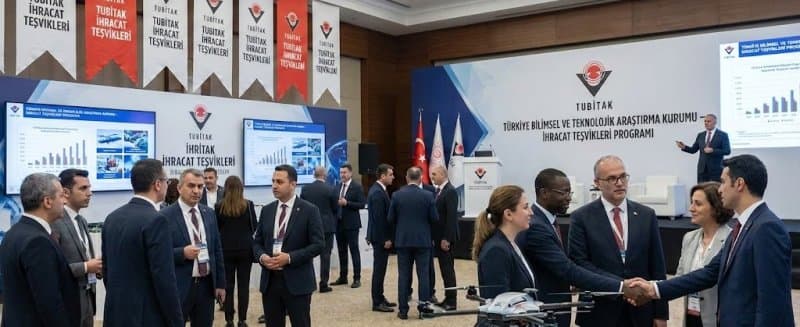

TÜBİTAK Export Incentives stand out as a strategic mechanism that helps technology-oriented companies enter global markets more quickly by supporting every stage from R&D to commercialization. They offer a range of financial and technical instruments to enhance the competitiveness of businesses with strong innovation capabilities. Particularly for companies operating in technology-intensive industries, these incentives are among the most effective ways to improve product quality, optimize processes, and comply with international standards.
How Are TÜBİTAK Export Incentives Used?
TÜBİTAK Export Incentives are used to commercialize R&D outputs globally, increase export potential, and adapt innovative products to international market requirements. They provide companies with financial and technical advantages at every stage, from the project application through to making the product export-ready.
To benefit from these incentives, companies must first develop a robust project that demonstrates the innovative nature of the product or process they intend to develop. The project is then submitted through the relevant application platforms for evaluation. If approved, it may receive comprehensive support such as non-repayable grants, personnel incentives, consultancy expense support, or funding for testing and analysis. The fact that technology-based exports across Türkiye grew by more than 9% as of 2024 is a tangible indicator of the impact of these incentives.
Key Components of TÜBİTAK Incentives
The building blocks of these incentives generally fall into three main categories:
- R&D and Innovation Support: These are the most critical instruments used in product development, prototyping, and validation processes.
- Commercialization Support: This facilitates the market entry of developed products and improves their international competitiveness.
- International Collaboration Support: This helps expand export volume through global consortia, joint research programs, and bilateral collaborations.
Impact of the TÜBİTAK Incentive Mechanism on Exports
The impact of the incentive mechanism is generally visible in three stages:
- Enhanced Technological Capabilities: Companies begin producing high-value-added products.
- Expanded Market Access: Funding for certification, testing, and quality processes reduces export barriers.
- Cost Advantage: Covering 60–75% of R&D expenditures enables more efficient use of working capital.
According to 2023 data, approximately 30% of TÜBİTAK-supported projects resulted directly in exports, and this rate continues to rise steadily each year.
What Types of Incentives Does TÜBİTAK Provide?
The incentives provided by TÜBİTAK include R&D support, commercialization programs, access to international funding, and financing for qualified human resources. Each program addresses a different stage of the export process, giving businesses a strategic advantage.
R&D and Innovation-Focused Support
Support used in innovative product development processes can be grouped under the following categories:
TÜBİTAK 1501 Industrial R&D Projects
This program contributes to the technology development processes of industrial enterprises. It covers a significant portion of the costs of high-risk R&D activities. More than 40% of the annual support volume is allocated to this program.
TÜBİTAK 1507 SME R&D Startup Support Program
This program encourages small and medium-sized enterprises to gain their first R&D experience. It provides rapid funding for subprocesses such as prototype development, testing, and verification.
TÜBİTAK 1505 University-Industry Collaboration
This program transfers academic expertise to industry and facilitates the development of innovative products aimed directly at export markets.
International Collaboration Support
This type of support is one of the most strategic mechanisms for directly increasing export capacity.
EUREKA Programs
These programs offer opportunities to collaborate with European-based joint research networks. Consortium projects allow products to be commercialized across a wider geographical area. More than 50 sub-calls with high export potential for businesses in Türkiye are regularly updated.
Eurostars Program
This program supports rapid product development processes for SMEs with strong R&D capabilities. According to available statistics, companies participating in Eurostars projects increase their export rate by an average of 15%.
Commercialization-Focused Support
Launching a developed product is the most critical stage of export success.
1512 BİGG Program
By funding the incorporation of technology-based startups, this program helps bring products capable of competing in global markets to life.
1702 Patent-Based Technology Transfer
This program supports the development of exportable products and processes through the commercialization of patents.
Qualified Human Resources Support
The success of export-ready projects is directly linked to the availability of specialized personnel.
- Incentives for R&D personnel
- Postgraduate scholarships and researcher support
- Funding for technical consultancy
Research shows that the project success rate of companies receiving qualified personnel support increases by more than 20%.
Who Can Benefit from TÜBİTAK Export Incentives?
Organizations eligible for TÜBİTAK export incentives include SMEs, large-scale industrial enterprises, startups, research centers, technopark companies, and universities. Although eligibility requirements vary depending on the application type and nature of the project, the primary criterion is that the product being developed must offer innovative value.
Eligibility Criteria for SMEs
SMEs benefit from incentives at a higher rate than other segments because most programs are designed to accelerate technology-based growth.
Core Capabilities Required of SMEs
- A technical team demonstrating the capacity to execute the project
- At least one innovative output target
- Measurable R&D processes
- Documentable cost planning
For example, 65% of SMEs applying to the 1507 program receive support on their first application.
Large-Scale Industrial Enterprises
Large enterprises may apply to the incentive mechanism with more comprehensive projects. Companies in this category generally work on process improvement, automation, advanced materials technologies, or high-volume production lines intended for export.
Technology Startups
The program most widely used by technology startups is BİGG (1512). Through this program, young companies reach the stage of developing investment-ready products within an average of 12–16 months. More than 2.000 applications are reviewed annually under the program.
Universities and Research Centers
These institutions primarily participate in 1505 and international collaboration calls. They help complete the scientific validation processes required for export-oriented projects more quickly.
How Do You Apply for TÜBİTAK Export Incentives?
The application process for TÜBİTAK export incentives follows a defined sequence, from developing the project concept to uploading the application online. A successful application must clearly demonstrate the project's innovative aspects, technical feasibility, and impact on exports.
The first step is to prepare the project's technical and financial feasibility assessment within the company. The project is then uploaded through TÜBİTAK’s PRODIS system and evaluated by independent reviewers. Clearly defined and measurable cost items are particularly important for achieving a high evaluation score.
Key Stages of the Application Process
- Defining the project concept
- Analyzing technical requirements
- Clarifying the innovative aspects
- Developing risk and mitigation plans
- Breaking down the budget into individual items
- Uploading the project file through the system
- Reviewer visit and evaluation process
The average application acceptance rate between 2022–2024 was reported as 42%.
Evaluation Criteria
Reviewers consider the following factors during the evaluation process:
Level of Innovation
How the project differs from existing solutions and its degree of technical innovation.
Technical Feasibility
The feasibility of the proposed product, measurable R&D stages, and the realism of the project schedule.
Contribution to Exports
The target market, competitive advantage, and the product's potential to comply with global standards.
Organizational Capacity
Project management experience, team capabilities, and technical infrastructure.
Key Documents Used in a TÜBİTAK Application
The general application documents are listed below:
| Document Type | Description |
|---|---|
| Project Proposal Form | Technical content and commercialization plan |
| Budget Table | Detailed breakdown of cost items |
| Company Information Form | Presentation of organizational capabilities |
| Work Packages | Phased activity plan |
| R&D Definition | Reasoned explanation of the innovative aspects |
This table provides a supporting framework for the application process.
Most Common Application Mistakes
Common mistakes include inadequately explaining product commercialization steps, confusing R&D activities with routine processes, and failing to provide sufficient budget justifications. In particular, an incomplete analysis of the target export market significantly lowers the evaluation score.
What Benefits Do TÜBİTAK Export Incentives Offer Companies?
The benefits that TÜBİTAK export incentives provide to companies include both short-term operational advantages and long-term competitive strengths. These incentives increase technology production capacity, improve product quality, and accelerate access to foreign markets. Critical objectives such as scalability and sustainable export volume become more attainable.
Financial Advantages
High R&D costs are a significant barrier for many companies. TÜBİTAK support largely removes this obstacle.
Key Financial Benefits
- Grant support covering 60–75% of R&D expenditures
- Incentives for personnel expenses
- Funding for testing and certification expenses
- Support for consultancy and training expenses
Testing processes involved in developing export-oriented products often account for 10–15% of the total budget. Covering these costs through incentives gives companies a significant resource advantage.
Technology and Product Development Benefits
R&D support raises businesses' technological capabilities and facilitates the production of products that comply with global standards.
Examples of Technological Benefits
- Faster prototype validation
- Compliance with international certification processes
- Improved quality in software and hardware integration
- Easier transition to Industry 4.0 applications
These processes shorten companies' product development timelines by an average of 20%.
Advantages for Export Operations
Entering export markets is not solely a technical process; it also involves logistics, regulatory, and marketing components. TÜBİTAK incentives play a critical role, particularly in reducing market-entry barriers.
Observed Effects on Export Operations
- Support for market validation processes
- Removal of certification barriers
- Greater visibility through international collaborations
- Faster acceptance of products by foreign buyers
Statistical data show that TÜBİTAK-supported projects have a 35% higher commercialization rate than other projects.
Development of Organizational Capabilities
Export-oriented projects are effective structures for strengthening internal company disciplines.
Areas of Organizational Capability
- Project management
- Technical documentation
- Compliance with international standards
- Strategic planning
These capabilities support the company's long-term growth objectives.
Contribution to Human Resources
Developing specialists involved in R&D processes expands the company's knowledge base. A qualified team is one of the key determinants of export success.
Impact on Competitiveness
The ability to produce value-added products enables companies to compete in international markets on more than price alone. In this respect, TÜBİTAK support strengthens companies' long-term export performance by creating a technological advantage.