TİM Supports
A detailed guide offering a comprehensive, professional, and practical roadmap for businesses seeking to strengthen their export capacity through TİM supports.
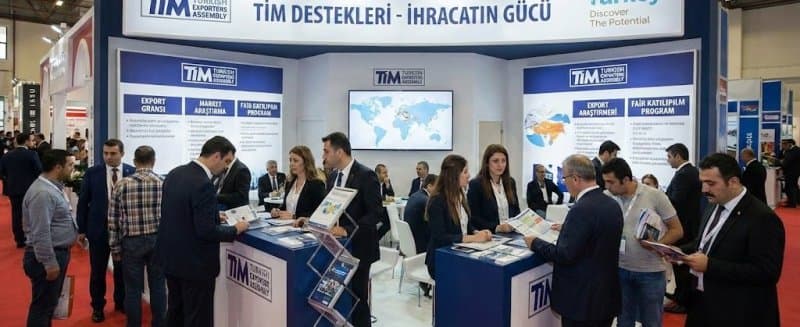

TİM supports rapidly enhance competitiveness by offering financial, operational, and marketing advantages to companies seeking to improve their export capabilities. These programs reduce the uncertainties encountered during market entry, accelerate capacity-building processes, and enable SMEs in particular to expand sustainably into international markets. Since approximately 62 percent of exporters in Türkiye are SMEs, the economic impact of these supports reaches a broad base across the country.
The Role of Support Mechanisms in the Export Ecosystem
The mechanisms implemented under TİM are designed to increase sectoral diversity, promote branding, and channel technology-based products into exports. This structure enables both traditional industries and advanced technology segments to strengthen their export strategies under the same umbrella. International trade statistics, global demand trends, and country-specific market analyses inform the design of these supports.
How the Expanding Scope of Support Affects Businesses
One of the most tangible benefits in practice is that the cost-sharing model reduces businesses’ perception of risk. Contributions covering a wide range of areas, from marketing activities to digital transformation, accelerate companies’ investment decisions. For example, having an average of 50 percent of costs covered under participation programs for target countries significantly lowers the barrier to entering new markets.
How Are TİM Support Programs Structured?
TİM support programs consist of application, evaluation, implementation, and completion stages based on defined criteria, with eligibility reviews playing a central role throughout the process. This systematic structure provides both a rapid approval mechanism and transparent operational management.
Application Processes and Eligibility Criteria
Applications are generally submitted through the digital platforms of TİM and its affiliated units. Eligibility assessments examine parameters such as company type, field of activity, capacity reports, and export history. The most common challenge for companies is preparing complete documentation; conducting an internal audit before applying therefore helps expedite the process.
Types of Activities and Eligible Areas
Eligible activities are structured to cover every stage of the export process. The table below summarizes the most commonly used activity groups:
| Activity Category | Scope |
|---|---|
| Marketing & Promotion | Trade fairs, delegations, digital advertising, and brand promotion |
| Training & Consulting | Competency development, institutionalization, and foreign trade training |
| Digitalization | E-commerce, e-export, software, and automation solutions |
| Product Development | Prototyping, testing processes, and technical documentation |
These categories provide a holistic framework for supporting companies’ strategic growth objectives.
The Importance of Auditing and Reporting Structures
Post-support audit mechanisms, combined with proper document management, ensure that processes remain sustainable. Many companies make mistakes during the reporting stage after completing an activity; however, maintaining orderly records both ensures transparency and increases the likelihood of approval for subsequent applications. Analyses show that businesses with high-quality reporting are approximately 30 percent more likely to receive support again.
An In-Depth Review of TİM Support Types
The supports offered by TİM vary according to the needs of businesses of different sizes and often form complementary structures.
Market Entry Supports
Market entry supports safeguard the first and most critical stage of the export process. Businesses gain cost advantages for activities such as trade fair participation, buyer delegations, trade missions, and promotional campaigns targeting specific countries. Data-driven analyses show that companies regularly attending trade fairs experience an average 45 percent increase in international orders over two years.
A Strategic Approach to Digital Marketing Campaigns
Using support for digital marketing activities presents a critical opportunity, particularly for businesses expanding through e-export structures. Proper optimization of advertising expenditure, combined with support rates, significantly lowers unit costs. The accuracy of target market analysis is the key factor determining success in this model.
Training and Consulting Supports
Supports aimed at competency development transform both human resources and operational quality. Training in areas such as foreign trade, legislation, international marketing, digitalization, and brand management improves businesses’ structural performance. The average 20 percent increase in process efficiency among companies receiving training is a tangible indicator of this impact.
Supporting Corporate Transformation Through Training
Corporate transformation initiatives are directly linked not only to technology investment but also to employee competency. Consulting supports therefore create a multilayered impact that strengthens businesses’ corporate structures. As organizational competency increases, error rates in export processes decline.
Digitalization and E-Export Supports
Digitalization programs provide financial contributions toward software subscriptions, e-commerce platform memberships, automation systems, and data analytics tools. These supports have a particularly significant impact on the growth rate of SMEs adopting the e-export model.
Strengthening Data-Driven Decision-Making
Investments in digital infrastructure improve data collection and analysis processes. As data quality increases, customer behavior can be understood more accurately, leading to higher conversion rates. According to market research, the annual export volume of data-driven businesses grows an average of 25 percent faster.
How Can Businesses Maximize the Benefits of TİM Supports?
To maximize the benefits of TİM supports, the process must be managed through proper planning, budget optimization, and disciplined reporting. Successful businesses share one common characteristic: they position these supports as long-term strategic tools rather than short-term incentives.
The Role of Strategic Planning and Time Management
The planning stage requires identifying target markets, conducting competitive analyses, and preparing budget projections. This preparation not only helps secure prompt approval but also increases the utilization rate of the support. In practice, companies that plan effectively achieve budget accuracy rates of over 90 percent.
Document Management and Corporate Discipline
Properly managing document workflows provides a major advantage during both the application stage and post-activity audits. Businesses that archive their documents digitally are known to complete processes approximately 40 percent faster. Document management is therefore a critical success criterion across all support programs.
Integrating Supports into a Holistic Business Model
Integrating supports into the business model does more than provide cost advantages; it also increases organizational maturity. When a working model is established in which every department, from marketing to production, participates in the process, efficiency rises through a multiplier effect. Companies pursuing a multichannel export strategy can achieve sustainable growth momentum when they manage support integration effectively.
Strategies for Using TİM Supports by Business Type
TİM supports offer different advantages depending on the size of the business, and each category achieves greater impact when it follows a strategy suited to its own dynamics.
Prioritization Methodology for SMEs
The most effective approach for SMEs is to combine market entry and digitalization supports. This dual model accelerates business development and reduces budget risk. Field analyses show that SMEs applying this model achieve an average 30 percent increase in exports by the end of the first year.
Optimizing Resource Management in SMEs
Because resource constraints are significant for SMEs, support budgets should be directed toward investment costs. This approach visibly improves a business’s competitiveness within a short period.
Growth and Brand Strengthening for Medium-Sized Businesses
The competitiveness of medium-sized businesses is closely linked to branding and international perception management. Promotion and brand supports strengthen these businesses’ position in global markets. Field data clearly show that businesses with a strong brand perception achieve higher average unit prices.
Strategic Brand Management Framework
Brand management encompasses not only visual identity but also the value proposition and the entire customer experience. Using supports in this area directly strengthens businesses’ long-term strategies.
Strengthening International Operations in Large Companies
Large companies can use TİM supports for operational optimization and global expansion projects, enabling large-scale transformation. Because these businesses handle larger volumes of data, digitalization projects deliver substantially more effective results.
The Role of Supports in Multilayered Operations Management
As operations expand, processes become more complex; digital solutions and consulting mechanisms therefore play a critical role. Practical examples show that large companies undergoing digital process transformation can reduce error rates by up to 50 percent.