Smart Agriculture Products Export
A comprehensive roadmap addressing the technological, logistical, and marketing dynamics of smart agriculture product exports through professional strategies.
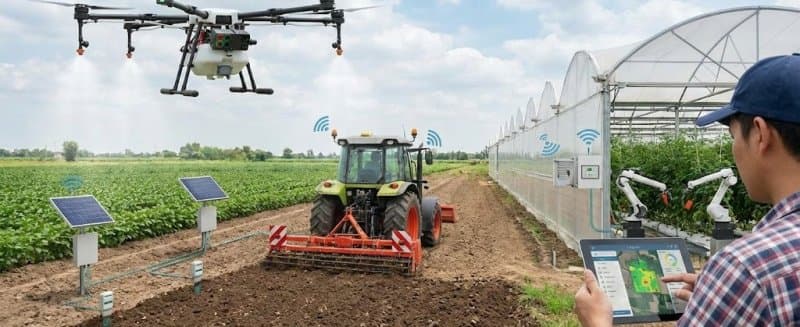

Smart agriculture product exports are viewed as a strategic growth area for businesses seeking to deliver high-value agricultural outputs to global markets through data-driven production, precision farming infrastructure, IoT sensors, and automation systems. As traceability, quality standardization, and productivity-enhancing technologies become integrated into production processes, the structure of international demand shifts rapidly.
Why Smart Agriculture Products Export Provides Strategic Advantage
Smart agriculture product exports deliver strategic advantage because they increase demand elasticity in global markets through high yields, low loss rates, traceability, sustainability, and value-added product structures. Integrating advanced technologies into production processes reduces competitive pressure on traditional agricultural products while elevating innovative product categories.
Field studies from various countries show that yield increases of 15–25% annually occur through data-driven production, demonstrating that smart agriculture investments have direct positive impact on export performance. Similarly, reducing post-harvest loss rates to 40% through sensor-enabled storage and climate-controlled logistics improves businesses' cost structures and strengthens their negotiating power.
Core Criteria for Smart Agriculture Export
Successful export of smart agriculture products depends on coordinated management of multiple technical and operational variables. Although market dynamics vary by country, core criteria are well-defined:
- High-precision data collection infrastructure
- Traceability chain aligned with global standards
- Minimal-variance quality profile
- Sustainable production certifications
- Responsive supply and logistics network
Holistic application of these criteria strengthens competitive positioning.
Core Technologies Used in Smart Agriculture
The technology components determining smart agriculture products' export potential have become increasingly diverse. Sensor-based soil moisture meters, artificial intelligence-powered yield prediction algorithms, robotic harvesting machines, and blockchain-based traceability systems form the fundamental components of this structure. Microclimate measurement-based production planning particularly reduces supply chain uncertainty significantly.
Each technology adds value to the product and directly increases its exportability. For example, field reports document that producers using precision irrigation technology reduce water consumption by 30–50% while increasing average plant yield by 20%.
Product Categories Used in Smart Agriculture Product Export
Smart agriculture export products are not limited to physical agricultural products alone. Technological agricultural inputs, software, and biotechnological solutions are also recognized as part of the export sector. This broad product range expands the scope of marketing strategies.
The following headings form the foundational building blocks of prominent product groups in smart agriculture export.
Sensor-Enabled Products in Plant Production
Plant root zone sensors, climate monitoring stations, leaf wetness sensors, and smart fertilization systems provide both high-precision data and contribute to consistent product quality formation. Export volume of such products has shown continuous growth of approximately 12–18% globally over the past five years.
Vertical Farming and Controlled Environment Systems
LED-based growth modules, automated nutrient management systems, and controlled-environment farm cabinets are increasingly boosting the capacity of exporters producing in high-density urban areas. Because controlled environment systems manage environmental variables with near-zero error margins, they guarantee quality standardization in export markets.
Integrated Structure of Controlled Environment Farming
H4 heading:
Automatic nutrient solution measurement, UV sterilization, climate modulation, and carbon optimization modules are core components that enhance system efficiency. This structure enables continuous year-round production for an average of 12 months annually and frees export capacity from seasonal dependency.
Smart Agriculture Software Solutions
Software including production optimization, harvest planning, disease prediction, inventory management, and export documentation automation make business operations more manageable. AI-powered forecast engines particularly can achieve accuracy rates exceeding 90% in export planning.
Biotechnological Advanced Agriculture Products
Biological pesticides, high-performance seeds, probiotic agricultural support products, and plant resilience-enhancement solutions are increasingly gaining demand in the export segment of smart agriculture. Non-GMO but genetically selected high-yield seed varieties stand out particularly in European and South American markets due to cost advantage.
How to Strengthen Logistics Infrastructure in Smart Agriculture Products Export
To strengthen logistics infrastructure, cold chain integrity, sensor-enabled storage, real-time tracking systems, and monitoring protocols using non-reversible data records must be employed. This approach minimizes product damage during transport and simplifies international quality controls.
Smart agriculture products typically require precise storage. For this reason, high-precision monitoring technologies must be applied at every link in the transportation chain. When product temperature exceeds the ±1°C tolerance range, quality value drops up to 30% in some categories. Therefore, IoT-based alarm systems are critical at the logistics stage.
Data Technologies Used in Logistics Network
- Location-based real-time tracking
- Real-time measurement of environmental values
- Blockchain-verified shipment documentation records
- High-precision route optimization algorithms
These methods provide average improvements of 10–15% in delivery times.
Storage Structures Used in Logistics
Ozone-controlled storage, smoke sensors, ethylene gas measurement systems, and active atmosphere control units are critical structures determining export quality. Deterioration rates of products can be reduced up to 50% with proper storage technologies.
Certification and Traceability Requirements in Smart Agriculture Products Export
Traceability requirements mandate that the entire journey from production process, field to warehouse, warehouse to port, and port to buyer country be recorded in a verifiable manner. Establishing this verifiable structure provides exporting businesses significant advantage in customs processes.
Many countries require quality certification, pesticide use reports, sustainability certificates, and carbon emission measurements when accepting smart agriculture products. Automated generation of these documents depends on software modules' compliance level.
Core Steps of Traceability Chain
- Collecting production data through sensors
- Transferring data to blockchain-based ledger
- Processing post-harvest quality measurements
- Digital verification of storage conditions
- Real-time monitoring of logistics chain
- Archiving final product certification data
The traceability chain not only provides exporters legal compliance advantage; it also strengthens the brand's trust perception.
Marketing and Brand Positioning in Smart Agriculture Products Export
Marketing smart agriculture products differs significantly from traditional agricultural product market strategies. The distinguishing factor here is that the product's value lies not only in its physical qualities but also in the reliability that production technology provides. Therefore, technology, sustainability, and data verifiability take center stage in brand positioning.
Creating Value Proposition
For a smart agriculture product to stand out in the global market, its value proposition must be formulated strongly. The value proposition should typically be built on these components:
- Consistent quality
- High traceability
- Low carbon footprint
- Extended shelf life
- Sustainable production standards
Strong construction of this framework increases negotiating leverage in export contracts.
Digital Marketing Infrastructure
Digital visibility for smart agriculture products constitutes an important portion of buyer confidence. Documenting production processes with short videos, displaying sensor data in charts, and presenting blockchain records in verifiable format through APIs strengthens digital brand authority.
Content Modules for Marketing
- Technical documentation
- Data-driven product profiles
- Certification files
- Supply chain transparency reports
- Environmental sustainability reports
These modules are particularly critical for B2B buyers.
Target Market Analysis for Smart Agriculture Products Export
Demand for smart agriculture products shows marked differences based on countries' technology adoption speed, agricultural policies, and strategic responses to climate crisis. While traceability and sustainability product demand grows rapidly in developed country markets, demand for yield-enhancing technologies runs higher in developing countries.
The following table provides a categorical perspective of general market characteristics:
| Market Segment | Demand Profile | Strategic Priority | Implementation Infrastructure |
|---|---|---|---|
| Developed Countries | Traceable, sustainable, certified products | Low-risk high quality | High |
| Developing Countries | Yield-enhancing technological solutions | Cost optimization | Medium |
| Tropical Zone Countries | Climate adaptation solutions | Resilience enhancement | Low-Medium |
| Urbanized Regions | Vertical farming equipment | Land productivity | High |
Analysis of Regional Demand Structures
European Union countries prioritize low carbon footprint agricultural products as sustainability criteria tighten progressively. North America places high emphasis on data verifiability. Southeast Asian markets represent a significant opportunity area for exporters with sensor-based yield optimization solutions.
Risk Management in Smart Agriculture Products Export
Risk management is an integral part of the export process. Technological failures, climatic variability, certification misalignment, logistics delays, and market fluctuations constitute the structure's risk factors. Managing these risks becomes possible through technology-supported planning processes.
Risk Types and Management Strategies
- Supply Risk: Sensor malfunctions or production interruptions; managed with backup systems.
- Logistics Risk: Cold chain breakdown; reduced through alarm-based monitoring.
- Regulation Risk: Documentation gaps; minimized with automated compliance software.
- Quality Risk: Increased variance; prevented with automated quality control.
Proper functioning of risk modules strengthens overall export stability.
Investment Planning in Smart Agriculture Products Export
When planning investments, technological infrastructure, staff expertise, traceability systems, and sustainability projects should be evaluated as priorities. One of the largest cost items in smart agriculture's export segment is digital infrastructure; however, these costs are offset by long-term productivity gains.
Main Components of Investment
- Data collection sensors
- Autonomous farming machines
- AI-powered software solutions
- Vertical farming and controlled environment modules
- Certification and traceability infrastructures
This structure creates a solid foundation for businesses pursuing continuous growth targets.
How to Create Competitive Advantage in Smart Agriculture Products Export
Creating competitive advantage requires high technology adoption speed, strong data verification capacity, and uninterrupted logistics infrastructure. Additionally, the product category must carry a distinguishable value proposition.
Providing data-supported quality reports to buyers in advance demonstrates transparent supply chain management. This approach particularly accelerates purchasing decisions at large-scale importer companies.
Factors Strengthening Competitive Advantage
- Stable production volume
- High-precision quality reporting
- Fast delivery capacity
- Low carbon footprint measurements
- Continuous innovation investments
When these factors are combined, a lasting position is achieved in export markets.
Operational Excellence in Smart Agriculture Products Export
Operational excellence requires working with continuous improvement principles across all processes from production to logistics. Smart agriculture technologies make this improvement measurable, placing productivity increases into a sustainable form.
Core Approaches for Operational Processes
- Production optimization through continuous data flow
- Post-harvest loss analysis
- Energy consumption monitoring
- Labor productivity measurements
- Autonomous process modules
When properly implemented, operational efficiency gains can reach 10–20% annually.