Selling Internationally Through a Website
Selling internationally through a website is one of the most powerful e-export strategies, giving brands full control through their own domains.
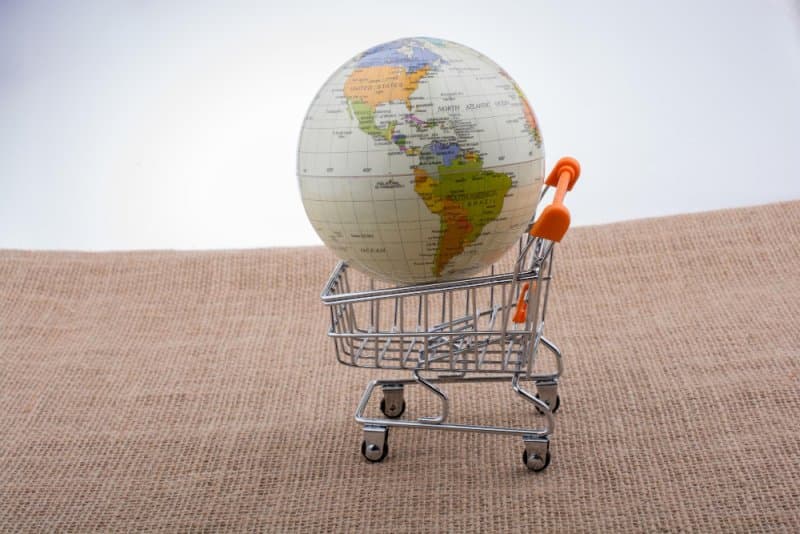

Selling internationally through a website is one of the most powerful e-export strategies, giving brands full control through their own domains. Although platforms such as Amazon, Etsy, and other marketplaces offer major sales opportunities, an independent website provides a far more sustainable foundation for long-term brand building. Therefore, selecting the right product for innovative e-export is important, but determining which sales channel will deliver the best performance for that product is equally critical. MarcaWorld always recommends a multichannel growth strategy during its consulting engagements, while emphasizing that an independent website holds a unique place in establishing international brand prestige.
Success in digital commerce depends not only on product quality, but also on how a brand manages its digital presence, optimizes its marketing processes, and improves the user experience. In this section, we will therefore examine the foundations, strategic advantages, and potential risks of selling internationally through a website, and most importantly, how this model should be integrated with the right product selection.
Brand Control with an Independent Website
One of the greatest advantages of selling through a website is having complete control over how your brand is perceived. While marketplaces impose limits on product pages, your own website allows every detail—from design and user journeys to content strategy and payment methods—to be optimized in a way that strengthens your brand identity.
At this point, many entrepreneurs ask: “Do I really need to launch my own website?”
Yes, particularly for companies aiming to build a global brand over the long term. A website:
- Allows you to collect customer data directly
- Strengthens remarketing strategies
- Enables more professional product presentation
- Eliminates dependence on a single platform
- Provides flexibility in product pricing and promotions
MarcaWorld states that the healthiest model is for brands to gain visibility on marketplaces initially while simultaneously growing their independent websites. This strategy provides a secure starting point and increases the diversity of sales channels as brand awareness grows.
Choosing the Right Domain and Technical Infrastructure
When selling internationally through a website, the choice of technical infrastructure is one of the key determinants of success. Shopify, WooCommerce (WordPress), Wix, and custom-built systems are among the main options used for global sales.
So, which platform is the right choice?
The answer largely depends on the brand’s objectives. Shopify stands out for its rapid setup and international optimization features, while WooCommerce offers significant advantages in flexibility and customization, particularly for brands with technical teams.
Some factors to consider when selecting technical infrastructure include:
- Multilingual support
- Multiple-currency support
- Integrated payment methods
- Logistics automation
- Mobile compatibility
- Speed and performance
- SEO flexibility
The right infrastructure reduces the operational burden of selling internationally through a website and enables the business to establish a scalable e-export model.
Integrating International Payment Systems
When selling internationally through a website, payment methods are directly linked to customer trust. “Can I accept credit card payments?”, “Is PayPal mandatory?”, and “Which payment method do global customers prefer?” are frequently asked questions in this area.
The most widely used payment methods for global sales are:
- Stripe
- PayPal
- Wise Business
- Shop Pay
- Apple Pay / Google Pay
- Country-specific payment solutions (Klarna, iDeal, etc.)
MarcaWorld always recommends offering customers at least two different payment options. While some customers prefer credit cards, others favor mobile payment systems. A wider range of payment options noticeably increases conversion rates.
Optimizing International Shipping and Logistics
When selling internationally through a website, logistics require more planning than on marketplaces. However, this is not a disadvantage; on the contrary, it gives the brand the freedom to manage shipping prices and use different logistics models in different regions.
The most critical question in logistics is: “How can I deliver to the customer quickly and cost-effectively?”
The answer depends on the destination country, the product’s volume, and the target delivery time.
Commonly used logistics models include:
- PTT / International postal shipments
- Express delivery services (DHL, UPS, FedEx)
- Fulfillment centers such as European or U.S. warehouses
- 3PL logistics solutions
- Hybrid Shipping models
In previous sections, we emphasized that logistics compatibility must be assessed when selecting products for innovative e-export. This criterion becomes even more important when selling through a website, as global shipping costs can be high for bulky and fragile products. MarcaWorld therefore recommends planning product selection, the logistics model, and pricing together.
A Multilingual and Multiple-Currency Website Strategy
It is extremely difficult for a brand selling in the global market to succeed with a “single language–single price” model. Customers trust a brand more when they can shop in their own language and currency.
A frequently asked question is: “How many languages should my website offer?”
Two languages are sufficient at the outset:
- English (for the global market)
- A language specific to the target country (for example, German, French, or Arabic)
Additional languages can be introduced later as sales volume increases.
Similarly, displaying prices in local currencies increases conversion rates. For example, when a website selling to Europe displays prices in Euro, customers gain a greater sense of trust and control.
Generating Organic Traffic Through International SEO
When selling internationally through a website, SEO does more than improve visibility; it also creates a continuous stream of sales that is not dependent on advertising. At this point, the question “How is international SEO done?” becomes important.
The key components of international SEO are:
- Target-country-specific keyword research
- Multilingual meta tags
- Hreflang tags
- Country-specific content strategy
- Speed optimization
- User experience
- Competitor analysis
The critical point is to prepare product pages with original content tailored to each country’s habits, rather than merely translating existing content. MarcaWorld states that this approach significantly increases conversion rates.
Directing Social Media Traffic to the Website
Social media is one of the most powerful sources of traffic for growing website sales. Content created for Instagram, TikTok, Pinterest, and YouTube makes it easier to reach global audiences.
However, there is one point that many brands overlook: social media content should build interest in and trust toward the brand, rather than simply sell products. Therefore:
- Content strategy
- Influencer collaborations
- Short-form video trends
- Story formats
- Communicating product value
become key elements that support sales.
Website User Experience and Conversion Optimization
The success of selling internationally through a website depends on many details, from the site’s design to the persuasiveness of its product pages. User experience (UX) therefore has a direct impact on sales conversion rates.
So, what should be done to increase the conversion rate?
- Strong product images
- Detailed and persuasive descriptions
- A fast checkout process
- Mobile compatibility
- Social proof (comments and reviews)
- A clear return policy
- Trust badges
These elements have a major influence on the customer’s purchasing decision. In particular, highlighting the advantages identified during the product selection process for innovative e-export makes the website more persuasive.
Growing the Website Through Advertising Strategies
Google Ads, Meta Ads, TikTok Ads, and Pinterest Ads are among the most effective tools for increasing website traffic. However, without accurate targeting in international advertising, the budget can be depleted quickly.
The following approaches are therefore important in advertising strategies:
- Country-specific targeting
- Interest-based micro-segmentation
- Product-focused short-form videos
- Remarketing campaigns
- Automations for users who abandon their carts
Combining advertising performance with SEO creates a long-term sales engine for an independent website. MarcaWorld emphasizes that digital advertising delivers fast results and reduces costs when optimized correctly.
Brand Trust and Return Policies
International customers are particularly cautious about unfamiliar brands. Clearly stating return and warranty policies therefore increases trust in the brand.
In addition, providing customer service in English, ensuring fast response times, and using tools such as chatbots positively affect conversion rates.
Integrating Website Sales with Product Selection
When selecting products for innovative e-export, it is essential to assess whether the chosen product is suitable for website sales. Some products sell faster on marketplaces, while others may be more profitable on a brand’s own website.
The following product types are highly suitable for website sales:
- Niche, story-driven products
- High-value-added design products
- Digital products suitable for a subscription model
- Physical products with strong branding potential
- Products with high repeat-purchase rates
A website is an ideal platform for telling a brand’s story and reinforcing the value of its products. MarcaWorld therefore recommends shaping the website’s value proposition alongside the product selection process for every brand.
Managing Global Sales Channels Together
Selling internationally through a website delivers the most effective results when combined with marketplaces.
This multichannel structure:
- Increases brand awareness
- Distributes risk
- Makes logistics more efficient
- Improves the return on advertising expenditure
A website should therefore be viewed not merely as a sales channel, but as the brand’s global storefront.