Launching a Brand Abroad
Practical methods for brands planning an international launch, strengthened by strategy, positioning, cultural adaptation, and marcaworld’s expertise.
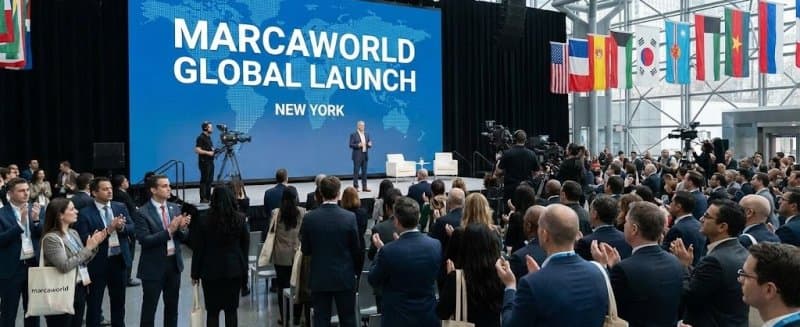

Launching abroad has become one of the most critical steps in accelerating a brand’s growth. While launches without proper preparation often fail to deliver the expected results, companies that understand cultural differences and market dynamics establish their position much faster. This strategic awareness is precisely why brands working with teams experienced in international brand management, such as marcaworld, make steadier progress. Since every country has different consumption patterns, expectations, and purchasing motivations, the entire launch process must be designed from a global perspective.
Choosing the Right Market and Building a Realistic Foundation
Determining which market is most likely to embrace a brand quickly directly influences the launch’s outcome. Consumer habits, the intensity of competition, the pace at which trends change, and language barriers are among the first factors to consider. Sometimes, rather than entering a large and highly competitive country, targeting a more niche market with strong growth potential can provide a far more powerful start.
Many brands initially fall into the trap of believing that “the largest market is the right market.” Yet large markets also mean high entry costs, lengthy promotional periods, and more intense competition. In projects supported by marcaworld, the market’s sociocultural structure is assessed first, followed by a ranking of target countries that align with the brand’s character. This approach not only contributes to a successful launch but also lays the foundation for long-term brand loyalty.
Cultural Adaptation: The Hidden Power Behind a Launch
Culture is one of the most important factors influencing consumer behavior in international markets. Every detail, from the brand story to product messaging, should be adapted to the target country’s perceptions. The same product or service may carry different meanings in different countries.
Some brands struggle to connect with their target audiences during international launches because they do not give sufficient importance to cultural alignment. The tone of the message, color choices, visual style, and even the rhythm of a slogan can vary from one country to another. marcaworld places particular emphasis on this aspect when working with brands because messages gain acceptance much faster when cultural alignment is achieved.
Practical Tips for Adapting to Cultural Differences
- Focus not only on figures in market research but also on emotional and perception-based data
- Ensure that product names do not acquire unintended meanings
- Adapt campaign language and content rhythm to the local communication style
This alignment ensures that the brand is perceived as “familiar” rather than “foreign” in the market.
Positioning and Messaging: The Heart of Consumer Engagement
When a brand plans to launch abroad, the first question should be, “How do we want to be perceived here?” The same brand can adopt entirely different positioning strategies in different countries because consumers’ motivations for using the product vary.
For technology products, innovation may be the leading selling point in one country, while trust and durability may take priority in another. Therefore, instead of relying on a single global message, it is more effective to use a messaging framework that preserves the core strategy while being optimized for local consumers. This approach is frequently applied in projects developed by marcaworld: the core brand identity is retained while subtle adjustments are made to align it with the target market’s expectations.
Another important consideration in message design is the emotional journey consumers will experience throughout the launch. Capturing attention, communicating information clearly, and building trust are all part of this journey.
Campaign Structure and the Importance of Timing
Launching abroad involves much more than setting an announcement date. The periods before, during, and after the launch must be planned meticulously. The preparation phase can often be more critical than the launch itself.
Timing mistakes are a common issue in campaign planning. Some brands launch during highly competitive periods and lose visibility. Others weaken their campaign by launching when consumers have little motivation to buy. Country-specific seasons and purchasing cycles must therefore be taken into account.
The table below provides a clearer overview of the stages in a typical launch process:
| Launch Stage | Primary Objective | Critical Consideration |
|---|---|---|
| Preparation | Market analysis, positioning, localization | Ensuring complete cultural alignment |
| Warm-Up Phase | Generating interest and building a community | Timing and tone of voice |
| Main Launch | Product/service announcement | Rapid feedback management |
| Post-Launch | Loyalty and sustainability | Ongoing communication and data monitoring |
This process is more than a theoretical framework. In launches supported by marcaworld, every stage is developed in detail to align with the brand’s identity. As a result, the campaign is not confined to a single day but creates a lasting impact.
Increasing International Visibility Across Digital Channels
Today, most global launches take place in the digital world. However, digital platforms differ from one country to another, as do user behaviors. Even search engine preferences vary in some countries, making it impossible to apply a one-size-fits-all digital strategy.
International SEO, social media adaptation, content localization, and a multilingual user experience are the cornerstones of this stage. Because search engines have different algorithmic dynamics in each market, brands must undertake tailored optimization for every country. marcaworld provides brands with technical and strategic guidance in this area because poorly optimized content directly reduces visibility.
Key Questions in the Consumer’s Digital Journey
During a launch, many consumers look for answers to specific questions. These questions also form the basis of the digital content strategy.
Is the new brand trustworthy?
Consumers are persuaded more quickly when the brand’s background, references, and values are presented clearly.
Does the product or service meet local needs?
The launch becomes more effective when technical features and benefits are emphasized in line with local expectations.
How will after-sales support be provided?
Clear warranty, return, and support procedures are critically important for international users.
Keeping the answers to these questions visible throughout the campaign allows the consumer journey to progress naturally.
The Art of Telling a Brand’s Story in a Universal Language
Launching abroad means more than simply introducing a product. Telling the brand’s story effectively helps forge stronger connections in target countries. When engaging with a foreign brand, people consider not only the product but also the brand’s values, position, and approach.
A mistake some brands make at this stage is presenting their story exactly as it is and expecting it to create a universal connection. While the story itself may remain unchanged, the language and points of emphasis should vary by country. marcaworld supports brands in reframing their stories in a way that is universal yet locally relevant.
Post-Launch Continuity: Maintaining and Deepening Visibility
After successfully completing a launch, many brands lose momentum by reducing the pace of their communications. Yet the real value begins after the launch. Early feedback should be analyzed quickly, while user behavior, comments, and changes in trends should be monitored closely.
In some cases, even minor strategic adjustments can make a major difference. Changing the pace of messaging, producing content for specific segments, or launching a market-specific campaign can strengthen the brand further. marcaworld works alongside brands throughout this process to help create a sustainable growth model.
The most effective way to build loyalty is to provide consumers with continuous value. This may be achieved through informative content, product development announcements, or community management. Whatever method is chosen, the brand can establish a lasting presence in the market as long as communication remains uninterrupted.
The Impact of Strategic Partnerships on Launch Success
Local partnerships are critical to international launches. A strong distributor, an influential influencer, or an industry-related organization in a country can make the brand’s initial point of contact much more effective. Joint projects with local authorities enable the brand to earn trust much faster in a new market.
At times, even a small partnership can create a major leap forward. However, the right partner must be selected. Drawing on its experience in building partnerships aligned with brand values, marcaworld helps brands take this step on a firmer footing.
A Data-Driven Approach: The Cornerstone of Modern Launches
Launching abroad is no longer a process driven by intuition alone. Consumer behavior, product performance, brand perception, and competitive analysis must be continuously supported by data. Accurate interpretation of data enables rapid optimization at every stage of the campaign.
Pre-launch A/B tests reveal which messages perform better in the digital campaign. During the launch, real-time data is analyzed to steer the campaign. The data gathered afterward forms the basis of long-term positioning in the market. marcaworld offers an analytical perspective to help brands interpret this data and turn it into strategy.
Common Mistakes in International Launches and How to Address Them
Many brands encounter similar challenges during international launches. Most of these issues can be overcome easily with proper planning and professional guidance.
Generalizing based on a single country
Every country has different market dynamics. The solution is to develop localized strategies.
Presenting the brand story without adaptation
The language of the story should be adapted to achieve universal appeal.
Reducing communication after the launch
Continuity and community management are essential to building a lasting brand perception.
Underestimating local competition
Competitive analysis forms the strategic foundation of the launch.
These mistakes are often linked to insufficient detail during the preparation stage. Brands that work with experienced teams such as marcaworld significantly reduce these risks.