E-Commerce Special Zone Advantages
E-commerce special zone advantages offer strategic opportunities that strengthen digital commerce—from logistics speed to tax incentives—and enhance business competitiveness.
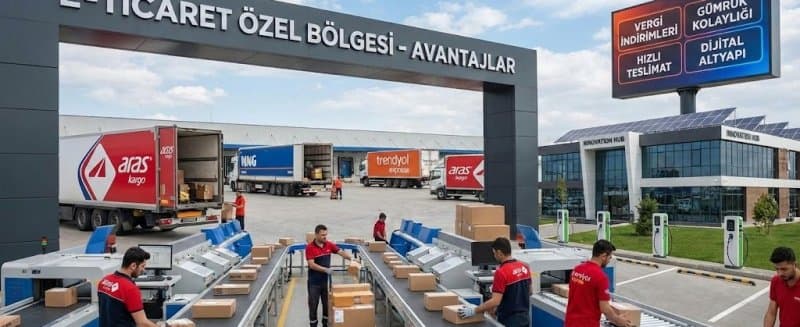

E-commerce special zone advantages represent a collection of structural conveniences that enable scalability in digital commerce, reduce operational burden, and accelerate market entry processes. As the modern commerce ecosystem increasingly demands flexible infrastructure and intelligent logistics models, special zones occupy a critical position that influences business growth velocity.
What Is an E-Commerce Special Zone?
An e-commerce special zone is a commerce area specifically configured with customs procedures, storage facilities, technology infrastructure, and logistics services designed to facilitate digital commerce operations. The zone's core purpose is to create an integrated system enabling businesses to operate faster, at lower cost, and with greater scalability. Measurements show that products transacted in these zones achieve approximately 25% time savings across the order-to-delivery cycle—a decisive advantage in competitive verticals.
Components of Core Features
These zones operate several structural components in unison:
- Advanced customs integration
- Authorized storage facilities
- Real-time data flow and traceability infrastructure
- Simplification of foreign trade processes
- Logistics networks compatible with multi-channel supply chains
Spatial Transformation of Digital Commerce
Special zones represent a model where physical spaces are reorganized according to digital flow, with data-driven decisions directing logistics planning. This transformation enables stable performance even during order volume fluctuations, allowing brands to respond consistently to customer expectations.
What Commercial Gains Do E-Commerce Special Zones Provide?
The most evident benefit of e-commerce special zone advantages is the direct gain in speed, cost, and efficiency across operational processes. By simplifying the supply chain, these zones standardize workflows and enable international sales channels to be managed with far less friction.
Acceleration in Logistics Processes
Simultaneous inventory management, dedicated customs lanes, and integrated distribution networks significantly shorten shipment preparation times. In some zones, products now routinely reach shipment-ready status within the same day. This speed gain reduces capacity pressure during peak periods and directly improves customer experience.
Improvement in Delivery Performance
Delivery speed is one of the most critical parameters driving cart completion rates. Analysis shows that reducing delivery time from 48 hours to 24 hours correlates with up to 18% increase in repeat purchase rates. Special zones transform this metric into consistently improving performance.
Flexibility in Inventory Management
The ability to adjust storage capacity according to demand fluctuations reduces overstocking risk. This flexibility particularly minimizes losses in verticals with rapid inventory turnover, such as fashion, cosmetics, and consumer electronics.
Simplification of Customs Procedures
Special zones operate with digital systems that reduce documentation volume in import and export processes and accelerate control workflows. In authorized areas, customs processing wait times have been observed to drop by up to 40%. This simplification reduces costs while minimizing operational risk.
Effects of E-Commerce Special Zone Structure on Supply Chain
E-commerce special zone infrastructure delivers mechanisms that optimize end-to-end supply chain performance. By reducing inefficiencies across each link, zones help businesses maintain control over total cost of ownership.
Strengthening Supplier Integration
Systems enabling real-time integration with suppliers allow inventory levels and production plans to be managed transparently. This facilitates reduced supplier delivery errors and demand forecasting with higher accuracy.
Order Processing Efficiency
Processing orders from a single center increases standardization in packing and sorting processes. Automation systems deployed can reduce packing errors by up to 30%—a critical metric directly reflected in customer satisfaction.
Returns Management
Special zones maintain dedicated return lines and segregation areas, enabling rapid evaluation by product category. This structure improves the suitability of returned products for resale, lowering loss rates. In some sectors, special zone processes have reduced returns management costs by up to 15%.
Impact of E-Commerce Special Zone Advantages on Operational Cost
One of the most powerful outcomes is the reduction seen in total operational costs. Technology integrations, workforce productivity, storage capacity utilization, and customs process simplification directly support cost optimization.
Energy and Storage Savings
Modern special zones employ high-bay systems and automation-based storage solutions that lower storage cost per unit. Use of energy-efficient systems creates long-term cost advantages for operators.
Workforce Planning Efficiency
Automation reduces manual work, enabling workforce to shift toward skill-requiring functions. Some businesses have achieved workforce productivity gains exceeding 20% following special zone integration.
Cost-Effectiveness in Customs and Document Management
Process digitalization reduces both administrative time waste and transaction costs. One-stop office models simplify document flow, enabling sustainable optimization of the cost baseline.
Impact of E-Commerce Special Zone Advantages on International Markets
Entering international markets carries significant risk for businesses lacking proper infrastructure. Special zones function as a platform that reduces these risks and accelerates new market entry.
Global Competitiveness Through Customs Speed Gains
Accelerated export processes help businesses approach global market opportunities more proactively. Reduced per-package costs create pricing advantages in competitive international platforms.
Management of International Customer Expectations
Adapting to different countries' logistics standards becomes more practical through centralized management. Multi-carrier integrations optimize shipments according to destination country and improve customer satisfaction.
Global Data Management
Processing data collected from multiple international sales channels in a single center enables accurate reading of demand trends. This data flow provides businesses with measurable advantage in marketing and product development strategy.
Strengthening E-Commerce Special Zone Advantages Through Technology
Technology infrastructure forms the backbone of special zones. Through data analytics, automation, and traceability solutions, businesses can manage workflows with greater clarity and control.
Real-Time Tracking Systems
Every step from warehouse entry to exit can be tracked. IoT sensors, barcode, and RFID technology minimize operational errors. This traceability strengthens consumer perception of trust.
AI-Powered Forecasting
Demand forecasting algorithms accurately predict sales intensity to maintain inventory costs in balance. Forecasting systems deployed in some zones have reduced error margins to approximately 12%—critical for fast-moving categories.
Impact of Automation on Warehousing
Automatic shelf systems, robotic picking lines, and conveyor optimization regulate inventory movement. This structure can improve individual order processing times by minutes.
Contributions of E-Commerce Special Zone Advantages to Economic Ecosystem
Special zones benefit not just individual businesses but the economic ecosystem of the region where they operate. Developing logistics infrastructure, technology investments, and employment opportunities are powerful components supporting regional development.
Emergence of New Business Models
New supplier firms emerge in areas such as storage technology, software solutions, packing automation, and data analytics. This increases economic diversification and encourages innovative ventures within the sector.
Employment and Specialization
Growth in logistics and technology-based positions enables specialist workforce development. Data-driven operations management creates an ecosystem that elevates workforce quality.
Contribution to Regional Competitiveness
Locations hosting special zones gradually acquire trade center status, attracting both local and global investors. This investment cycle increases regional economic resilience.
Impact of E-Commerce Special Zone Advantages on Business Scaling
For rapidly growing brands especially, scalable operation models are vital. Special zones make this scaling sustainable.
Flexibility in Capacity Management
During demand peaks, the ability to increase storage and shipping capacity prevents businesses from facing operational limitations. This flexibility prevents speed loss during growth periods.
Adaptation to Multi-Channel Sales
Managing local e-commerce, marketplaces, and international channels from a single center provides significant advantages in cost and time. This integrated structure eliminates the need for brands to create separate operation costs per channel.
Brand Reliability
Businesses with strong order performance gain consumer trust. Trust is one of the most important indicators sustaining long-term growth in digital commerce.
How to Conduct Strategic Planning for E-Commerce Special Zone Advantages?
To maximize value from e-commerce special zone advantages, a business must properly analyze its current operation structure, product profile, and target market strategy. Incorrect capacity planning or insufficient integrations can diminish advantages.
Correct Infrastructure Analysis
Product diversity, inventory cycle, and order volume are core criteria for zone selection. For particularly high-transaction brands, zone capacity and automation level become critical determinants.
Planning the Integration Process
Integration with order management systems, shipping solution partners, and ERP infrastructure must proceed without friction. Poor integration, especially in high-volume operations, can cause disruptions.
Performance Measurement
Improvements in operation speed, changes in storage costs, returns process performance, and delivery times must be tracked with verifiable metrics. When measurement systems are properly established, the added value provided by special zones becomes apparent.
Sectoral Usage Differences of E-Commerce Special Zone Advantages
Each sector uses special zone advantages according to its own dynamics. Product cycle, fragility level, inventory volume, and demand intensity cause different advantage areas to become prominent.
Fashion and Apparel
Because of rapid inventory turnover, delivery performance is the sector's core. Special zone operations shorten product cycles and support fast delivery standards.
Electronics
Tracking and security take priority. Traceability and controlled storage systems are strongly implemented in special zones.
Cosmetics and Personal Care
Restocking and returns assessment processes are critical for the sector. Segregation lines in special zones are an important factor increasing efficiency in this vertical.
Food and Fast-Moving Consumer Goods
For products requiring cold chains, stable storage systems are decisive. In some special zones, temperature-controlled areas minimize loss rates.
Converting E-Commerce Special Zone Advantages into Strategic Investment
Businesses have begun evaluating special zones not merely as operational solutions but as long-term scaling investments. Developing logistics lines, digital infrastructure, and supply chain optimization are factors increasing investment value. The speed, transparency, and cost advantages provided by special zones create a decisive difference in markets with high competition intensity.