Building Your E-Commerce Business: Company Setup and Platform Integration
A comprehensive guide covering all stages of company formation for e-commerce platforms, integration processes, logistics management, tax procedures, and strategic growth requirements.
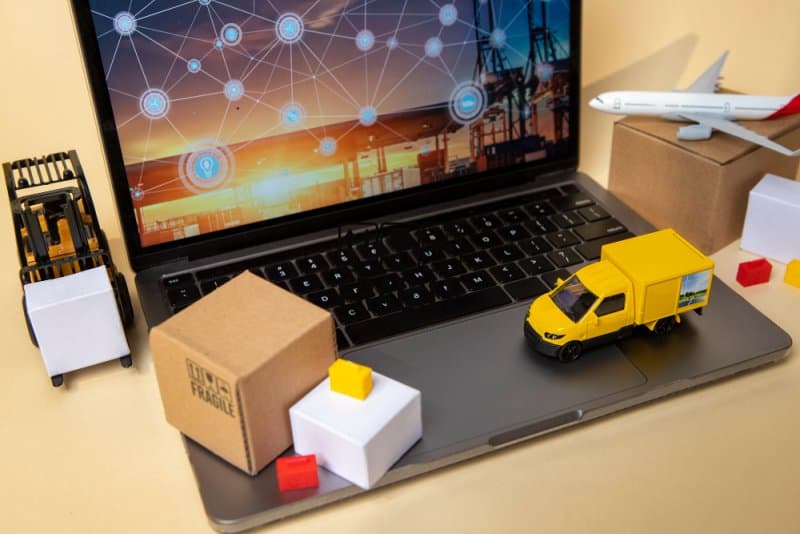

With the globalization of digital commerce, e-commerce export has become an accessible business model not only for large companies, but also for SMEs and individual entrepreneurs. Platforms such as Etsy, Amazon, Allegro, Walmart Marketplace, eBay, Wayfair and many others now enable sellers from anywhere in the world to present their products to hundreds of millions of customers. However, there is one fundamental rule to e-commerce export: to be a professional seller on these platforms, you must have a registered company.
The question that new entrepreneurs ask most frequently is usually this:
"What is the best type of company to start with for e-commerce export?"
In fact, there is no single answer to this question; the target market, product type, sales volume, growth plans, and tax obligations all directly influence the choice of company structure.
A company operating in integration with e-commerce platforms has quite different requirements than traditional domestic commerce. Import-export regulations, international invoicing, customs procedures, VAT exemptions, payment provider conditions, and logistics processes are the key factors that distinguish this model from others. For this reason, establishing a solid company structure before entering e-commerce export is critical for long-term success.
This article provides a comprehensive guide addressing the company structure suitable for e-commerce integration, processes, requirements, and all strategic decision points in detail.
Can You Do E-Commerce Export Without Registering a Company?
This is the first question many entrepreneurs have. The answer is clear:
E-commerce export cannot be conducted without a registered company on product sales platforms.
Global platforms such as Etsy, Amazon, and eBay require sellers to provide the following documents:
- Tax certificate
- Business bank account
- Trade registry certificate (according to company type)
- Authorized signature document
- Authority to issue invoices
- Invoices in the legal format required for e-commerce (international sales)
As an individual, you can only sell content, digital products (on some platforms) or services; physical product sales absolutely require a commercial structure.
Some entrepreneurs ask: "If I just send a few products as a hobby, will that be okay?" When the number of shipments increases, the products are classified as commercial and you may face customs issues. For this reason, a company is mandatory for a commercial model.
What Is the Best Company Type for E-Commerce Export?
In Turkey, three main company types can be used for e-commerce export: sole proprietorship, limited liability company, and joint stock company.
The right choice depends on the entrepreneur's goals.
Sole Proprietorship: Fast, Affordable, and Ideal for Beginners
The majority of entrepreneurs wanting to start e-commerce export initially choose a sole proprietorship. Here's why:
- Can be established within one day.
- Accounting costs are lower than other types.
- Simple and quick to close.
- Lowest startup costs of all models.
An important question that comes to mind for beginners is this:
"Does a sole proprietorship look professional when selling internationally?"
For Etsy, Amazon and other platforms, the company type is irrelevant. What matters is the accuracy of legal documents and consistent invoice issuance.
However, sole proprietorship income is subject to personal income tax; as income increases, the tax rate rises. For this reason, when transitioning to high-volume sales, it may make sense to move to a more professional structure.
Limited Liability Company: For Those Seeking Growth and Institutionalization
For entrepreneurs looking at e-commerce long-term, those with branding goals, and those wanting to establish a partnership structure, a limited liability company offers a stronger alternative.
Advantages:
- Corporate tax rate is fixed.
- Partnership structure is clearer.
- Provides a strong foundation for trademark registration, investment processes, and foreign trade operations.
An important question that entrepreneurs often ask is:
"Is a limited liability company required?"
No, it is not required for e-commerce export. However, if you have plans for a scalable structure, inventory-based operations, a production model, or global branding goals, a limited liability company is the right choice.
Joint Stock Company: For Large Ambitions and Investment-Focused Structures
Joint stock companies are generally suitable for brands with high export volumes, investment potential, or very broad global operations. It is not mandatory for starting e-commerce export and often creates unnecessary costs at the startup stage.
Selecting the Right Business Activity for E-Commerce Export
One of the most critical elements in company registration is determining a business activity suitable for international sales. Many people wonder: "Do I need a separate activity code for each product?" Generally, a single broad activity code is sufficient.
The basic NACE codes used for e-commerce export are:
47.91.14 – Retail trade via mail or internet
This code applies to all online sales within Turkey and internationally.
More professional structures may also use additional codes:
- 46.9 – Wholesale trade not specialized in any particular commodity
- 47.91 – Retail trade via internet
- 49.41 – Courier and logistics related services (if needed)
Depending on the product category, additional permits may be required. For example:
- Cosmetics
- Medical devices
- Dietary supplements
- Toys
- Baby products
While most categories are unrestricted on platforms like Etsy, Amazon and eBay may require certification for certain product groups. For this reason, examining permit requirements for your product category before company registration provides significant advantages.
The Logic Behind Integration with E-Commerce Sites
When a company integrates with e-commerce platforms, this involves automatic product uploads, inventory synchronization, order management, and rapid invoice processing. New entrepreneurs typically ask:
"Can I sell without integration?"
Yes, you can; however, with manual management, you often face:
- Inventory confusion,
- Order delays,
- Incorrect price updates,
- Non-compliance with platform policies
and other common problems.
Integration software therefore provides significant advantages.
What Do E-Commerce Integration Software Solutions Do?
These software solutions automate:
- Product uploads
- Multi-platform inventory management
- Order management from a single dashboard
- Automatic invoicing
- Shipment label generation
- Reflecting changes across all platforms simultaneously
Especially on high-volume platforms like Amazon and Etsy, integration speeds up operations and reduces errors.
How Do Tax Processes Work in E-Commerce Export?
One of the most attractive advantages of e-commerce export is the tax benefits. The first questions that come to mind for beginners are:
"Is there VAT on international sales?"
"How do I issue an e-commerce export invoice?"
Basic information:
- Sales to international customers are VAT exempt.
- A special invoice format (e-archive export) is used for e-commerce export.
- Income or corporate tax is calculated on a periodic basis.
- Commissions charged by marketplaces can be recorded as expenses.
- Payment providers (Payoneer, Wise, etc.) can be used as income documentation.
Many entrepreneurs wonder: "How is the tax handled on commissions?" Commissions, including VAT, can be recorded as expenses. This reduces your tax base.
For this reason, the accounting for an e-commerce export company is somewhat different from traditional commerce. Working with an experienced e-commerce accountant provides significant advantages.
Logistics, Shipping, and Storage Processes
After your e-commerce company is established, logistics management becomes the most critical concern. How products are shipped to the world, delivery times, and costs directly impact company success.
One question entrepreneurs frequently ask is:
"Shipping costs are very high; can this business be profitable?"
While shipping costs vary by product type, Turkey's low production costs and the advantage of currency-based sales often offset high shipping fees. High-value-added products in particular—jewelry, accessories, art items, personalized designs, textiles, and home décor—have significant advantages in e-commerce export.
Micro-Export Simplification
In Turkey, shipments to international destinations up to 300 kg and €15,000 fall under the micro-export category. These shipments:
- Are cleared with an Export Declaration Form (ETGB)
- Incur no customs processing fees
- Are processed quickly
95% of entrepreneurs new to e-commerce export use this model.
Warehouse Usage (3PL) and International Fulfillment
As order volume increases, storage strategy becomes important. Your options include:
- Shipping directly from Turkey
- Using fulfillment warehouses in Europe
- Amazon FBA model
- Using US warehouse facilities
- Dropshipping or manufacturer-direct shipping models
At this point, your company's growth goals determine which logistics model you will choose.
Product Selection and Profitability Analysis for E-Commerce Export
E-commerce businesses that generate profit share one common trait: they have the right product strategy. In the early stages, many people ask:
"Which products should I sell for e-commerce export?"
The right answer: profitable, lightweight, quick to produce, durable, and products that don't require special category permissions.
Particularly on platforms like Etsy, handmade items, personalized designs, art products, and digital objects are very popular. On Amazon and eBay, branded products, unique designs, and niche items stand out.
The most critical factors in product selection are:
- High demand
- Low competition
- High profit margins
- Shipping-friendly dimensions and weight
- Low return rates
Many entrepreneurs who enter e-commerce without conducting this analysis fail to achieve their expected results due to poor product choices.
Strategic Management and Growth Models for Your E-Commerce Company
E-commerce is a constantly evolving business model. For this reason, company management must be more dynamic than in traditional commerce. The essential skills expected of a seller include:
- Price optimization
- Creating content compliant with platform policies
- SEO-friendly product titles
- Customer relations
- Advertising budget management
- Control of shipping and return processes
Entrepreneurs often ask:
"With so many processes, how will I manage everything alone?"
With e-commerce integration software, automation tools, assistant support, and regular analysis systems, these processes become very manageable.
Strategic growth models your company can pursue long-term include:
- Expanding product variety
- Entering new marketplaces
- Building your own brand
- Creating your own e-commerce website
- Opening a warehouse in Europe or the US
- Moving into B2B export
Each strategy takes your company to the next level.
A Professional Roadmap for Your E-Commerce Company
Building a company integrated with e-commerce platforms is not merely a registration process; it is opening the door to a global business model. When the right company type is chosen, the proper business activities are selected, and integrations are set up correctly, all processes scale much more rapidly.
Considering the currency advantages offered by international markets, low production costs, micro-export simplification, and the breadth of the global customer base, e-commerce export represents one of the strongest growth opportunities available to today's entrepreneurs. When this model is combined with proper company structure and strategic planning, it becomes a sustainable and highly promising business.
When all these factors are considered, the most important step for anyone wanting to start e-commerce export is to establish a company suited to your business model, select the right business activities, and create an infrastructure compatible with e-commerce platforms. This way, the path to global growth opens much more firmly and under your control.