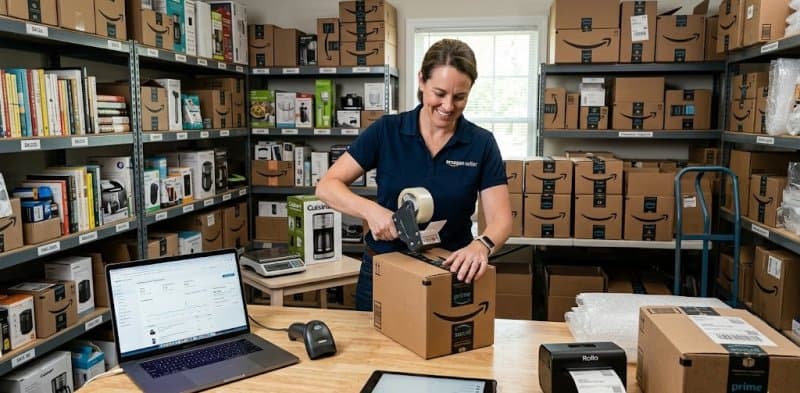
Shipping Branded Products on Amazon FBA
Selling branded products on Amazon is a process supported by professional supply chain management, verifiable documentation structures, packaging standards, and brand protection mechanisms.


Selling branded products on Amazon is a process supported by professional supply chain management, verifiable documentation structures, packaging standards, and brand protection mechanisms. This structure contributes to both the security of the seller account and proper product positioning within the platform. The FBA model reduces operational burden for branded products while providing customers with fast delivery benefits, making sales performance more predictable.
Why Branded Product Sales on Amazon FBA Provide a Critical Advantage
Selling branded products on Amazon FBA is a process that aligns directly with the platform's quality and reliability policies. Branded products supported by a smooth supply chain earn consumer trust more easily. This increase in trust translates to conversions and ensures sales performance gains stability. When known brands are combined with proper listing structure, there is a noticeable increase in category visibility. Notably, a significant increase in Buy Box win rate directly impacts sales speed.
This advantage provided by branded products strengthens not only sales speed but also long-term account health. To access Amazon's advanced analytics tools, formal verification procedures between the brand and platform must be completed. This verification grants the seller Brand Analytics data, A+ content creation, and ASIN control authority. These permissions enable product pages to appear more professional, help consumers make purchasing decisions faster, and allow organic ranking to gradually improve.
Price behavior is also more stable in branded products. Since sudden price drops are rare in products with major brand names, sellers can create more reliable net profit projections. Because the brand registration protection mechanisms reduce counterfeiting rates, sales permissions are not interrupted and store trust scores remain consistently maintained.
What Are the Basic Requirements for Shipping Branded Products?
For a branded product to be accepted into Amazon FBA warehouses, the seller must support their supply chain with documentation. These documents are the foundation of Amazon's customer security policy. Verification that the product comes from the manufacturer, clear visibility of the brand name on the packaging, correct use of GS1-compliant barcode structure, and accurate product-ASIN matching are the main components of compliance.
Meeting these requirements provides critical advantages in seller performance reviews. Amazon's evaluation teams place great emphasis on documentation consistency, especially for branded products. Supply invoices must be clear, legible, and complete with product information, authorization documents must be issued by the brand owner, and packaging must properly represent the product. All these steps protect sellers in potential reviews and ensure uninterrupted sales permissions.
How Is Compliance Checked in FBA Shipments?
When preparing an FBA shipment plan, product brand names, barcode matching, SKU information, and variant verification must be examined carefully. A significant portion of errors seen in seller accounts results from incorrect barcode use or mismatch between ASIN and product. These inconsistencies extend the warehouse process and in some cases result in product return. For this reason, internal quality control conducted before shipment is the most critical step in logistics.
The most common points where inconsistencies appear include brand name not visible on packaging, shipment without invoices, missing UPC codes, or unauthorized brand sales. While most sellers assume these problems only emerge during shipment, the root cause of most issues originates during the product preparation phase. Maintaining package integrity, ensuring barcodes are readable by machines, and achieving exact ASIN-product content matching accelerates the warehouse acceptance process.
How Does Amazon Brand Registry Strengthen Branded Product Sales?
Amazon Brand Registry is an advanced protection system created to enable brands to have full control over the platform. This system provides trademark owners with powerful tools such as editing product listings, quickly filing counterfeiting complaints, managing brand story sections, and creating A+ content. The control power provided by Brand Registry allows brands to directly influence how their products are presented, creating a strategic advantage for sellers.
It is measured that list manipulation rates for brands participating in this program decreased by 99%. This statistic is a decisive advantage, especially for sellers wanting to protect their brand in highly competitive categories. For unregistered brand products, authorized seller documentation remains mandatory. Therefore, the registration process not only provides protection but becomes a critical part of long-term scaling plans.
Packaging Standards When Shipping Branded Products to FBA Warehouses
In branded products, packaging functions not only as a protective tool but as the physical representation of the brand. Since the volume of products processed in Amazon FBA warehouses is quite high, packaging must be completely compatible with automation processes. Barcode readability from the outside, clear visibility of the brand name, proper placement of additional protective materials for fragile products, and complete bundle warnings for set products form the foundation of these standards.
When packaging is done correctly, problems are greatly reduced both within the warehouse and during customer delivery. Amazon's analyses across various categories show that products with premium packaging have 12% lower return rates. This effect is particularly pronounced in cosmetics, personal care, and electronic accessories categories. The impact of packaging on both quality perception and purchase decisions is quite high.
Special Processes for Branded Product Sales in Supply Chain Management
Supply chain transparency is critically important in branded products. The product's source, manufacturer information, batch numbers, and invoice details must be complete. Amazon is known to conduct strict document verification especially in electronics and health categories. Therefore, the supply chain must be verifiable at every stage. Working with manufacturers or official distributors, regularly updating documentation, and creating quality control reports for products are the fundamental building blocks of the operation.
To increase supply chain visibility, batch number tracking, digital inventory reporting, and barcode standardization are implemented. This approach provides significant advantages to sellers in Amazon policy compliance. The following table clearly summarizes the main areas checked in the supply process:
| Control Area | Description |
|---|---|
| Brand Authorization | Sales approval granted by manufacturer or distributor |
| Invoice Accuracy | Matching of product name, SKU, quantity, and company information |
| Barcode Compliance | Correct use of GS1-registered codes |
| Packaging Inspection | Undamaged, legible, and standards-compliant packaging |
| Serial/Batch Tracking | Creating a traceable supply chain |
This structure enables early detection of errors that may occur during the process and contributes to stable progression of the operation.
The Impact of Branded Products on Amazon Seller Account Health
Branded product sales are one of the most powerful factors affecting seller account overall performance. Brand verification and documentation consistency play critical roles in Amazon's policy compliance scores. A significant portion of sellers unable to provide adequate documentation encounter ASIN restrictions during certain periods. Studies show that 27% of branded product sellers without proper documentation experience product suspension at least once a year, while only 2% of Brand Registry owners experience similar situations.
In counterfeit product claims, sellers are asked to provide invoices, supplier contact information, packaging photos, and evidence showing the relationship between the package and invoice. When documents are consistent, the process resolves in the seller's favor. For this reason, regular archiving of documents throughout the supply process is the safest approach for sellers.
Proper Pricing and Competition Strategy for Branded Products
Price movements in branded products are more predictable than in private label products. This allows sellers to implement strategic pricing. Buy Box competition, review average, logistics model, and sales speed directly affect pricing decisions. Measurements show that products with BSR values under 1,000 in the electronics accessories category have daily average sales in the 15–40 unit range. This data demonstrates how pricing strategies relate to sales speed.
Competitive analysis evaluates brand authority, price history, and listing quality. This examination strengthens the market position of branded products. Correct ASIN optimization combined with appropriate pricing strategy enables products to gain higher visibility.
Management of Branded Products in the FBA Logistics Process
Branded products sent to FBA warehouses undergo a specific logistics flow. Product acceptance, barcode scanning, and shelf placement processes are completely automation-compatible. Proper labeling of shipment boxes is the most critical step in the acceptance process. While acceptance time may extend by several days during peak periods, properly packaged products are known to be processed faster.
Packaging errors can cause the product to enter "Unfulfillable" status. A product in this status becomes unsellable and results in return charges for the seller. For this reason, some sellers use preparation services to conduct packaging, barcode labeling, and quality control phases with professional teams. Prep centers significantly reduce error rates, especially in high-volume operations.
Creating Your Own Brand and Selling Branded Products on Amazon
For those wanting to create their own brand and sell in the Amazon FBA model, the process is not limited to just sourcing. Product development, packaging design, GS1 barcode acquisition, brand registration, and listing optimization are the fundamental stages of this journey. A strong brand identity provides competitive advantage not only within Amazon but across all digital marketplaces. Therefore, visual concept, packaging language, and product story are among the most important factors determining brand value.
The impact of visual optimization on sales is quite significant. Professional product photography increases conversion rates by an average of 25%. Lifestyle images are particularly strong in the US market as they directly show product usage. A+ content strengthens the completeness of the product page, accelerating the consumer decision-making process.
Post-Sale Management and Maintaining Brand Credibility
Customer satisfaction in branded products directly affects brand value. Fast and professional post-sale communication reflects positively on store rating scores. It is known that sellers who respond within 24 hours have 18% higher positive review rates. These effects strengthen both ASIN performance and overall brand perception.
Even if return rates are low, every return should be evaluated as feedback. Product development teams can analyze this feedback to identify product weaknesses and provide improvements in subsequent productions. Thus, the branded product sales process becomes a continuously improving cycle.
Strategies Applied to Scale Branded Product Sales on Amazon
Healthy scaling of branded product sales is possible through data-driven analysis. Sales speeds, inventory turnover rates, advertising performance, and logistics costs must be tracked regularly. Adding variants to high-performing ASINs or creating product bundles increases sales momentum. Optimizing advertising campaigns increases visibility and strengthens conversion rates.
In sponsorship campaigns, products with high brand awareness demonstrate more stable performance. Controlled progression of ACOS rates during launch periods provides cost advantage to sellers. As products mature, the decrease in advertising costs creates a noticeable impact on long-term profitability.
Professional Support Needs and Consulting Process
Branded product sales require a broad range of expertise including supply chain management, brand protection, document verification, packaging standards, logistics control, and listing optimization. For this reason, many sellers use professional support to make the process more efficient. Experienced consultants strengthen all operational areas of the brand from product selection to supply design, from shipment preparation to ASIN performance analysis. Considering the intensity of competition in US and European markets in particular, professional guidance provides businesses with significant advantages.
Businesses seeking sustainable success in shipping branded products on Amazon FBA greatly benefit from expert support in establishing operational processes within a secure and efficient structure. Brands seeking comprehensive solutions in this area can contact Marcaworld.