World Bank Entrepreneur Support
World Bank entrepreneur support programs strengthen business development by providing financing, technical assistance, and innovative development initiatives for sustainable growth.
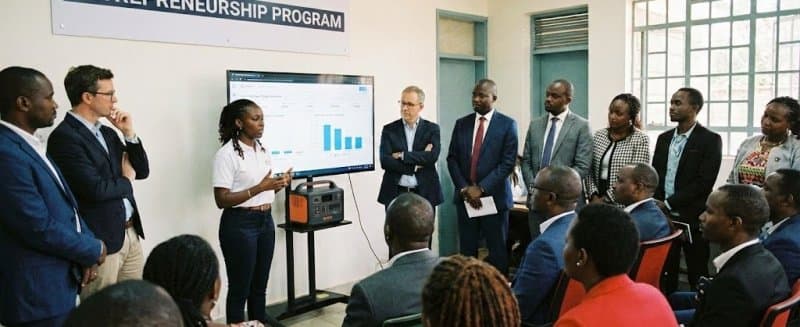

World Bank entrepreneur support comprises financing, policy development, infrastructure preparation, and institutional capacity building—components that enable businesses in countries with diverse economic conditions to establish scalable structures. A significant portion of this work focuses on sectors with high growth potential, and each program incorporates risk-reduction and innovation-incentive elements that the entrepreneurial ecosystem requires. Support mechanisms are typically positioned through public-private partnerships and follow structures aligned with regional development strategies. Through this approach, both new ventures can be launched and scaling-stage businesses can gain competitive strength in international markets.
What Is the Core Approach of World Bank Support?
The core approach of World Bank entrepreneur support is to ensure that business establishment and growth processes are freed from financial, technical, and structural risks—enabling sustainable economic development acceleration. This approach aligns with countries' long-term productivity growth objectives and includes evidence-based policy tools aimed at closing the startup capital gap. Program design incorporates regional needs analysis, sector-based demand projections, and social impact measurements. In this way, the entrepreneurial ecosystem receives not a unidirectional but a multi-layered development model.
Development-Focused Principles
Development-focused principles lift entrepreneurs from the position of mere financing recipients to become driving actors in regional economies. Among these principles are inclusivity, long-term stability, and practices that prioritize knowledge transfer. In programs implemented across many countries, variables such as technology adoption speed, reduction of informal economy activity, and workforce skill enhancement are closely monitored. Through this monitoring, corrective policy components are developed for sectors facing early-stage bottleneck risks.
Ecosystem-Oriented Support Structures
Ecosystem-oriented support mechanisms operate from the reality that ventures cannot grow with financing alone. Therefore, complementary components such as supply chain linkages, innovation centers, digital infrastructures, and research and development platforms are deployed. In some programs, regional cooperation networks are established, and through these networks, entrepreneurs' market access is accelerated. Data analyses show that in many regions, business establishment costs can decline by 12% to 18%.
What Support Mechanisms Does the World Bank Provide to Entrepreneurs?
The World Bank offers entrepreneurs five interconnected core mechanisms: financing, technical assistance, capacity development, digital transformation tools, and investment climate improvements. These mechanisms are implemented in scalable fashion according to the country's development stage and sector priorities. Each support type aims to increase entrepreneurs' production efficiency, reduce risks, and expand innovation capacity.
Financing Tools
Financing tools provide flexible models to meet capital needs of ventures operating in different sectors. Applied methods include long-term credits, thematic grant programs, and guaranteed investment funds. In particular, guaranteed credit structures increase entrepreneurs' access to bank lending, narrowing the capital gap. In some countries, once this mechanism was deployed, credit utilization was measured to rise by up to 25%.
Technical Assistance and Advisory Programs
Technical assistance programs enable businesses to receive expert support in areas such as marketing, financial management, production planning, and operational efficiency. In these processes, the World Bank often collaborates with local institutions to make knowledge transfer permanent. Implementations aim to integrate data-driven decision-making into business operations. Measurements taken in many regions have shown that businesses receiving technical assistance achieved an average productivity increase of 15% within two years.
Capacity Development and Human Resource Strengthening
Capacity development work focuses on strengthening entrepreneurs' management skills, financial literacy levels, and operational planning competencies. Training modules are offered in modular format and may contain different content by sector. These modules cover topics including business model creation, innovative product development, supply chain management, and digital marketing. Program outcomes include competency improvement measurements, and in many regions, more than 60% of participants achieved marked improvements in their business processes.
Digital Transformation and Technology Adoption
Digital transformation programs aim for businesses to integrate technological infrastructure into production and service processes more rapidly. In this scope, tools such as data analytics solutions, e-commerce integrations, cybersecurity protocols, and smart manufacturing applications are provided. In some programs, technology incubation centers are supported to reduce early-stage venture research and development costs. Data points show that following digitalization support, production error rates declined by 8% to 12%.
Investment Climate and Regulatory Environment Improvement
Improving the investment climate is critical for ventures to conduct long-term planning. In this area, the World Bank focuses on policy components including simplification of business establishment processes, digitalization of permit and licensing systems, reduction of informal economy activity, and creation of competitive market regulations. Measurements have determined that thanks to digitalized permit processes, business establishment times shortened by an average of 30%.
Comparison of Program Components
The table below classifies the core components of support—not as conceptual distinctions, but in a way that provides structural clarity.
| Support Type | Focus Area | Expected Impact |
|---|---|---|
| Financing | Capital access | Increased investment capacity |
| Technical Assistance | Operational improvement | Increased efficiency |
| Capacity Development | Management and competency | Skill level improvement |
| Digital Transformation | Technology integration | Reduction in production errors |
| Investment Climate Improvement | Regulatory framework | Acceleration of business establishment processes |
How Does the Impact Mechanism of World Bank Support Programs Work?
The impact mechanism of World Bank support programs is based on the principle of creating an ecosystem conducive to growth by solving barriers entrepreneurs face through an interdisciplinary approach. The mechanism operates in three fundamental stages: diagnosis, implementation, and scaling. Each of these stages is informed by data-driven analyses and includes active participation of local stakeholders.
Diagnosis and Needs Analysis
The diagnosis stage begins by identifying financing gaps, regulatory barriers, technological deficiencies, and workforce skill issues that entrepreneurs face in country- and sector-specific contexts. Applied analytical models are often supported by economic resilience indices, entrepreneurship intensity data, and sectoral growth indicators. Data sets used in this process make regional development differences visible and enable prioritization of policy components.
Implementation Stage
The implementation stage is when financing, technical assistance, training, digital tool integration, and policy improvements targeting entrepreneurs are actualized. The World Bank typically works in coordination with local government institutions, private sector representatives, and international expertise networks. During program implementation, performance indicators are monitored regularly and strategic adaptations are made as needed. According to observed findings, adaptations during the implementation stage can increase program effectiveness by 10% to 20%.
Scaling and Sustainability
The scaling stage concerns the dissemination of successful implementations to a broader entrepreneurial population and the creation of sustainable business models. In this stage, institutional capacity enhancements, knowledge-sharing networks, and the lasting impacts of digital infrastructures come to the fore. Results are designed to contribute to long-term economic growth. Various impact analyses have shown that scaled projects delivered an average performance improvement of 18% per business.
How Does the Application Process for World Bank Programs Work for Entrepreneurs?
The application process for World Bank programs for entrepreneurs consists of eligibility criteria review, project design creation, document submission, and evaluation stages. While the process varies by country, it generally follows a five-stage structure and is conducted through digital application platforms.
Examination of Eligibility Criteria
Examination of eligibility criteria is the first step in understanding whether an entrepreneur qualifies for the program, and criteria are often shaped according to activity sector, business scale, regional priorities, and development objectives. Some thematic programs may include sector-based limitations or innovation-focused conditions. Proper evaluation of criteria significantly increases the likelihood of application acceptance.
Project Design and Presentation Preparation
Project design clearly articulates what problem the entrepreneur aims to solve, how the business model operates, and what impact it intends to create. The design document includes cost structure, expected social and economic impacts, feasibility analysis, and risk mitigation strategies. Well-prepared files provide a strong advantage in the evaluation process because program specialists focus especially on impact potential when measuring project feasibility.
Document Submission and Evaluation
Following document submission, the evaluation process proceeds within an analytical framework. Expert teams review criteria such as feasibility, impact strength, innovation level, and implementability. During evaluation, additional information may be requested, and this process may take several weeks depending on application quality. Analysis of outcomes shows that applications presenting strong impact plans have an acceptance rate approximately 30% higher.
Approval, Implementation, and Monitoring
Upon completion of the approval process, entrepreneurs become eligible to receive support and transition to the implementation stage. Within the program scope, financing utilization, technical advisory, training modules, or digital tool integrations are carried out in phases. During implementation, regular monitoring reports are requested, and these reports reflect performance indicators. Monitoring results are fed back to policymaking institutions, providing data for broader reform initiatives.
Impact of World Bank Support on Economic Ecosystems
The impact of World Bank support on economic ecosystems is measured through increased competitiveness of entrepreneurs, strengthened local production capacity, and accelerated diffusion of innovation-focused business models. These impacts produce outcomes that directly affect both business performance at the micro level and economic growth at the macro level.
Increased Competitiveness
Increased competitiveness is one of the most visible outcomes seen in support programs. When businesses gain access to modern production techniques, begin using digital transformation tools, and open to new markets, they reach a strong position in terms of cost advantage and product quality. At this stage, impact measurements show that the likelihood of supported firms engaging in export activity rose by up to 20%.
Expansion of Innovation Capacity
Innovation capacity shows marked increase particularly in technology and research and development-focused sectors. In many programs supported by the World Bank, it has been measured that ventures' patent application rates increased, product development processes accelerated, and prototype production costs declined. Various studies have shown that in businesses completing technology adaptation, annual production growth varied between 10% and 22%.
Local Production and Employment Contribution
There is a direct relationship between strengthened local production and employment growth. Since support programs enable businesses to increase capacity, the pace of new job position openings accelerates. According to regional data, SMEs receiving support increased their employment within the first two years by an average of 12%. This finding points to long-term welfare increases for local economies.