WIPO Trademark Application
The WIPO trademark application system strengthens brands’ international protection strategies by comprehensively explaining its processes, advantages, and critical requirements.
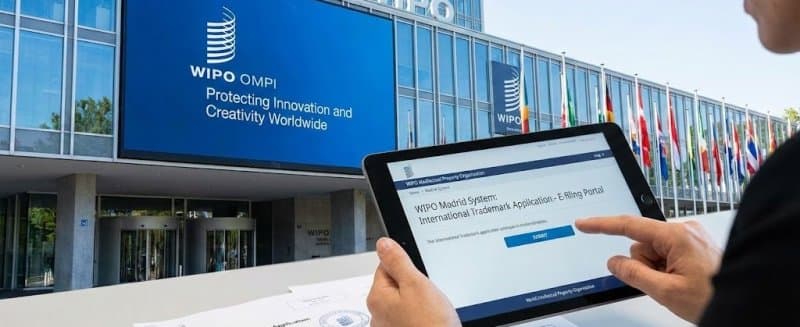

A WIPO trademark application is filed through the Madrid System, which enables a trademark to be registered in multiple countries through a single international application system. The essential first step is to register the trademark with a national or regional office and then extend its protection through WIPO.
The process conducted under the Madrid Protocol offers applicants strategic benefits such as cost savings, convenient centralized management, and rapid access to international trademark protection. According to current data, the Madrid System covers more than 130 countries, bringing over approximately %80 of global trade within its protection network. This broad reach makes it possible to secure brands’ commercial footprint worldwide.
To file an application, the trademark owner must have a genuine commercial establishment or residential connection in the relevant country. This connection is established through a “basic application” or “basic registration” and provides the legal basis for international expansion. Professionals managing the trademark portfolio should carefully plan the process and assess potential country-specific opposition risks in advance, as each country applies its own national law when making decisions under the Madrid System.
What Does the Madrid System Provide?
The Madrid System makes it possible to manage trademark protection across multiple countries through a single application file, a single set of fees, and a single file number. It provides a centralized framework that accelerates trademark owners’ global commercial expansion.
The system offers the following advantages:
- Significantly lower costs compared with filing separate applications in each country.
- Updates can be made centrally.
- Assignments, address changes, and limitations to classes of goods or services can be updated simultaneously across all countries.
- New countries can be added to the application at a later date.
The latest statistics published by WIPO indicate that more than 70.000 international trademark applications were accepted in 2023, with the technology, finance, food, and fashion sectors accounting for the highest filing volumes. This volume shows that global branding strategies are becoming increasingly standardized and that brands are expanding their cross-border operations.
The Difference Between the Madrid Protocol and the Madrid Agreement
The Madrid System consists of two international treaties, but today the vast majority of applications are filed under the Madrid Protocol. Thanks to its more flexible structure and broad country participation, the Protocol has become the standard for international trademark protection.
Key Differences
- The Protocol permits an international application based on a basic application, whereas the Agreement accepts only a basic registration.
- The Protocol allows fees to be determined on a country-by-country basis.
- The Agreement has a very limited scope of use today.
These distinctions are particularly important when choosing the appropriate method for planning the registration process.
Documents Required for an International Application
The documents required for an international application follow a structure consistent with national application standards and are prepared in accordance with the technical requirements established by WIPO.
After the documents are submitted to the national office, the trademark is examined by WIPO and forwarded to the designated countries. Preparing all documents completely helps prevent delays and reduces the risk of refusal.
Essential Documents
- Details of the basic application or basic registration.
- List of goods and services compliant with the Nice Classification.
- Image of the logo or word mark.
- The trademark owner’s identity and address details.
- Power of attorney, where required.
- List of country-specific requests for protection.
Statistics relating to the Nice Classification show that approximately %40 of trademark applications worldwide are filed under class 35 (advertising and business management). This concentration demonstrates that commercial services occupy the largest share of international trademark portfolios.
Points to Consider When Preparing Documents
Consistency across all documents is particularly important when categorizing goods and services. Otherwise, national authorities may reject classifications that fail to satisfy clarity requirements. The trademark’s distinctiveness, visual quality, and the clarity of its description are also critical assessment criteria during examination.
How Does the WIPO Examination Process Work?
WIPO’s examination process has a phased structure that allows the trademark owner to monitor the entire application centrally. This structure provides administrative convenience and establishes a standardized communication mechanism with national authorities.
The process consists of three main stages:
- Formal Examination: WIPO checks whether the application complies with the technical requirements. This stage is generally completed within 1–3 weeks.
- International Registration: If the application is compliant, the trademark is entered in the International Register and published.
- Examination by National Offices: The designated countries examine the application under their own trademark laws. This stage is limited to 12–18 months, although additional extensions may apply in some countries.
A refusal issued by one country is binding only in that country; protection continues in the others. This is one of the Madrid System’s key centralized advantages and enables businesses managing trademark portfolios to localize risk.
Grounds for Refusal by National Offices
- Lack of distinctiveness.
- A similar trademark that was previously registered.
- Conflict with Tata, a geographical indication, or public order.
- Ambiguity in the list of goods or services.
According to current data, the average refusal rate for international applications is in the %15–20 range. This rate clearly demonstrates the need for a properly designed application strategy.
Geographical Scope of Trademark Protection
Protection obtained through a WIPO trademark application extends across the selected countries and is enforced under each country’s own legal system. With more than 130 members, the Madrid System is preferred by a large proportion of the business community.
Despite this broad coverage, protection does not operate on a “one registration = worldwide protection” basis. Each country independently conducts its own examination. Therefore, a poorly planned geographical strategy may result in unnecessary costs or unexpected refusals.
Geographical Selection Criteria
- Countries where the trademark is currently used or intended to be used.
- Target markets for e-commerce or logistics operations.
- Regions to which products are exported.
- Geographies with a high risk of counterfeiting.
Global brands are observed to select an average of 12–20 countries for their portfolios, while businesses in the technology and fashion sectors designate more than 25 countries in a single file.
Integration with Regional Systems
The Madrid System operates in harmony with regional registration systems:
- European Union Intellectual Property Office (EUIPO)
- African Regional Intellectual Property Organization (OAPI)
- Benelux Office for Intellectual Property (BOIP)
Because these organizations cover multiple countries through a single regional office, some brands strategically choose them when filing Madrid applications.
Application Management and Subsequent Changes
International trademark portfolios are protected not only through initial registration but also through the proper management of ongoing processes. WIPO’s centralized system makes it possible to control this process from a single source.
Key Portfolio Management Procedures
- Adding countries (subsequent designation)
- Change of trademark owner
- Change of representative
- Limitation of classes of goods or services
- Address update
A single request is sufficient for these procedures; WIPO communicates the changes to all relevant countries.
Term of Protection and Renewal
An international registration is protected for 10 years and may be renewed every 10 years. WIPO statistics show that more than %80 of trademarks are renewed after the initial 10-year term, demonstrating the appreciably high commercial value of trademark assets.
The Role of a WIPO Application in Strategic Trademark Management
For businesses operating globally, trademark assets are among the fastest-growing categories of intangible value. According to 2024 data, the combined brand value of global brands has reached the 8 trillion dollar threshold, and international protection plays a critical role in sustaining this value.
A WIPO application provides strategic benefits in three main areas:
- Cost Advantage: Lower operating costs compared with individual country applications.
- Risk Management: The localized impact of independent refusal decisions by individual countries.
- Trademark Portfolio Optimization: Easier implementation of long-term protection strategies through centralized management.
Industry-Specific Examples
- Technology: Software brands are the group that files the most Madrid applications due to rapid international expansion.
- Fashion: It is widely preferred for obtaining rapid protection in markets with a high risk of counterfeiting.
- Food and Beverage: The Madrid System plays a critical role in visual registration processes because of the need to protect packaging and logos.
Core Components of an International Trademark Strategy
A robust strategic framework is required not only to register a trademark but also to protect it sustainably.
Strategic Components Table
The following table presents the principal building blocks of an international trademark strategy:
| Component | Definition | Area of Application |
|---|---|---|
| Distinctiveness | The trademark must be unique and clearly identifiable | Logo, word element, packaging design |
| Market Analysis | Assessment of trademark use in target countries | Industry concentration, competitive analysis |
| Legal Compliance | Risk assessment under national laws | Visual elements, product categories |
| Portfolio Management | Centralized control of registrations | Renewal, adding countries, class updates |
These components are regarded as mandatory elements of trademark management standards, particularly by global brands.
The Importance of Risk Analysis
A trademark may not convey the same meaning in every country or may conflict with certain cultural boundaries. Language, symbols, regional sensitivities, and competitive intensity must therefore be assessed. Japan and the USA are among the countries that apply particularly strict distinctiveness criteria when issuing refusal decisions.
Common Practical Issues
In international trademark applications, practical details are just as critical as technical procedures. The following issues frequently arise in experience-driven portfolio management:
Incorrect Classification
Incorrect application of the Nice Classification is one of the most common grounds for refusal. In many countries, an ambiguous list of goods or services constitutes direct grounds for refusal.
Conflicts with Similar Trademarks
If no preliminary search is conducted, the risk of conflict with previously registered trademarks in target markets increases. This risk is particularly high in countries with heavy filing volumes, such as the USA, China, and Germany.
Lack of Distinctiveness
Generic industry terms are not considered distinctive in most countries. For example, word marks that merely describe a product category are excluded from protection in many systems.
For this reason, collaboration between design and legal teams when creating the trademark’s visual and verbal elements consistently produces better results.
Professional Strategy Recommendations for WIPO Applications
Because international trademark protection is a long-term investment, the process should be managed through clear, experience-based steps.
Critical Strategic Steps
- Establish Market Priorities: Initial expansion should target countries with high commercial potential.
- Trademark Search: A search for similar trademarks must be conducted through the WIPO Global Brand Database.
- Distinctiveness Analysis: The trademark’s visual and conceptual strength should be evaluated.
- Expert Support: A professional assessment should be conducted to reduce the risk of country-specific refusal decisions.
- Portfolio Updates: Address changes, company name changes, and the addition of new countries should be monitored regularly.
These steps place the trademark owner’s international operations on a sound legal foundation.
The Process’s Impact on Commercial Value
International trademark registration provides more than legal protection; it is also among the key indicators used to determine a brand’s commercial value. A registered trademark builds credibility among investors and business partners and contributes to increased value in merger and acquisition processes.
According to Bloomberg data, approximately %25 of the total value of global brands derives from the commercial security provided by intellectual property protection. This figure demonstrates why WIPO registration is a critical lever in the business world.