Online Invoicing Process for Overseas Companies
How do overseas companies issue online invoices, and which systems do they use? Learn about digital invoicing compliance with Marca World.
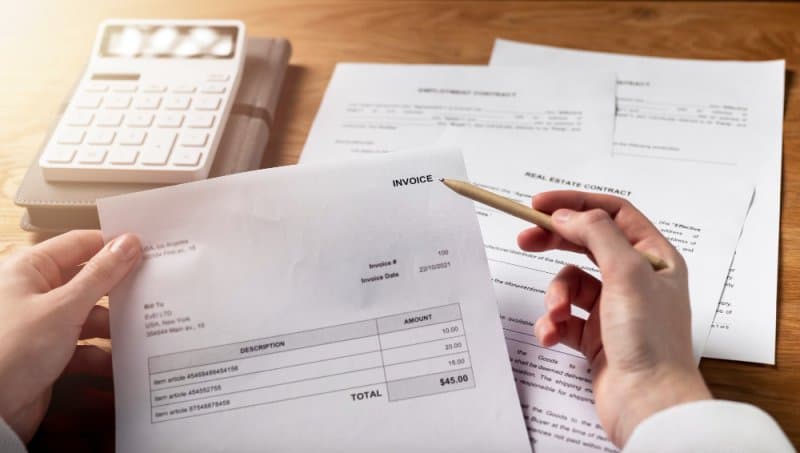

After forming a company abroad, one of the first matters you will encounter is the online invoicing process. As the world has become increasingly digital, companies are now required to send documents to their customers electronically rather than on paper.
So, how do overseas companies issue online invoices? Which systems apply in which countries? What are the differences between Türkiye’s e-Invoice system and systems used abroad?
In this article, we draw on Marca World’s expertise to explain online invoicing processes worldwide, step by step.
What Is an Online Invoice and Why Has It Become Mandatory?
An online invoice (e-invoice) is a digital document issued when a sale takes place. Unlike a paper invoice, it is created, sent, and archived electronically.
So, why has it become mandatory worldwide?
Because it offers significant advantages to both governments and businesses: it reduces paper waste, digitizes financial data, simplifies audits, and increases tax transparency.
Many countries, particularly European Union member states, have made online invoicing mandatory for VAT tracking.
The Legal Basis for Issuing Invoices Abroad
Each country has its own electronic invoicing legislation. Companies operating abroad must therefore comply with the digital accounting rules of the country in which they operate.
For example:
- In the United Kingdom, online invoicing is overseen by HMRC through the “Making Tax Digital” system.
- In Estonia, e-invoicing transactions are carried out through the e-Business portal.
- In Germany, the “ZUGFeRD” standard is mandatory.
- In the U.A.E. (United Arab Emirates), e-invoices are monitored through the Federal Tax Authority system.
So, is Türkiye’s e-Invoice system valid abroad?
No. Türkiye’s e-Invoice system (Revenue Administration – GİB) is valid only within Türkiye. However, integration solutions can make it compatible with invoicing systems used abroad.
Steps for Issuing an Online Invoice
Although each country uses a different platform, the basic process is similar.
- Preparing the Invoice Details: Enter the seller, buyer, product or service details, date, and amount.
- Determining Tax Rates: The applicable VAT rate is calculated automatically according to the country.
- Creating the Invoice in Electronic Format: Prepare it in XML, UBL, or PDF format.
- Submitting It to the Competent Authority: In some countries, the invoice is sent first to the tax authority and then to the customer.
- Archiving: Invoices are stored digitally for the statutory retention period, usually 5–10 years.
So, can these steps be completed manually?
In theory, yes, but it is not recommended in practice. Even the smallest formatting error can cause the system to reject an invoice. Professional software automates this process.
In Which Countries Is Online Invoicing Mandatory?
Online invoicing is now mandatory across much of the world.
The following table outlines the practices in several popular countries for establishing a business:
| Country | System Name | Mandatory Status |
|---|---|---|
| United Kingdom | Making Tax Digital | Mandatory |
| Estonia | e-Faktura | Mandatory |
| Malta | VAT e-Portal | Mandatory |
| Germany | ZUGFeRD / XRechnung | Mandatory |
| U.A.E. | FTA e-Invoicing | Mandatory |
| USA | EDI / state-based system | Partial |
As the table shows, invoicing has moved entirely to online systems in digitalized economies.
Formats Used in Online Invoicing Systems
Each country has established an invoice format based on its own technical infrastructure. The most common formats are:
- UBL (Universal Business Language): Widely used in Europe.
- XML: Preferred in digitally advanced countries such as Estonia and Finland.
- EDI (Electronic Data Interchange): Used in the USA and Canada.
- PDF/A: A format used for archiving purposes.
So, are these formats compatible with one another?
Partially. International companies therefore need software that automatically converts invoices between formats.
Tax Compliance and VAT Management on Invoices
The most critical factor when issuing online invoices abroad is the applicable tax (VAT/KDV) rate.
So, when is VAT not added?
If a sale is made to a customer outside the country, a “zero-rated” VAT rate generally applies. However, if the buyer is located in the same country, the country’s standard VAT rate must be shown on the invoice.
For example:
- The standard VAT rate in the United Kingdom is %20.
- It is %18 in Malta.
- It is %22 in Estonia.
Invoices issued using the wrong rate may be rejected by the system or result in penalties imposed by the tax authority.
The Difference Between Online Invoicing and E-Archiving
Many entrepreneurs ask the following question:
“Are online invoices and e-archives the same thing?”
No. An online invoice (e-invoice) is an electronic document sent to the customer through an official authority. E-archiving refers to storing issued invoices digitally.
In other words, every e-invoice is e-archived, but not every e-archived document is an e-invoice.
This distinction is particularly important during audits.
Advantages of Digital Invoicing
Issuing online invoices is not only a legal requirement but also an operational advantage.
- It saves time and reduces costs.
- It simplifies invoicing in foreign currencies for international sales.
- It prevents data-entry errors.
- It supports compliance through automatic tax calculations.
- It accelerates reporting processes.
Thanks to these advantages, companies engaged in e-commerce and service exports are adopting online invoicing systems much more quickly.
Currency and Language in International Invoices
Choosing the appropriate currency and language is also important when issuing an invoice.
So, in which language should an invoice be prepared if the customer is in another country?
The general rule is as follows:
- In Europe, English or the local language may be used.
- Invoices submitted to government authorities generally need to be prepared in the local language.
The invoice currency is generally the currency specified in the contract (EUR, USD, GBP, etc.). However, the system may require VAT to be calculated in the local currency.
Errors and Penalties in Online Invoicing Systems
Issuing an incorrect or incomplete invoice can result in significant financial penalties in many countries.
So, what are the most common errors?
- Entering an incorrect tax number
- Providing incomplete address information
- Applying the wrong VAT rate
- Issuing the invoice with a late date
- Uploading the invoice to the system late
These errors can lead to both regulatory penalties and payment disputes with customers.
Professional Support for Online Invoicing Systems with Marca World
Properly managing online invoicing processes is critical for overseas companies, both for legal compliance and sound financial administration.
Marca World provides entrepreneurs with the following services in this area:
- Country-specific invoicing system setup
- Tax and VAT rate compliance
- UBL, XML, and EDI format conversion
- Integration software
- Reporting and archive management
- Invoice planning compliant with double taxation rules
This gives entrepreneurs a professional infrastructure for global trade without requiring them to manage the technical details themselves.
Digital Invoicing from Marca World’s Perspective
Online invoicing is no longer optional; it is a fundamental standard of the digital economy.
So, is your company still operating manually, or has it transitioned to a digital system?
If it has not yet made the transition, Marca World’s digital compliance consulting services can help you integrate seamlessly with both local and global invoicing systems.
In modern commerce, speed, accuracy, and compliance can now be achieved simultaneously—provided the system is set up correctly.