Ministry of Trade Support Programs
The Ministry of Trade’s support programs offer businesses powerful incentives for exports, e-commerce, branding, and expansion into global markets.
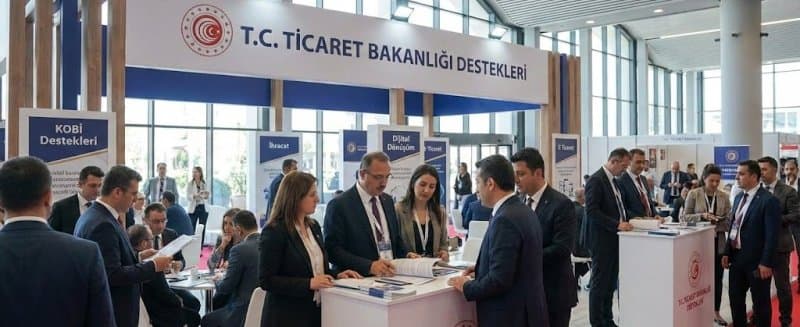

The Ministry of Trade’s support programs provide strategic tools designed to expand export capacity, enhance international competitiveness, and strengthen businesses’ digital transformation. When planned correctly, these programs ease financial burdens, balance market-entry costs, and deliver measurable progress in branding. Many businesses use these incentive mechanisms to manage the challenges of entering foreign markets more effectively and achieve sustainable growth. ## What Export Support Programs Are Available? Export support programs aim to meet the financial and operational needs of businesses during the stages of preparing for, entering, and establishing themselves in foreign markets. In short, a comprehensive support system is available across the various stages of exporting. Businesses can access incentives covering a broad range of activities, from market research and trade fair participation to trademark registration and logistics expenses. Since market intelligence is one of the most important factors affecting export volume, companies with access to reliable data sources can measurably increase their competitiveness. According to OECD data, countries with strong foreign trade performance stand out in terms of the proportion of businesses that regularly use support mechanisms, and these companies scale 30% faster when entering new markets. ### Market Research and Reporting Support Market research support facilitates the analysis of demand trends, competitive intensity, and consumer behavior in target countries. In practice, it allows businesses to obtain professional consulting, sector reports, and data analysis services at a lower cost. Understanding market dynamics early provides a critical advantage, particularly for early-stage companies, and improves the accuracy of their market-entry strategies. ### Overseas Unit and Brand Support Support for overseas units reduces the burden of long-term investment for businesses seeking to open an office, warehouse, showroom, or store. For companies pursuing global branding goals, this incentive is one of the most effective ways to gain visibility among international consumers. Data shows that companies making significant brand investments experience an average 18% increase in export orders. ### Trade Fair Participation Support Trade fair support significantly reduces the cost of attending international events and enables exporters to engage directly with global buyers. Such fairs are platforms where businesses can quickly achieve results in product promotion and networking. Participating companies generally record a marked increase in their rate of building new customer portfolios within six months after a fair. ## How Do E-Export and E-Commerce Support Programs Work? E-commerce support programs are designed to strengthen online sales models and accelerate businesses’ integration into the digital economy. Their operating model centers on supporting digital marketing, software infrastructure, e-export logistics, and entry into global marketplaces. As the e-commerce sector has grown by an average of around 20% in recent years, the momentum these programs provide to digital-first companies has become critical. By increasing their visibility on digital platforms, businesses can reach global consumers with lower operating costs. ### Marketplace Support for E-Export Companies Marketplace support helps cover the software, commission, advertising, and store-opening expenses businesses incur when integrating with Amazon, eBay, Etsy, Allegro, Trendyol Go Global, or other international platforms. Companies that develop a global marketplace strategy can significantly increase sales volume while benefiting from the operational flexibility of delivering products directly to end consumers. ### Digital Marketing and Promotion Support Incentives for digital advertising campaigns, content production, SEO, and social media promotion strengthen a brand’s impact on its target audience. Kantar Media research indicates that brands investing in digital advertising achieve an average 25% higher level of consumer recall. This support generates strong returns for businesses seeking to increase product awareness. ### Software and Infrastructure Support Developing infrastructure such as web software, ERP, CRM, automation tools, and API connections for e-commerce websites and e-export operations can require substantial investment. The available support helps businesses establish digital systems that are both secure and scalable. Companies with robust infrastructure see an average 12–15% increase in customer satisfaction scores. ## Support Provided to the Service Sector Service-sector support covers a wide range of fields, including IT, consulting, education, health tourism, film production, and creative industries. These programs aim to increase the added value of service exports and foster internationally competitive service models. Service exports often offer higher profit margins than product exports and, when scaled with the right strategies, provide businesses with long-term revenue streams. ### IT and Software Export Support Incentives for software companies reduce costs in areas such as product licensing, cloud-based applications, game development, and technology exports. For companies seeking to enter international software markets, these programs provide a strong starting point in highly competitive ecosystems. This area is strategically important because the export revenues of IT companies have increased by an average of 40% over the past five years. ### Health Tourism Support Health tourism has strong global demand, particularly for medical treatment, cosmetic surgery, dental care, and rehabilitation services. Support programs make it possible to cover international promotion, certification, digital advertising, and operating expenses. According to World Tourism Organization data, the health tourism market is growing by more than 15% annually, creating a significant opportunity for service exports. ### Education and Consulting Services Academic institutions exporting education services, consulting companies, and organizations providing specialist services can benefit from support to increase their visibility in international markets. These incentives help enhance both brand awareness and service capacity. Institutions offering comprehensive education models can reach a broader student population by facilitating accreditation processes in target countries. ## UR-GE Projects and Clustering Models UR-GE (Support Program for the Development of International Competitiveness) offers a clustering-based model addressing companies’ shared needs. Compared with businesses acting independently, this model provides greater efficiency and cost advantages. Companies participating in UR-GE projects collectively strengthen their competitiveness by benefiting from training, consulting, overseas marketing, and buyer delegation programs. Data shows that businesses participating in clustering projects experience an average 35% increase in export volume within three years. This collective growth model allows SMEs, in particular, to enter major markets with greater confidence. ### The Impact of Training and Consulting Activities Training provided under UR-GE focuses on practical areas such as market strategies, digitalization, quality management, supply chain optimization, and sales techniques. These processes directly increase companies’ organizational capacity. The consulting stages following the training establish a strong connection between theoretical knowledge and practical implementation. ### Overseas Marketing and Buyer Delegations Overseas marketing activities enable companies to meet potential buyers directly in target countries. Buyer delegations make it possible to invite foreign buyers to Türkiye for direct business meetings. This approach strengthens two-way trade relations and creates opportunities for sector-specific cooperation in particular. ## How Is the Government Support Application Process Managed? Managing support applications requires a specific methodology. Put simply, the process depends on accurate documentation, effective time management, and selecting the right program. Businesses with strong planning capabilities can both accelerate the approval process and maximize benefits by correctly categorizing their costs. Businesses commonly follow these steps in support application processes: - Conducting a needs analysis - Identifying the appropriate type of support - Preparing application documents - Submitting the request through the digital system - Collecting expenditure documents - Managing reimbursement request procedures Properly managed applications provide significant financial flexibility, particularly during periods of intense competition. ### Preparing the Documents Complete documentation plays a decisive role in the speed of the process. When technical documents, invoice details, activity reports, and contractual content are presented clearly, businesses avoid delays at every stage. Sound documentation practices also facilitate cost control in large-scale projects. ### Expenditure Management Expenditure management is critical for companies seeking to obtain the maximum benefit from support programs. Expenses must be eligible under the program, categorized correctly, and incurred on dates consistent with the support schedule. Because support programs generally offer reimbursement at specified rates, sound financial planning strengthens a business’s cash flow. ### Using Digital Application Systems The Ministry of Trade’s digital platforms are continuously improved to streamline application processes. These systems provide businesses with an uninterrupted workflow for uploading, tracking, and updating documents in an orderly manner. Applications submitted through digital platforms are processed an average of 40% faster than manual applications. ## How Is Strategic Planning Carried Out for Support Programs? Strategic planning is essential if incentive programs are to generate genuine added value. An effective strategy establishes a clear match between the business’s medium- and long-term objectives and the available types of support. Unplanned support may offer a short-term advantage, but companies without a sustainable growth objective cannot maintain that advantage for long. ### Selecting Target Countries and Markets Target-country selection takes into account numerous variables, including economic growth rates, import trends, consumer behavior, cultural compatibility, and logistics costs. World Bank data shows that SMEs selecting the right markets increase export profitability by an average of 28% within three years. Support programs should therefore be considered together with market analysis processes. ### Resource Management and Operational Planning A business’s workforce, supply chain capacity, and production volume must be prepared for any increase in demand resulting from support programs. Companies with strong operational planning become more resilient to market fluctuations. Efficient resource utilization enhances the true effectiveness of incentives. ### Performance Measurement Specific performance indicators are monitored to measure the impact of support: - New customer acquisition rate - Order volume - Digital visibility metrics - Brand awareness scores - Operating cost savings These metrics allow a company to identify which forms of support provide the greatest benefit and shape its strategy accordingly. ## Summary of the Benefits Offered by Ministry of Trade Support Programs The Ministry of Trade’s support programs provide businesses with multidimensional advantages in exports, e-commerce, service exports, branding, digitalization, UR-GE projects, and international marketing. These advantages represent not only short-term cost reductions but also long-term improvements in competitiveness. With the right strategy and professional implementation, support programs act as a powerful lever that helps businesses establish a lasting market presence. Businesses should therefore view these mechanisms not merely as financial incentives, but as strategic tools that strengthen their position in the global market.