Medical Device Exports
Pathways to sustainable growth in medical device exports through market analytics, compliance processes, distribution networks, and technical criteria that create a competitive advantage.
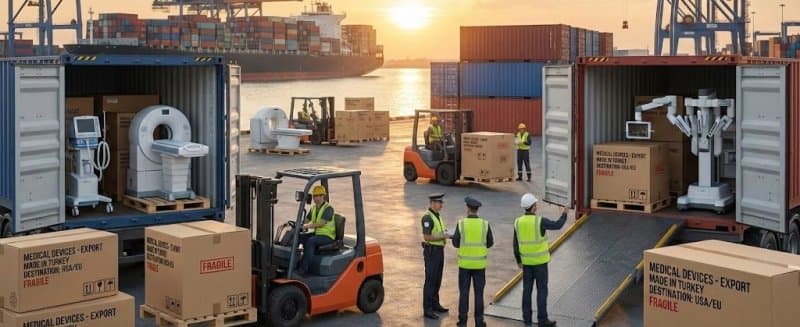

Medical device exports offer businesses significant opportunities to scale within the international healthcare ecosystem, which is shaped by stringent regulations and technological innovation. With little tolerance for error, this sector requires comprehensive preparation in terms of both clinical accuracy and market compliance. The quality of the manufacturing infrastructure, completion of certification processes, optimization of logistics management, and technical and linguistic adaptation for target markets are among the key elements of building a competitive advantage.
What Are the Key Dynamics of Medical Device Exports?
The key dynamics of medical device exports consist of multilayered processes such as regulatory compliance, product classification, market segmentation, and technical documentation. These dynamics both reduce risks and ensure sustainable access to international markets. As the procurement criteria of healthcare institutions worldwide become increasingly detailed, a well-positioned export strategy directly affects a business’s long-term performance.
Industry data in World Health Organization reports indicate that average annual growth of more than %5 is continuing. This increase is associated with aging populations, the growing prevalence of chronic diseases, and advances in healthcare technologies. Manufacturers’ ability to meet this surge in demand depends not only on engineering precision but also on their command of the administrative requirements of exporting.
The Role of Regulatory Compliance in the Industry
Regulatory compliance is an integral part of medical device exports. Different regulatory systems, such as the European Union’s MDR, the US FDA 510(k) process, and the UK’s UKCA framework, require different sets of documents depending on the device class. Each system is built around evidence of clinical performance, manufacturing quality management standards—particularly ISO 13485—risk management files, and user safety testing.
The Strategic Impact of Device Classification
Product classification is one of the most critical technical parameters determining market access costs and approval timelines. As clinical data requirements are more extensive for high-risk devices, the certification schedule is longer. When developing a strategic road map, the best results are achieved by considering the device class together with the regulatory intensity of the target country and anticipated market demand.
How Is the Right Market Selected for Medical Device Exports?
The right market for medical device exports is determined by criteria such as the product’s technical capabilities, device class, local healthcare investment, supply chain maturity, and regulatory complexity. Selecting the most appropriate market both enables rapid entry and supports long-term distribution relationships.
When selecting a target country, it is necessary to clearly analyze population demographics, purchasing power, hospital infrastructure, the size of the private healthcare sector, and the technical criteria used in public tenders. OECD data show that demand for advanced-technology devices increases significantly in regions with high per-capita healthcare expenditure.
Data Points Used in Market Research
- Healthcare institutions’ annual purchasing volumes
- Import–export statistics by device type
- Product portfolios of local manufacturers
- The difficulty level of certification requirements
- Clinical usage patterns and infrastructure adequacy
These analyses enable accurate positioning, particularly in highly competitive segments.
Market Segmentation and Targeting
No country offers a single homogeneous market. Surgical devices, diagnostic equipment, rehabilitation products, and home-use medical devices are subject to different procurement criteria across institutions. A segment-based approach clarifies which user group is most likely to adopt a device quickly.
How Are Certification Processes Managed in Medical Device Exports?
Certification processes are among the most critical stages in managing risks and securing market access for medical device exports. These processes cover a broad framework, from product design and clinical performance reports to manufacturing quality management and labeling compliance.
ISO 13485 and Manufacturing Quality Management
ISO 13485 is the globally accepted quality system standard for medical device manufacturing. Proper implementation of this standard provides systematic proof of product safety. Complete audit reports strengthen importers’ confidence in the manufacturer.
Technical File Content
Many countries require manufacturers to provide a complete technical file. This file generally includes the following:
- Device description and technical specifications
- Risk analyses and risk mitigation plans
- Clinical evidence and performance evaluations
- User manuals and labeling compliance
- Test reports and verification and prototyping outputs
Maintaining a well-organized technical file ensures a high level of transparency for both regulatory authorities and commercial stakeholders.
THE BALANCE OF CLINICAL EVALUATION
For high-risk devices, clinical evaluation reports serve as strong references that accelerate market acceptance. For example, evidence of clinical performance for orthopedic implants or invasive sensors is among the principal areas reviewed by importing institutions. Regularly updating such data provides a significant advantage in extending the product life cycle.
How Is a Distribution Network Established for Medical Device Exports?
The distribution network directly determines market visibility and sales volume in medical device exports. Because trust is essential in the healthcare sector, distributor selection should be assessed not only against commercial criteria but also in terms of technical and operational competence.
An ideal distributor needs a well-established infrastructure that includes a strong field team, technical service capabilities, clinical training capacity, and inventory management. These attributes safeguard not only product sales but also post-use monitoring.
Evaluation Criteria Used in Distributor Selection
- Level of recognition in clinical segments
- Access to hospital and public tender networks
- Technical service and spare-parts infrastructure
- Knowledge of local regulations
- Strength in digital marketing and after-sales support
The distributor must have a strong ability to understand technical manuals; particularly for diagnostic devices, the ability to communicate calibration procedures correctly is critical.
Supply Chain Optimization
Because most medical devices contain sensitive components, logistics management plays a decisive role in preserving product safety. For devices sensitive to humidity and temperature, standardized packaging protocols offer advantages in terms of both cost and quality.
The Importance of Localized Technical Documentation in Medical Device Exports
Localized technical documentation reduces user errors and supports regulatory compliance. Many countries require devices to include user manuals in their local language. These manuals must be optimized not only linguistically but also for technical compatibility and cultural context.
Essential Elements of User Manuals
- Clear risk warnings
- Installation and commissioning steps
- Maintenance intervals
- Emergency procedures
- Compliance of safety pictograms with local standards
High-quality localization makes it easier to use the device correctly in clinical settings.
Labeling Compliance Processes
UDI codes, lot numbers, manufacturing dates, and safety symbols on labels must correspond exactly to the standards of the importing countries. Labeling noncompliance can cause imports to be suspended in many countries.
How Are Pricing and Positioning Strategies Developed for Medical Device Exports?
Pricing requires an analytical framework that balances technical capabilities with market expectations. Because medical devices are often purchased for long-term use, buyers focus on total cost of ownership. Pricing must therefore account not only for the cost of the device but also for factors such as warranty terms, calibration costs, and user training.
A Value-Based Pricing Approach
Value-based pricing supports the device’s clinical benefits with tangible data. For example, if a monitoring device reduces the margin of error by %15, this represents operational efficiency for hospital management. Placing such measurable benefits at the center of the pricing strategy creates strong market acceptance.
Technical Parameters Considered in Competitor Analysis
The table below shows some of the parameters that may be assessed in competitor analysis:
| Parameter | Purpose of Evaluation |
|---|---|
| Sensor accuracy | Clinical performance comparison |
| Energy consumption | Operational efficiency analysis |
| Calibration interval | Determination of maintenance costs |
| Service life | Long-term value analysis |
| Portability | Clinical flexibility assessment |
Such technical parameters make the pricing strategy more rational and defensible.
The Role of Digitalization in Medical Device Exports
Digitalization is having an increasing impact on both operational efficiency and marketing capabilities in export processes. Particularly for IoT-enabled devices, remote access and performance monitoring optimize distributors’ after-sales services.
Digital Supply Chain Applications
Cloud-based inventory management reduces errors and shortens device lead times. Digital tracking at every stage, from manufacturing to shipment, is critically important for the traceability of devices in high-risk categories.
Benefits of Sharing Clinical Data
Anonymized performance data are a powerful tool for demonstrating the benefits a device provides in clinical settings. These data increase the likelihood that importing institutions will select the device during their evaluation processes.
How Is Risk Management Ensured in Medical Device Exports?
Risk management requires a systematic approach to product performance, logistics conditions, regulatory changes, and supply chain disruptions. Effective risk management is achieved through consistent technical file updates, manufacturing audits, and feedback mechanisms.
Product Traceability and Recall Protocols
UDI systems allow a product’s entire life cycle to be tracked. Clearly structured recall protocols are critically important for international reputation, particularly for class II and III devices.
Effects of Regulatory Changes
As every country periodically updates its regulations, technical files and labeling must be reviewed regularly. Businesses that monitor these updates can maintain an uninterrupted market presence.
Branding Strategies in the Global Medical Device Market
In medical device exports, branding is a fundamental source not only of visibility but also of confidence in technical reliability. Strong brands gain faster acceptance from clinical authorities and are regarded by distributors as low-risk business partners.
The Impact of Clinical Training Programs
User training improves both device performance and safety. Feedback from trained professionals becomes an indicator of brand reliability.
Digital Content and Technical Manual Libraries
Digital technical documents accessible to international users enhance the brand’s professional standing. In particular, instructional videos with 3D animation deliver high efficiency in training processes.
The Role of Sustainability and Environmental Compliance in Medical Device Exports
Sustainability has become an important criterion for export performance in recent years. Many countries require environmental compliance documents to be included in the technical file. The use of recyclable materials or energy-efficient device designs can provide an advantage in public- and private-sector tenders.
Energy Efficiency and Environmental Performance
Devices that reduce energy consumption by %10–20 offer an advantage in long-term procurement plans by lowering operating costs. Such data provide verifiable indicators that strengthen the device’s competitive value.
Waste Management and Recycling
Because some medical device components may fall within the hazardous waste category, manufacturers must provide clear procedures for their handling. This approach is particularly important to hospital management teams’ environmental compliance policies.
The Impact of Emerging Technologies on Medical Device Exports
Although new technologies shorten product life cycles in medical device exports, they create opportunities for businesses with strong innovation capabilities. AI-assisted diagnostic systems, robotic surgical components, and personalized treatment devices are shaping the direction of the market.
AI-Assisted Diagnostic Systems
AI-based analysis accelerates the clinical acceptance of devices by improving diagnostic accuracy. Data security and algorithm transparency are prominent criteria for devices in this segment.
Advances in Sensor Technologies
The margin of error in next-generation sensors has fallen to as low as %2. This development is one of the technical advantages determining international competition in monitoring and imaging devices.
How Do Manufacturing Capacity and Technological Maturity Affect Exports?
Manufacturing capacity is one of the fundamental factors determining the sustainability of medical device exports. Maintaining delivery times during periods of high demand provides a critical advantage in earning distributor confidence.
Automation and Process Control Systems
Automation infrastructure minimizes variations caused by manufacturing errors, ensuring consistent device quality standards. Process control systems contribute directly to exports for devices in both low- and high-risk classes.
Supplier Management
Reliable component suppliers support consistent device quality. Traceability of every component in the supply chain is an important requirement in highly regulated markets.