International Shipping Procedures: A Comprehensive Guide to Professional Shipping Processes
A comprehensive guide to international shipping procedures, costs, process management, and professional logistics steps.
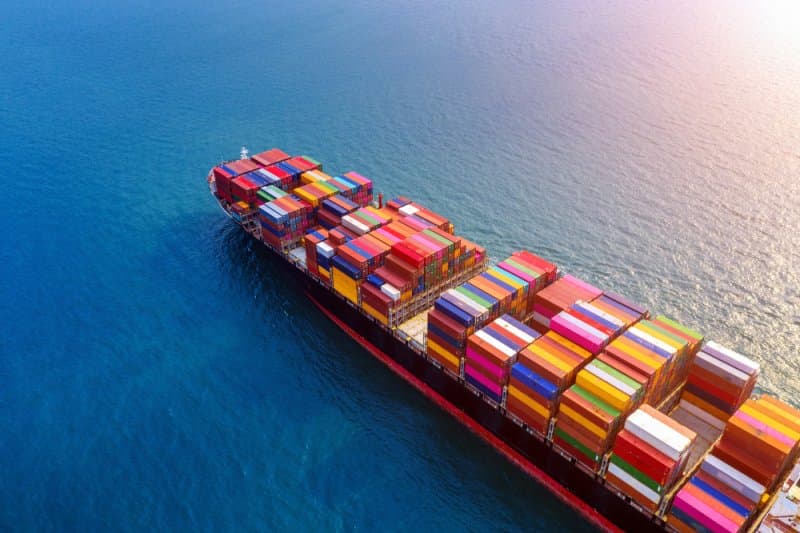

The international shipping process is a critical logistics step for both individuals and e-commerce businesses. As global trade accelerates and millions of packages cross national borders every day, using the right shipping methods offers significant advantages in terms of both time and cost. Customs procedures, shipping methods, delivery times, insurance options, and packaging standards may seem complicated, especially to first-time international shippers. Understanding the process, working with the right companies, and planning properly therefore reduce costs over the long term and help shipments arrive without complications.
This guide examines every key aspect of international shipping. It covers which carriers offer the greatest advantages in different situations, along with packaging techniques, customs rules, and the specific requirements of e-commerce shipments. It also explains price optimization for businesses, documentation requirements for personal shipments, and express shipping procedures for time-sensitive deliveries. Whether you are sending a product to a customer or a gift to someone living abroad, you will be able to manage every step with confidence.
How the International Shipping Process Works
International shipping is completed smoothly when several fundamental stages work together. The product category, package size, shipping method, destination country's customs policies, and expected delivery speed are all decisive factors. This is why people often ask, “Is it difficult to ship internationally?” In fact, the process is fairly standardized when you have the right information; difficulties arise when the requirements are not understood.
The main objective in international shipping is to dispatch the package with a data set that can be read in every country, including a label, barcode, and contents declaration. The shipment must therefore be declared and packaged correctly and sent using the appropriate shipping method. International shipping is a documentation-driven process, and even a minor declaration error may cause a shipment to be held at customs or returned.
The Most Common International Shipping Question: Delivery Time
The first question most shippers ask is, “How many days does international shipping take?” Delivery time varies depending on:
- The selected carrier,
- The shipping method (express or economy),
- The destination country,
- Factors such as customs congestion.
Express shipments are generally delivered within 1–5 days, while economy shipments may take 7–21 days. Choosing the shipping method that best suits your needs therefore has a direct impact on delivery speed.
How International Shipping Companies Operate
Selecting the right carrier is one of the most important decisions when shipping internationally. Each company offers distinct advantages in terms of speed, price, coverage, and service options. Businesses with high shipping volumes can significantly reduce their costs by negotiating special agreements with carriers.
Global express carriers such as DHL, UPS, FedEx, and TNT are industry leaders in fast delivery. However, this raises the question, “Which matters more: speed or price?” Express shipping is the logical choice when a shipment must arrive within a critical timeframe. If fast delivery is not essential, economy options such as PTT offer cost advantages.
Which Carrier Should You Choose in Different Situations?
There is no single “best carrier” for every shipment. The choice should reflect the nature of the shipment:
- Small, valuable packages: Express carriers are safer and faster.
- Large-volume shipments: Economy carriers offer cost advantages.
- E-commerce shipments: Carriers that provide tracking and responsive support are more suitable.
- Document shipments: The fastest options should be selected.
Another point to consider is the destination country's transport restrictions. Some countries may impose different rules on the importation of products such as liquids, electronics, or cosmetics.
Rules to Know Before Shipping Internationally
International shipping is governed entirely by documentation and law. The answer to the question, “Will the shipment encounter problems at customs?” therefore depends on the accuracy of its declaration. Every package is processed with a contents declaration, value declaration, and sender and recipient details.
Why Is the Customs Declaration So Important?
The shipment's contents must be declared accurately and transparently. An incorrect or incomplete declaration, or the deliberate understatement of value, violates international shipping regulations. Customs officers have the right to open the package, and if they identify a discrepancy with the contents declaration:
- Additional taxes may be charged,
- A penalty may be imposed,
- The package may be returned,
- Entry into the country may be denied.
It is therefore especially important to issue an accurate invoice for commercial shipments.
Prohibited Items in Shipments
Every country has its own list of prohibited items, but the following categories are generally prohibited or subject to restrictions in most countries:
- Explosive and flammable materials
- Chemicals
- Medicinal products
- Weapons and ammunition
- Certain types of precious metals
- Perishable foods
Another frequently asked question is, “Can cosmetics be shipped internationally?” Yes, they can, but products such as liquids, aerosols, and perfumes are subject to special aviation-security rules. The product category must therefore be disclosed to the carrier before shipping.
How to Package Items Correctly for International Shipping
Packaging is one of the most critical stages of international transportation. Many instances of damage result from improper packaging rather than mistakes by handling personnel. The question “How should I package my shipment?” is therefore vital for every sender.
Durable and Appropriate Packaging Techniques
International shipments may pass through at least 6–8 different transfer points. Packaging should therefore meet the following criteria:
- Use a double-wall cardboard box
- Protect the contents with cushioning materials
- Label fragile items
- Seal the exterior securely with strong tape
It is also important to measure the package's weight and dimensions accurately. Shipping charges are generally calculated using both volumetric and actual weight, so incorrect measurements may result in higher costs.
How Should Fragile Items Be Shipped?
People shipping glass, ceramics, or delicate products often ask, “How can I reduce the risk of breakage?” The necessary precautions are:
- Do not place the item in the box without protection
- Use internal cushioning material
- Surround the item with at least 5 cm of padding
- Secure it so that it cannot move inside the box
Fragile items should always be shipped with insurance because carriers apply limited-liability policies to international transportation.
Understanding International Shipping Charges
Shipping charges are often the subject shippers are most curious about. The question “How much will I pay for a certain weight?” has no standard answer in logistics. Pricing is based on the shipment's:
- Weight,
- Dimensions (volumetric weight),
- Shipping method,
- Destination country,
- Additional services (insurance, customs, special delivery)
and a combination of many other factors.
What Is Volumetric Weight?
In international transportation, volumetric weight is calculated by dividing the package dimensions by a specified divisor. If the volumetric weight is higher than the actual weight, the carrier uses the volumetric figure. Large but lightweight boxes may therefore cost more than expected.
The best approach is to determine the box dimensions and obtain a preliminary quotation before preparing the shipment.
International Shipping Processes for E-Commerce Sellers
For e-commerce businesses, international shipping is not merely a logistics issue; it is also a commercial strategy. As the number of companies selling in international markets continues to grow, businesses that fail to choose the right shipping model may lose their competitive edge.
The most common questions asked by sellers operating internationally include:
“Does delivery time affect the customer?”
Yes, it directly influences the customer's purchasing decision.
“Which shipping model is more suitable?”
This depends on order volume and product type.
“Who pays the customs duties?”
Although this varies by destination country, the recipient pays under most models.
Tracked shipping should always be used for international e-commerce orders to prevent packages from being lost. Untracked shipments are not accepted in many countries or may be lost during customs processing.
How Do Return Processes Work?
International returns are generally complicated and expensive. Sellers should therefore provide complete and accurate product descriptions to minimize returns. Because return shipping charges are high, senders are often unable to recover returned products.
Preparing the Required International Shipping Documents Correctly
Document management is one of the most critical stages of international shipping. Many senders assume that most of the work is complete once the package has been prepared, but international transactions are primarily documentation-driven. This is why “Which documents are required for international shipping?” is among the most common questions asked by beginners. Although individual countries may require different documents depending on the nature of the shipment, three basic requirements apply to every international shipment: a contents declaration (CN22/CN23), an invoice (commercial or pro forma), and complete sender and recipient details.
For commercial shipments, the product description on the invoice must be detailed. General terms such as “electronic component” or “accessory” may be considered insufficient by customs officers and cause the package to be held. Clear descriptions such as “12W charging adapter” or “men's cotton T-shirt, size M” should be used instead. The product's country of origin, quantity, unit price, and total value must also be stated clearly. International regulations require transparent and truthful declarations. When no commercial invoice is available, a pro forma invoice may be used; this document is preferred for samples or gifts that are not being sent as a sale.
Is an Invoice Required for Gift Shipments?
Another common question is, “I am sending a gift; do I still need to provide an invoice?” Yes. Even for gifts, customs officers must know the value of the package contents. At a minimum, a low-value pro forma invoice must therefore be prepared. This document does not indicate a sale; it simply provides information for customs purposes. Otherwise, the package may be held at customs because its value declaration is incomplete.
Sample Shipments and Product Samples
Businesses frequently need to send samples to customers abroad. An invoice is still required for sample shipments. The word “sample” should be added, a low value should be declared, and the shipment should be identified as non-commercial. Some countries may charge taxes even on sample shipments, so it is important to check the destination country's rules in advance. Express carriers generally manage these specialized shipments more quickly.
A Detailed Examination of Customs Procedures
Customs is at the heart of international shipping. No matter how carefully a package is prepared, even a minor omission at customs can significantly extend the delivery time. Understanding customs procedures more thoroughly helps senders prevent many problems before they arise.
Every country has different customs policies, but the basic principle is the same: the product is classified, its value and declaration are verified, any applicable duties are calculated, and the package is cleared for entry. An incorrect category declaration is a common problem. For example, declaring an electronic product as a textile item or describing cosmetics with a general term such as “gift” creates suspicion and requires additional inspection. The shipment category must therefore always be stated accurately.
Who Is Responsible for Customs Duties?
One of the most common concerns for senders is who will pay the customs duties. As a general rule, duties on international shipments are the recipient's responsibility. When the package enters the country, the recipient is notified of the duties and receives the package after making payment. Under some shipping models, however, the sender can prepay the duties. This model is known as DDP (Delivered Duty Paid). Some e-commerce sellers use it to improve the customer experience, but it involves higher costs.
Packages Held at Customs
One of the most stressful situations for senders prompts the question, “My package is stuck at customs—what happens now?” The main reasons for a customs hold are:
- An incorrect or incomplete declaration
- Prohibited contents
- An understated value declaration
- The recipient's failure to pay duties
- The country's special security procedures
In this situation, the carrier or customs broker contacts the recipient. If the missing documentation is provided and the duties are paid, the package continues to delivery. If the recipient does not pay the duties, the package is generally returned or destroyed. Return shipping charges are usually billed to the sender.
Express Shipping Models for Time-Sensitive Deliveries
Some shipments are time-critical. Express solutions are used for urgent documents sent to a family member living abroad, paperwork that must arrive in time for an international tender, or commercial samples that require prompt delivery. Express shipping generally provides delivery within 1–5 days.
The advantages of express shipping models include:
- Faster transportation
- Fewer transfers
- More frequent flights
- A more reliable tracking system
- More comprehensive insurance for damage and loss
- Special expedited customs procedures
The disadvantage, however, is the cost. Senders should therefore clearly answer the question, “How important is speed to me?” Economy options may be adequate for personal shipments, while express shipping is often necessary for corporate shipments.
Differences Between Express and Economy Shipping
Economy shipping is less expensive, but delivery takes longer and tracking is limited. Express shipping is faster but more costly. In some countries, customs processing for economy shipments may take longer because priority is given to express shipments. Express shipping is therefore more advantageous for customer satisfaction, particularly for commercial shipments.
Using International Shipment Tracking Systems Correctly
Once a package has been dispatched, many senders want a quick answer to the question, “Where is my package?” International tracking systems are highly advanced and provide shipment updates using a barcode number. However, tracking events are not always updated in real time.
For example, when a package enters a transfer center, the event may appear in the system after a delay. This may cause unnecessary concern. The important point is to interpret the package's latest tracking events correctly. “Customs clearance” means that it has entered the customs process, “In transit” means that it is moving between countries and transfer centers, and “Out for delivery” means that it is on its way to the recipient.
Customs authorities in some countries are extremely busy. In countries such as the USA, Canada, Australia, and England, it is normal for packages to remain at customs for several days. This delay does not necessarily indicate a problem with the package; it may simply reflect the country's processing volume.
Measures to Reduce the Risk of Loss
Although the risk of loss cannot be eliminated entirely in international transportation, it can be minimized by taking the right precautions. One of the biggest mistakes senders make is failing to attach the shipping label properly or handwriting information on the package. International shipments require a machine-readable barcode label.
To prevent loss, you should:
- Attach the label to a flat, clean surface on the box
- Protect the label from moisture and abrasion
- Place a backup copy of the shipping information inside the box
- Choose tracked shipping
- Insure valuable items
Many people also wonder, “What happens if my package is lost?” Carriers pay compensation up to a specified liability amount based on the shipment's value. This coverage is broader when insurance has been purchased. For uninsured shipments, however, carriers generally pay only a limited amount.
The Importance of International Shipping Insurance
Insurance is almost essential when shipping valuable items internationally. It protects the sender against loss, damage, or delay. Some senders avoid the cost of insurance and are then unable to obtain compensation when a problem occurs. Insurance is therefore particularly important for electronics, medical equipment, valuable personal belongings, and high-value commercial goods.
The insurance amount is calculated based on the shipment's declared value. The actual value must be stated; otherwise, the compensation process may be adversely affected. Insurance remains valid throughout the entire period from dispatch until delivery.
How Shipping Policies Vary by Country
Every country has its own import rules, taxation system, and security screening procedures. Senders therefore frequently ask questions such as, “Which countries are stricter?” In general, the USA, Canada, Australia, and England conduct rigorous inspections. Countries in the Middle East and South America may request additional documentation because of their security procedures.
Some countries also prohibit food products entirely, while others may require special testing for cosmetic products or electronics. Every shipment should therefore be checked against the destination country's specific requirements during preparation.
Logistics Strategies for Corporate Shipments
For businesses, managing international shipments involves more than selecting a carrier; it is also part of their logistics strategy. Companies that ship regularly can reduce their costs by %30–60 through volume agreements. Managing shipping processes through automation, integrating them with e-commerce platforms, and planning barcode systems professionally also offer major advantages.
Brands that structure their shipping processes correctly can provide faster delivery and improve customer satisfaction. Quality control, packaging standards, and the automated preparation of customs documents make a significant difference for regular shipments.
Recommendations for Managing the Process Professionally
Effective international shipping depends on the sender's planning and choices. To prevent packages from being delayed, damaged, or held at customs, senders should follow several basic principles, including:
- Declaring the product under the correct category
- Measuring the package dimensions accurately
- Selecting the right shipping method
- Checking the destination country's regulations in advance
- Attaching the label correctly
- Saving the tracking number
- Purchasing insurance when necessary
These steps improve not only delivery times but also reliability. The process becomes much more straightforward over time, especially for frequent shippers.