International KOSGEB Support Programs
A comprehensive guide and practical strategies for accelerating exports, trade fair participation, and global market expansion through international KOSGEB support programs.
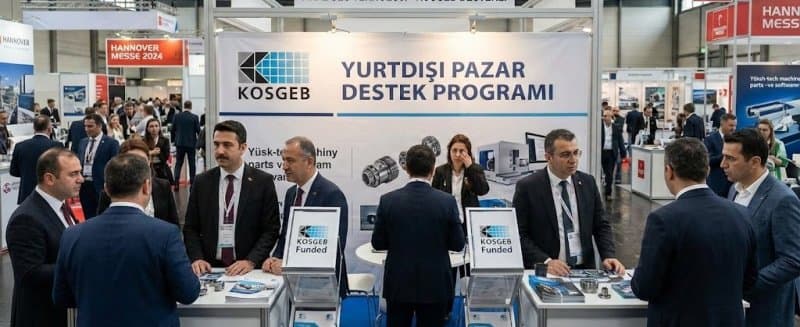

For businesses seeking to become more competitive in the global market, international KOSGEB support programs serve as a powerful tool for expanding company capacity, regardless of scale. The primary objective of this support framework is to systematically strengthen access to target markets for SMEs with export potential and help them build sustainable commercial networks. Its broad scope, extending from export preparation to participation in international trade fairs, enables businesses to adapt to the dynamics of global competition.
What Do International KOSGEB Support Programs Cover?
The scope includes programs that provide businesses with financial and operational assistance throughout their international expansion. Key areas include incentives for trade fair participation, international market support, brand awareness development, and integration into global business networks. This framework reduces the cost of entering international markets while helping businesses conduct sound market analyses.
Key Components of the Support Programs
The programs are structured modularly to cover different areas of business development. Each module helps applicants identify their areas of potential strength and plan the right investment steps.
Market Research and Preliminary Analysis
The first step in an international market-entry strategy is to understand the dynamics of the target country in detail. At this stage, businesses analyze variables such as industry growth rates, consumer behavior trends, and competitive positioning to develop a more predictable strategy. According to OECD data, 62% of businesses that sustainably increase their exports treat market research as a systematic process.
Participation in Trade Fairs and Trade Delegations
Trade fairs are critical touchpoints where businesses can both showcase their products and establish direct contact with international distributors. Support programs strengthen business visibility by covering items such as participation, stand design, logistics, and promotional materials. Practical experience has shown that the average number of commercial contacts increases by more than 40% after trade fair participation.
Who Can Benefit from International KOSGEB Support Programs?
Eligibility criteria cover businesses that qualify as SMEs and whose fields of activity are defined in accordance with applicable legislation. The primary requirement is for the business to demonstrate its export potential, production capabilities, and financial sustainability. Once the necessary conditions are met, the application process becomes highly accessible.
SME Qualification Requirements
The SME definition refers to the framework determined by the number of employees and annual net sales. Businesses that fall within this definition become eligible to access support programs. Although production capacity varies across industries, meeting the SME criteria opens the door to numerous investments aimed at global markets.
Industry Eligibility
Industry eligibility requires the business's activities to have the capacity to compete internationally. Businesses operating in fields such as technology, machinery, food, fashion, furniture, and software can often readily meet the requirements of the support programs. These industries have a structure capable of achieving real shares of between 3% and 7% in global trade-volume growth.
Distinction Between Micro, Small, and Medium-Sized Enterprises
Microenterprises generally focus on market-entry support, while small and medium-sized enterprises apply more frequently for trade fair, delegation, and brand-positioning programs. This differentiation allows support packages to be used in a more targeted manner.
How Can Businesses Obtain International Trade Fair Support?
To obtain support for international trade fairs, applicants must gather the correct documents and begin the process according to the relevant schedule. When the application steps are followed consistently, the likelihood of approval increases significantly.
Steps Required for the Application
The main application steps are organized within a systematic framework. Completing each step in full helps accelerate the process.
- Identify an appropriate international trade fair for the industry in which the business operates.
- Obtain confirmation of participation from the trade fair organizer or an accredited institution.
- Complete the application form through the KOSGEB online system.
- Upload all required documents in full.
- Submit the payment plan and activity reports on time following approval.
Preparing the Documents
Ensuring that documents are verifiable and up to date is the most critical part of the process. Standard documents include a certificate of activity, SME declaration, trade fair participation agreement, and records detailing expenditure items. Businesses that manage the preparation process correctly receive approval in an average of 25% less time.
Points to Consider During Preparation
Preparing documents in a consistent format, reviewing them before uploading them to the application portal, and presenting each item with clear explanations help the assessment process proceed smoothly.
What Does the International Market Support Program Provide?
This program offers strategic solutions that enable businesses to achieve sustainable growth in global markets. Under the program, businesses gain cost advantages in areas such as promotion, brand positioning, digitalization, consulting, and market-entry strategies. This framework provides a tangible increase in the business's international competitiveness.
Key Benefits Provided
The program creates measurable benefits that help businesses establish a sound growth model in foreign markets. The table below summarizes the practical value of these benefits:
| Area of Benefit | Description |
|---|---|
| Promotional Support | Positioning products and services appropriately for the target market |
| Consulting | Expertise in strategic analysis, brand development, and market segmentation |
| Digital Marketing | International SEO, content localization, and advertising activities |
| Market-Entry Strategies | Target-country legislation, competitive analysis, and operational planning |
The Impact of Digital Transformation
The digitalization rate of global trade has reached 58%. This rate makes it essential for businesses to establish a presence not only in physical markets but also in digital ecosystems. The digitalization solutions provided under the support programs create a strong competitive advantage, particularly for export-oriented software and technology companies.
How Can International Promotion and Brand Support Be Used?
Brand building is one of the most powerful factors in securing a lasting position in international markets. Support can be used for a wide range of expenses, including advertising, website localization, corporate identity development, and digital campaigns.
Creating an Effective Brand Strategy
An effective brand strategy requires positioning that reflects the cultural dynamics of the target market and aligns with consumer expectations. Practical experience shows that businesses that build a strong brand identity can increase export sales by up to 30% within the first 12 months.
Localization Approach
Localization is more than language translation; it is a holistic experience-design process centered on consumer behavior. Extending from website structure to product packaging, this process directly affects brand credibility.
The Role of Consulting in International KOSGEB Support Programs
Consulting services are a critical building block that enables businesses to enter global markets with the right strategy. Expert consultants provide guidance in areas such as market analysis, regulatory review, competitive positioning, and financial projections.
Types of Consulting
The consulting categories available through the support programs vary and are tailored to the business's objectives.
Strategic Growth Consulting
This type of consulting covers critical areas such as international growth planning, product-positioning strategy, and market diversification. In practice, businesses that create a strategic plan are known to become exporters 35% faster.
Digital Marketing Consulting
Digital marketing consultants provide guidance in areas such as SEO, international advertising targeting, and conversion optimization. This type of consulting increases visibility and reduces customer acquisition costs, particularly in highly competitive industries.
Why Is Strategic Preparation Necessary for International KOSGEB Support?
Strategic preparation is the essential step for maximizing the benefits of support programs. The preparation process includes assessing the business's current capacity, analyzing the target market, and aligning internal operations. Businesses that prepare effectively increase the efficiency of their support utilization by an average of 45%.
Key Stages of the Preparation Process
The preparation process consists of building blocks that evaluate the business's growth capacity using concrete data.
Internal Analysis
Internal analysis assesses the business's production capacity, cost structure, workforce capabilities, and logistics infrastructure. This data set forms the basis of the international market strategy.
Competitive and Trend Analysis
Competitor positioning, pricing policies, customer segments, and industry trends in the target market are examined in detail. According to World Trade Organization data, businesses in technology-based industries that conduct trend analysis achieve market-entry success rates of over 60%.