International Incubation Centers
International incubation centers are strategic organizations that accelerate early-stage ventures’ expansion into international markets by providing mentorship, R&D infrastructure, investor relations, and access to global business networks.
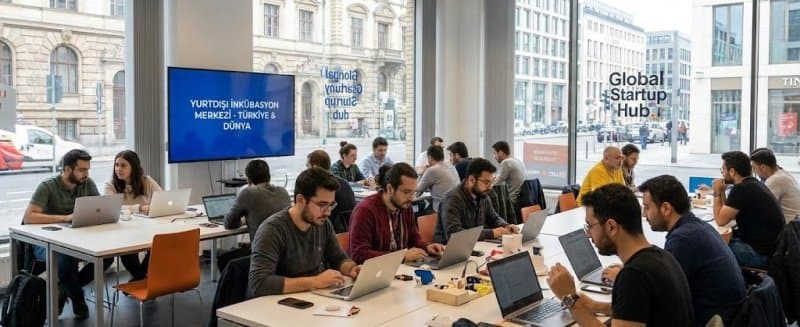

International incubation centers directly enhance competitiveness by helping ventures integrate into global markets more quickly. Through access to capital, product validation processes, test markets, and expert mentorship, these centers enable scalable growth.
It is widely recognized that 70% of early-stage companies struggle due to inadequate market access. Among ventures participating in international incubation programs, this rate falls to as low as 30%. This clear difference demonstrates the impact that selecting the right center can have on growth. Ecosystem diversity, regulatory support, logistical advantages, and qualified talent pools are key factors behind this decline.
Global incubation organizations accelerate ventures’ product development processes by providing high-capacity laboratories and expert mentor networks in focus areas such as artificial intelligence, biotechnology, fintech, cybersecurity, and advanced materials technologies. Through these centers, ventures gain the advantage of meeting international certification requirements, testing user behavior in target markets, and addressing technical shortcomings with expert guidance.
Key Added Value Provided by International Incubation Centers
The added value provided by international incubation centers strengthens not only the pace of growth but also the sustainability of ventures. Business development infrastructure, investor visibility, and knowledge of global competition make these centers drivers of transformation.
Market Access and International Network Development
Global incubation centers expand growth opportunities by giving ventures direct access to business development networks in more than 30 countries. These networks facilitate direct contact with potential customers and establish critical touchpoints throughout export processes.
Expert Mentorship and Technical Consulting Opportunities
Guidance from expert mentors plays a fundamental role in properly validating product–market fit. Technical consultants provide direction throughout R&D processes to improve a product’s scalability. Mentors with regulatory expertise make a particularly significant difference in RegTech, MedTech, and CleanTech.
Effective Access to Investors and Funding Sources
Global incubation centers increase ventures’ chances of securing early-stage investment by an average of 40%. Demo day events, investment consortia, and matches with corporate funds accelerate access to financing. Many centers run joint programs with angel investor networks.
Product Testing, Infrastructure, and R&D Laboratories
Access to costly infrastructure is one of the most prominent advantages of international incubation centers. AI training servers, prototyping laboratories, IoT testing facilities, and advanced biotechnology laboratories allow ventures to develop their products to professional standards.
Which Countries Lead in International Incubation Centers?
Countries such as the United States, Germany, the Netherlands, Singapore, South Korea, and the United Kingdom rank among the leaders in international incubation centers thanks to their technology ecosystems, R&D investments, and entrepreneurial cultures.
The Strength of the Incubation Ecosystem in the United States
The Silicon Valley, Boston, and New York triangle is home to some of the strongest incubation centers for technology ventures. According to data from the U.S. Bureau of Economic Analysis, the technology sector’s annual growth rate stands at 6.9%. This growth increases the volume of funding available to ventures.
Leading Sectors in the United States
- Artificial intelligence and machine learning
- Health technologies
- Cybersecurity
- Space technologies
- Financial technologies
Deep-Tech-Focused Centers in Germany
Berlin, Munich, and Hamburg host some of Europe’s most concentrated R&D investment. As of 2023, high-technology investment in Germany exceeded 78 billion euros. Laboratory infrastructure is particularly world-class for ventures in automotive, robotics, Industry 4.0, and mobility.
The Netherlands’ Logistics and Sustainability Advantage
As the Netherlands is Europe’s logistics hub, connecting with global supply chains is straightforward. Rotterdam and Eindhoven are highly sought-after incubation locations for CleanTech, AgroTech, and IoT ventures.
Singapore’s Role as a Gateway to the Asian Market
Singapore stands out in the Asia-Pacific region for its regulation-friendly environment and high living standards. According to World Bank data, the country ranked near the top of the “ease of doing business” index for many years. It offers strong incentive mechanisms in fintech and biotechnology.
The United Kingdom’s RegTech Advantage
London has one of the world’s most advanced ecosystems for financial regulatory technologies. It offers a substantial market for data privacy, payment systems, and financial security technologies.
How Are Different Types of International Incubation Centers Categorized?
The services offered by international incubation centers vary according to their areas of focus. To make a strategic selection, these organizations must be classified into the appropriate categories.
University-Based Incubation Organizations
These centers use the infrastructure of research universities. They offer strong support through patent offices, technology transfer offices, and academic consulting. They are particularly suitable for ventures developing advanced technologies.
Private-Sector-Backed Incubation Programs
Supported by corporations, these centers offer significant advantages during commercialization. They make it easier to move directly from the product development phase to pilot implementation.
Publicly Supported or Hybrid Organizations
Many countries offer government-backed incubation programs. These programs provide ventures with initial grants, visa facilitation, and international acceleration support.
Vertical-Focused Incubation Centers
These centers specialize in a specific industry. They concentrate on fields such as deep tech, mobility, energy storage, remote sensing, and health technology.
How Does Admission to International Incubation Centers Work?
The admission process has multiple stages designed to assess a venture’s scalability and international competitiveness. It generally consists of four steps:
- Application File Preparation: The business model, market size, technical validation, and team capabilities are analyzed.
- Product Demo and Technical Assessment: The center’s experts test the product’s viability.
- Interview with the Mentor Panel: Problem-solving ability and growth strategy are evaluated.
- Program and Country Fit Analysis: The venture’s alignment with the target market is assessed.
An average of 18,000 ventures are known to apply to global incubation programs each year. Although acceptance rates vary by center, they generally range from 3–12%.
What Services Do International Incubation Centers Offer?
Centers offer a broad range of services that vary according to each venture’s stage of growth.
Business Development and Product–Market Fit
Centers support ventures with competitive analysis, user behavior research, and segmentation in target markets.
Legal and Regulatory Consulting
The legal documentation, certification procedures, and data protection obligations required to enter international markets are managed professionally.
Technical and R&D Infrastructure
Access is provided to the laboratories and prototyping facilities required to develop products in high-technology fields.
Export and Global Logistics Consulting
Practical roadmaps are provided for distributing products to international markets.
The following table categorizes the typical areas of support available at incubation centers:
| Support Area | Benefits Provided |
|---|---|
| Mentorship | Strategy, scaling, and technical guidance |
| R&D Infrastructure | Laboratories, prototyping, and testing environments |
| Investor Network | Access to funding and demo day opportunities |
| Business Development | Market validation and customer access |
| Regulatory Support | Certification and regulatory compliance |
| International Network | Connections with distributors, partners, and customers |
How Can Ventures Maximize the Benefits of International Incubation Centers?
Maximizing the benefits of these centers requires more than simply joining a program. Ventures must implement the right strategy throughout the program.
Clearly Defining the Target Market
Market size, user behavior, and competitive dynamics must be clearly defined. Every activity undertaken during the program should serve this objective.
Using the Mentor System Effectively
Regularly following up on mentor meetings and completing assigned tasks help improve product metrics quickly.
Measurable OKR and KPI Models
The outcomes that ventures aim to achieve by the end of the program should be defined in measurable terms.
For example:
- Acquiring 3 pilot customers
- Bringing the MVP into compliance with international certification requirements
- Determining the weekly customer acquisition cost
Strengthening Investor Presentations
International investors have different expectations from those in local ecosystems. Presentations should be data-driven and supported by arguments tailored to international markets.
The Impact of International Incubation Centers Across Industries
Each industry requires different technical infrastructure and areas of expertise. Incubation centers can therefore provide distinct advantages depending on their sectoral focus.
Centers Focused on Artificial Intelligence and Data Science
These centers provide GPU clusters, model-training infrastructure, and data security solutions. They accelerate model validation processes for AI-based ventures.
Examples of Application Areas
- Medical image processing
- Predictive analytics
- Autonomous systems
- Text processing and natural language applications
Biotechnology Incubation Centers
Secure laboratories, molecular analysis equipment, and biological testing environments meet the most critical needs of biotechnology ventures. Professional management of clinical validation processes creates substantial value.
Fintech and RegTech Incubation Organizations
Countries with robust financial regulations have centers specializing in these fields. API integration laboratories and fintech sandbox environments allow products to be tested safely.
Mobility, Robotics, and Industry 4.0 Centers
Robotic arms, autonomous vehicle testing facilities, and sensor technology laboratories accelerate the development of these ventures.
Criteria to Consider When Selecting an International Incubation Center
The right selection directly affects program success and determines a venture’s ability to remain viable in the global market over the long term.
Development Level of the Country’s Ecosystem
Investment volume, incentive systems, and the concentration of technology hubs should be evaluated. International reports provide valuable data for comparing ecosystems’ capacity for innovation.
The Program’s Thematic Focus
The venture’s field of activity should align with the incubation center’s area of expertise. Otherwise, the mentor network and technical infrastructure may prove inadequate.
Visa and Immigration Facilitation
Many countries offer dedicated visa programs for technology ventures. Access to these programs provides a significant advantage throughout the process.
Size of the Partnership Network
Corporate collaborations, university partnerships, and investor relations are key factors determining a program’s quality.
Which Trends Will Shape the Future of International Incubation Centers?
As the global entrepreneurship ecosystem evolves, incubation centers are also being shaped by new trends. AI-driven training models, remote acceleration programs, and industry-specific hyper-vertical structures are among the defining features of the coming period.
Artificial Intelligence Integration
Many centers have begun using AI-powered analytics dashboards to monitor ventures’ development. These systems automatically evaluate venture performance metrics.
Remote-Access Incubation Organizations
Remote-access programs have become more robust as the number of global teams has increased. Hybrid structures reduce ventures’ costs by providing both physical and digital support.
Centers Focused on Sustainability and Green Technology
According to international reports, investment in sustainability technologies is growing by more than 25% annually. This growth is driving a rapid increase in the number of CleanTech-focused centers.
The Long-Term Impact of an International Incubation Strategy for Ventures
Ventures participating in global incubation programs have a 35% higher survival rate during their first five years than non-participants. This difference demonstrates the long-term impact of international networks, access to investment, and robust technical infrastructure. Expanding into new markets is the clearest path to sustainable growth in increasingly competitive technology sectors.