Exporting for Industrial and Manufacturing Companies
A comprehensive guide to export strategies, market selection, regulatory compliance, logistics, quality management, and methods for building a competitive advantage for industrial and manufacturing companies.
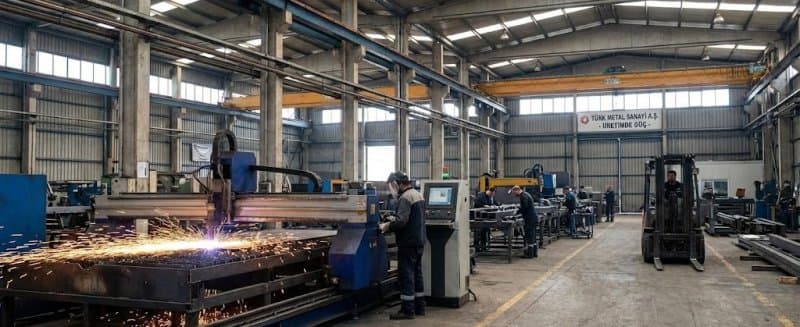

For industrial and manufacturing companies, exporting is one of the most effective ways to achieve economies of scale, adapt to global competition, and secure sustainable growth. In a highly competitive domestic market, an export-oriented business model minimizes fluctuations and provides manufacturers with a more stable revenue stream. When combined with proper market selection, regulatory knowledge, a sound financing model, logistics planning, and quality management, this structure forms the foundation for long-term global positioning.
What Are the Key Requirements for Starting to Export?
The key requirements for starting to export are selecting the right market, complying with the target country’s regulations, establishing a reliable logistics structure, and developing a competitive product-positioning strategy. These fundamentals enable industrial companies to bring their products to international markets with reduced risk and on a sustainable basis.
For industrial and manufacturing companies, the export process involves more than simply shipping goods abroad; it is an integrated set of operations designed to increase a product’s value in the global market. The right steps taken during the early stages have a decisive impact on the company’s market share and profitability in subsequent years. Particularly in sectors such as industrial machinery, metalworking, automotive components, defense equipment, food-processing technologies, and chemical manufacturing, export readiness requires a much more detailed approach to technical requirements.
Market Research and Target-Country Selection
The export success of industrial companies depends not only on market size but also on market-entry accessibility, competitive intensity, and local regulations. Trade data from international organizations, industry reports, and import trends are objective indicators that should be considered when selecting a target country. According to World Bank data, imports of manufactured goods grew by an average of %4 over the five years leading up to 2023; this suggests that manufacturers can adopt a more aggressive position in segments where global demand remains strong.
Product Compliance Requirements
Technical standards and certification requirements vary from country to country. Standards such as CE, ISO, UL, RoHS, and REACH are prerequisites for exporting many industrial and manufactured products. Proper certification management ensures that a product complies with both legal and commercial requirements.
Logistics and Supply Chain Readiness
In export operations, logistics expenses may account for between %8 and %15 of total costs. Optimizing factors such as the mode of transport, packaging, storage, and insurance therefore strengthens competitiveness within the global supply chain.
Financial Readiness and Payment Security
Securing payment for goods is critically important for manufacturers engaged in international trade. Instruments such as letters of credit, documentary collections, and bank guarantees enhance financial security.
How Should Industrial Exporters Select the Right Market?
Selecting the right market is the first and most decisive step in export planning. A target country should be chosen based on the level of demand for the product, competitive intensity, regulatory barriers, and logistical accessibility.
Manufacturers should conduct both macro- and micro-level assessments when analyzing a market. These assessments should cover demographic structure, the level of industrialization, the intensity of technology adoption, consumption trends, and local production capacity. For example, Central Europe has strong demand for industrial machinery, while Latin America has particularly high import volumes for chemical raw materials.
Market Evaluation Criteria
The following table summarizes the key criteria industrial and manufacturing companies use when selecting a market:
| Criterion | Description |
|---|---|
| Demand Level | The product’s import volume and growth rate |
| Competitive Intensity | The market dominance of local manufacturers |
| Technical Standards | The required level of certification |
| Logistical Accessibility | Shipping cost and transit time |
| Trade Barriers | Tax rates, quotas, and regulations |
These criteria support assessments at both strategic and operational levels.
Global Trade Trends
Automation, environmentally responsible production, energy efficiency, and modular design are prominent trends in trade involving industrial products. Exports of energy-efficient machinery increased by %12 during 2022–2023. These trends can help guide manufacturers’ R&D plans.
How Should Industrial Companies Position Products for Export?
Product positioning is fundamental to differentiating a business from competitors in the global market. Rather than merely offering products, factories are expected to provide tangible value through technical capabilities, durability, energy savings, longevity, and ease of maintenance.
Effective positioning reduces dependence on price competition, promotes a solution-oriented approach, and shortens the sales cycle.
Technical Differentiation Strategies
Technical differences directly influence purchasing decisions for industrial products. Manufacturers should therefore:
- Clearly disclose material quality and test results,
- Document product performance specifications,
- Provide energy-efficiency reports,
- Develop modular designs and custom-manufacturing options.
Research shows that %68 of procurement professionals believe technical reports accelerate the decision-making process.
A Value-Based Approach
Although price competition is inevitable for industrial products, value-based selling has a much stronger long-term impact. This approach is built around:
- Designs that reduce maintenance costs,
- A longer service life,
- Lower energy consumption,
- Features such as rapid assembly or installation.
Because these factors reduce the total cost of ownership, they create an attractive proposition for importers.
What Are the Legal Requirements for Industrial Exports?
The primary legal requirements for exporting industrial products are product certification, customs procedures, commercial documentation, and full compliance with technical standards. Meeting these requirements is mandatory for a product to be accepted in the target market.
Because industrial products often fall into high-risk categories, they are subject to more detailed regulatory inspections. International compliance criteria are especially critical for machinery, electrical equipment, pressure vessels, and chemical products.
Technical Requirements and Compliance Documents
Compliance documents are the cornerstone of exporting:
- CE Certificate: Mandatory in European Union markets.
- ISO 9001: Demonstrates quality management system competency.
- ISO 14001: Covers environmental management standards.
- UL Certification: Required in the United States and Canadian markets.
- REACH and RoHS: Chemical compliance and environmental standards.
Data indicate that industrial products with full CE compliance have a %40 higher acceptance rate in Europe.
Customs Procedures
Customs procedures for industrial products include the export declaration, invoice, statement of origin, packing list, and insurance documents. Preparing these documents incorrectly can delay the export process by an average of 3–7 days.
The Role of Trade Agreements
Free trade agreements influence the selection of the right market. Lower customs duties directly increase competitiveness.
How Should Industrial and Manufacturing Companies Plan Logistics?
Industrial products require specialized logistics planning due to their size and weight. Proper planning reduces costs and makes the shipping process more predictable.
The choice of transport mode, packaging standards, storage conditions, and insurance processes should be evaluated together in logistics planning.
Evaluating Modes of Transport
Each mode of transport offers different advantages:
- Sea freight: Provides a cost advantage for heavy and bulky cargo.
- Road freight: Flexible and fast; preferred for regional exports.
- Air freight: Used for high-value or urgent products.
- Rail freight: Reliable and moderately priced; especially suitable for high-volume industrial goods.
Globally, %80 of industrial products are transported by sea, clearly demonstrating its cost advantage.
Packaging and Safety
For industrial products, packaging is not only a means of protection but also a legal export requirement. Impact testing, moisture control, and pallet standardization are critical parameters for industrial shipments.
Insurance Management
Because international transport involves a high level of risk, insurance coverage of at least Institute Cargo Clauses A is recommended. This level of coverage provides manufacturers with maximum protection during transport.
How Does Export Finance Benefit Industrial Companies?
Export finance is an important mechanism that accelerates manufacturers’ access to global markets. Financing models balance cash flow, enabling companies to fulfill larger orders.
While global production volume increased by %3,5 in 2023, the use of export finance grew by %18 over the same period. This demonstrates the critical role finance plays in growth.
Financing Instruments
Models frequently used by industrial companies include:
- Letter of Credit: Provides a payment guarantee.
- Eximbank Loans: Offer exporters access to low-cost borrowing.
- Factoring: Quickly converts receivables that have not yet matured into cash.
- Forfaiting: Involves the assignment of medium- to long-term export receivables.
Risk Management
Financing models provide not only payment guarantees but also a means of managing factors such as exchange-rate and political risk.
How Does Digitalization Create an Advantage in Industrial Exports?
Digitalization accelerates industrial export processes while strengthening data-driven decision-making. Production-monitoring systems, digital catalogs, online supplier portals, and CRM systems provide a particular competitive advantage.
According to World Economic Forum data, digitalization increases operational efficiency in industrial businesses by an average of %12.
Using Digital Tools
- Sharing CAD models of products digitally streamlines procurement processes.
- Online trade fairs and B2B platforms accelerate customer acquisition without requiring physical contact.
- Data analytics enables more effective use of marketing budgets.
Which Export Strategies Create a Competitive Advantage?
Competitive advantage lies at the heart of sustainable exporting. Companies that rely solely on price advantages become weaker against global players over the long term. Manufacturers must differentiate themselves through technical capabilities, quality assurance, customer support systems, and after-sales services.
Strategic Approaches
- Modular Product Architecture: Provides a structure that can be adapted to different markets using a single platform.
- On-Site Service Network: Creates a critical competitive advantage, particularly in machinery and equipment exports.
- Fast Spare-Parts Delivery: Ranks among the top three decision criteria for global procurement professionals.
- R&D Investment: Profit margins are up to %20 higher for products with advanced technology.
Customer Relationship Management
Industrial buyers value long-term business partnerships. Technical training, user manuals, test videos, and remote-support systems strengthen customer loyalty to the manufacturer.
How Should Industrial Sales Processes Be Managed in Export Markets?
Industrial sales are B2B-oriented and require technical expertise. Sales processes therefore include stages such as customer analysis, technical presentations, field testing, and proposal optimization.
Analyses indicate that technical sales processes have an average sales cycle of 3–9 months.
Stages of the Sales Process
- Needs analysis
- Technical assessment
- Product testing or sample shipment
- Commercial proposal and specification compliance
- Contract and delivery planning
Each stage requires detailed documentation.
What Is the Role of Quality Management in Industrial Exports?
Quality management is fundamental to the sustainable growth of exports. Industrial customers evaluate product performance not only through technical documentation but also by considering the integrity of the entire production process.
Companies with ISO 9001 certification are %55 more likely to be preferred by international suppliers.
Quality Assurance Mechanisms
- Production testing protocols
- Incoming and outgoing quality controls
- Environmental durability tests
- Ease-of-maintenance and service-life analyses
These mechanisms provide customers with measurable assurance.
Sustainability Approaches for Industrial Exporters
Sustainability is no longer merely an environmental concern; it is a key purchasing criterion in international supply chains. Research conducted in Europe shows that %72 of procurement professionals consider sustainable production a reason for choosing a supplier.
Sustainable Production Practices
- Energy-efficient machinery
- Waste management and recycling
- Low-emission production processes
- Use of renewable energy
These practices not only enhance reputation but also reduce operating costs.
How Should Manufacturing Companies Plan for Long-Term Export Growth?
Long-term planning enables exports to grow permanently and measurably. The strategic roadmap should focus on market selection, product-portfolio expansion, investment budgets, and the development of after-sales structures.
Strategic Planning Steps
- Market diversification: Reduces dependence on a single market.
- Product-range development: Accommodates different levels of demand.
- Logistics-hub planning: Improves delivery speed.
- Building a local partner network: Reduces distribution costs.
Companies that implement long-term export plans achieve an average increase in profitability of %25.