EBRD Support Programs
Explore EBRD support opportunities in business development, financing, green transformation, and organizational capacity building in depth.
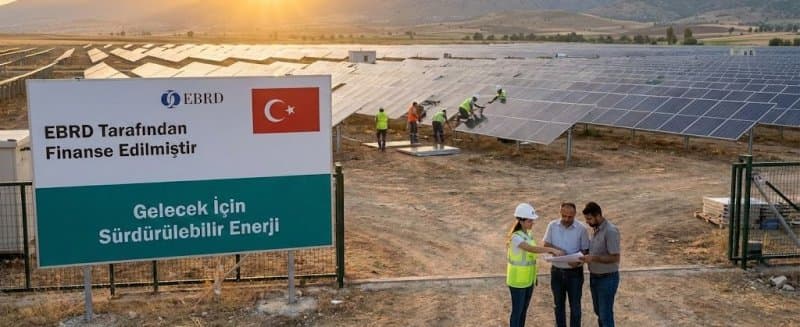

EBRD support programs facilitate access to financing for private sector enterprises, accelerate sustainability investments, and strengthen market resilience. These supports are implemented through comprehensive tools such as direct credit, technical assistance, consulting, investment partnerships, and green transformation incentives. Through these tools, businesses make tangible progress in scaling, improving productivity, and meeting international compliance standards.
EBRD's focus extends beyond financing; the institution systematically targets development in areas such as risk measurement, governance standards improvement, digitalization projects, and climate-aligned investments. This approach enables businesses not only to access funds but to use them effectively and in ways that create long-term value. Structured programs designed especially for SMEs provide comprehensive solutions that increase resilience against market fluctuations. As an international financial institution, EBRD employs evidence-based methodologies and data-driven assessment mechanisms to support regional economic development.
Which Sectors Does EBRD Support?
EBRD aims to create long-term growth and transformation potential in sectors with high multiplier effects. For this reason, it strategically focuses on areas such as energy, technology, infrastructure, logistics, manufacturing, agriculture, women entrepreneurship, digital finance applications, and circular economy. For each sector, risk profile, demand structure, investment requirements, and sustainability impact are evaluated separately. The ability to achieve efficiency improvements exceeding 30% on a regional basis in energy efficiency and renewable energy projects is one of the key indicators validating EBRD's sectoral selection. In the service sector, the capacity of digital transformation investments to reduce operational costs and increase international competitiveness is particularly noteworthy.
What Are the Types of EBRD Financing?
EBRD financing types vary according to business capacity, growth rate, risk appetite, and investment model. Each type has a clear purpose, and institutions undergo a comprehensive evaluation process before accessing these tools.
Direct Credit
Direct credit is a core financing model used for growth capital, modernization, and capacity expansion. These credits are long-term, typically featuring repayment schedules ranging between 5 and 12 years. What strengthens investment decisions is that credits are supported by technical consulting. Through this, businesses can implement proper capital allocation, risk control, and cash flow management. Direct credit is frequently preferred for scaling mid-sized industrial investments, including production line renewal or digital factory applications.
Indirect Financing Through Banks
Indirect financing consists of credits and credit lines distributed through local banks. It enables SMEs to access EBRD funds more quickly. Banks offer these funds with low collateral requirements, favorable interest structures, and investment-focused usage conditions. Its accessibility, particularly for regional businesses, makes a significant contribution to spreading economic activity evenly at the local level. Occasionally observed increases of up to 15% annually in transaction volumes demonstrate the system's effectiveness.
Equity Investment and Partnership Models
EBRD implements equity-based partnership models for businesses above a certain scale. These models are used to improve company valuation, raise corporate governance standards, and implement strategic growth steps in a planned manner. The partnership model introduces professional investor discipline while preserving the company's independence. This model has proven to perform well in technology start-ups and rapidly scaling manufacturing enterprises.
Green Financing Programs
Green financing is one of the most effective tools for promoting climate-friendly investments. Within the program scope, businesses focusing on energy efficiency, clean energy, waste reduction, carbon emission management, and sustainable production technologies are supported. Because many projects achieve average energy savings of 20–40%, these programs create competitive advantage in international markets. Through verification mechanisms, the climate impact of investments is measured and reported.
How Do EBRD Consulting Programs Work?
EBRD consulting programs provide capacity development for businesses in strategic management, operational efficiency, digitalization, marketing, brand management, financial planning, and export promotion. These programs are multi-layered, and each business's current situation is analyzed separately.
Internal Consulting and Local Expert Networks
Local experts work directly with businesses to conduct process analysis, modeling, workflow improvement, and decision support system development. The fact that these efforts are applicable in the field is a significant advantage. For example, in a manufacturing sector productivity project, process mapping can achieve an average reduction of 10–12% in production line downtime. Such measurable results highlight the effectiveness of consulting programs.
Strategic Transformation with International Consultants
International consultants engage in more sophisticated projects that enhance businesses' global competitiveness. Market entry strategies, brand positioning, digital transformation roadmaps, and corporate governance structure reviews are included in this scope. By developing models aligned with advanced market dynamics, they enable businesses to achieve long-term growth stability.
Long-Term Capacity Building
The primary purpose of these programs is not only to achieve short-term productivity gains; they also aim to develop managers' and teams' expertise in problem-solving, data analytics, strategic planning, and risk management. These competencies are core components of sustainable growth.
EBRD Sustainability and Green Transformation Programs
EBRD views reducing climate risks and accelerating businesses' transition to sustainable production models as one of its key objectives. Programs developed under this scope strengthen the long-term environmental performance of investments.
Energy Efficiency Investments
Energy efficiency investments concentrate on areas such as equipment renewal, heat recovery systems, insulation, and automation applications. Many businesses can achieve savings of 25% or more in energy costs through these investments. These savings directly increase competitiveness and shorten investment payback periods.
Renewable Energy Projects
Projects such as solar energy, biomass, wind micro-turbine applications, and hybrid energy systems are supported by EBRD. Beyond reducing environmental impacts, the capacity to ensure energy supply security increases the importance of these projects. The declining unit costs of electricity generated by next-generation photovoltaic solutions over the years contribute to making these investments economically more attractive.
Circular Economy Applications
Waste reduction at source, valorization of byproducts, establishment of recycling lines, and improvement of environmental management systems are addressed within this scope. Projects conducted in the manufacturing sector demonstrate that annual waste volumes can be reduced by 5–20%. This provides both environmental and cost advantages.
How Does the EBRD Application Process Proceed?
The EBRD application process follows a phased and systematic evaluation flow. Information gathered from businesses is used to measure project sustainability, financial structure, and development impact.
1. Initial Assessment
In the initial stage, the business's field of activity, financial structure, investment model, and transformation needs are evaluated. At this stage, the business's compliance with EBRD policies and project scale are determined. Data-driven analysis methods are used to forecast the likely contribution of the investment to the economy.
2. Project Definition
At this step, the scope of the investment is clarified. Financing needs, consulting requirements, technical verification steps, and sustainability components are identified. The project plan is developed with concrete criteria.
3. Technical Review and Risk Analysis
Technical experts examine the feasibility of the investment and its financial risk profile. At this stage, environmental risk analysis is conducted and compliance requirements are defined. The business's borrowing capacity, cash flow, and growth projections are analyzed.
4. Approval Process
Following evaluation by EBRD internal committees, final approval is granted. Contract processes begin for approved projects and a fund flow plan is established.
5. Implementation and Monitoring
After implementation begins, progress is regularly monitored. Performance indicators are measured and corrective actions are applied as needed.
Strategic Benefits of EBRD Support to Businesses
The impact of EBRD support is not merely financial; it creates long-term competitive advantage by strengthening businesses' structural capacity.
Corporate Resilience
Businesses develop stronger infrastructure in financial planning, data management, and operational efficiency. This structure increases their capacity to remain operational during crises.
Compliance with International Standards
EBRD support strengthens environmental, social, and governance (ESG) standards, facilitating businesses' entry into international markets. ESG-compliant businesses have higher capacity to attract investment.
Digital and Technological Transformation
Automation, ERP systems, data analytics solutions, and AI-based workflows increase businesses' productivity. Digitalized businesses achieve significant reductions in operational costs.
Human Resources Strengthening
Through micro-learning modules, management development programs, and field applications, teams develop expertise. This specialization has a direct impact on productivity.
Who Can Benefit From EBRD Support?
SMEs, mid-sized and large-scale enterprises, women entrepreneurs, export companies, technology start-ups, and institutions planning sustainability investments can benefit from EBRD support. Eligibility is evaluated considering sectoral alignment and investment potential. Agriculture, energy, and manufacturing sectors are particularly among the priority areas.
Table: Business Profiles That Can Benefit From EBRD Support
| Business Type | Core Need | EBRD Support Type |
|---|---|---|
| SMEs | Access to financing and scaling | Indirect credit, consulting, green transformation |
| Mid-sized and large-scale enterprises | Modernization and international competition | Direct credit, equity investment, strategic consulting |
| Women entrepreneurs | Capital and governance capacity | Credit programs, capacity building support |
| Technology start-ups | Rapid scaling and innovation | Equity partnership, digital transformation support |
Practical Impact of EBRD Support
The field impact of EBRD support produces measurable results. Annual cost reductions observed in energy efficiency projects, employment growth rates of businesses expanding through credit programs, and the contribution of consulting programs to brand value exemplify this impact. For instance, digital transformation projects demonstrate marked improvements in production continuity and error rates. Energy intensity reduction in new machinery investments contributes to lower carbon footprints.
Factors That Enhance Success in Accessing EBRD Support
For applicant businesses, certain factors facilitate positive progress in the process:
- Clean and verifiable financial records
- Sustainability-focused investment plans
- Project model with measurable targets
- Management team's readiness for transformation
- Use of data-driven business processes
These factors enable faster and more successful completion of the evaluation process.