E-Export Mentor Programs
Develop actionable strategies for scalable growth, sustainable marketing, and global operations management with e-export mentor programs.
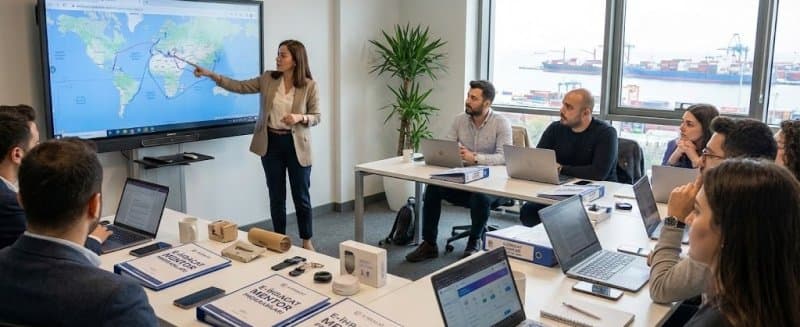

E-export mentor programs are frameworks that accelerate the global competitive capacity of brands seeking to enter digital markets, using experience-based guidance methods to increase the speed of strategic decision-making. Well-designed mentoring support optimizes internal resources, making the international growth process predictable.
How Do E-Export Mentor Programs Work?
E-export mentor programs create a customized roadmap based on the business's current capacity, establishing a step-by-step scalable growth model. These programs embed the analysis → strategy → implementation → evaluation cycle into a systematic framework, ensuring smooth progress in global operations.
The fundamental working principle of these programs can be examined in three stages:
- Analysis of current digital and logistics infrastructure
- Development of market selection and positioning strategy
- Process monitoring, performance measurement, and continuous optimization
For businesses seeking to increase export capacity, this framework makes the process of entering global markets—initially appearing complex—manageable. Research shows that brands receiving professional mentoring support demonstrate approximately 34% faster scaling performance on average.
The Impact of Programs on Scaling
Mentor-supported programs can provide over 20% operational time savings in digital integration processes. This is achieved by eliminating redundant tasks, making correct tool selections, and applying lean management principles to workflows.
Core Approaches Used in Mentoring Structures
Within mentoring scope:
- Strategy clarification through mind mapping
- Data-driven decision-making models
- Multi-market testing
- Risk scenario development
- Technology integration assessment and similar methods are used. These techniques provide a framework that minimizes errors, especially in cross-border e-commerce operations.
Why Is Mentor Selection Critical for E-Export?
Correct mentor selection directly determines a business's global competitive strength. E-export mentor programs don't merely provide theoretical knowledge; they transfer field-tested expertise, resulting in much higher capability to produce practical results.
Key criteria for mentor selection:
- Proficiency in cultural and commercial dynamics of target markets
- Experience in digital infrastructure and e-commerce technologies
- Comprehensive knowledge in logistics, customs, and regulatory matters
- Evidence-based successes in scalable growth
Experienced mentors ensure businesses select the right markets and prevent unnecessary investments. For example, for a business seeking to build a brand in the European market, different tax applications by product category, delivery SLA times, and local fulfillment options can completely change the strategy.
The Operational Guidance Role of Mentors
Correct guidance from a mentor prevents a business from:
- incorrect platform selection,
- inappropriate pricing,
- inadequate marketing budget planning,
- incorrect target audience segmentation. In international operations, the average cost loss resulting from these errors can exceed 15%.
Advantages of Experience Transfer to the Business
Experienced mentors anticipate hidden risks in global operations. This perspective helps the business react quickly in the competitive environment. Additionally, mentors provide significant leverage in areas such as improving product listing quality, enhancing conversion rates, and implementing process automation.
What Do Mentor Program Contents Cover?
E-export mentor programs focus on key areas such as marketing, operations, market research, conversion optimization, localization, customer experience management, and financial planning. Each program varies according to the business's current capacity.
The core modules of mentor-supported programs are:
- Market selection and competitive analysis
- Platform strategy (Amazon, Etsy, Allegro, Trendyol Go Global, etc.)
- Digital advertising management and performance optimization
- Logistics model development
- International warehouse and fulfillment planning
- Increasing product listing conversion rates
- Brand positioning and content localization
Research shows that localized product descriptions increase conversion rates by an average of 26%. Therefore, mentor programs allocate special focus to content quality and cultural adaptation.
Depth Level of Program Contents
Each module progresses through measurable KPIs. For example:
- ROAS targets in advertising campaigns
- Delivery time targets in logistics
- Visibility metrics in platform scores
- CTR and conversion values in product listings
These metrics play a critical role in tracking business progress within mentor programs.
Technology Tools Used in the Process
Commonly used in programs:
- Analytics dashboards
- Keyword analysis tools
- Multi-market price comparison systems
- Automation and reporting software are used. The correct combination of these tools saves time for businesses, particularly during scaling phases.
How Is Target Market Selection Done in Programs?
Target market selection determines a company's long-term sustainability rate globally. The first step is measuring the market's demand for the product category, cultural fit, and competitive intensity.
The direct answer: Target market selection is based on demand analysis, competitive scoring, logistics accessibility, and cultural fit criteria.
Key Criteria Used in Market Selection
- Category-based demand volume
- Customer expectations
- Average order value
- Customs and regulatory ease
- Competitive pricing structure
- Visibility potential on platforms
For example, while European countries offer high conversion rates in the fashion category, North American markets have higher potential in home decoration. Understanding these differences is critical for correct market selection.
Data Usage in the Decision Process
A data-driven approach reduces uncertainty in market selection. Mentor programs at this stage:
- platform search volumes,
- popular product trends,
- competitor sales volumes per SKU,
- country-based logistics cost analyses. This method helps the brand identify which market will provide the fastest return.
Market Testing Processes
Market testing is typically conducted with small-budget campaigns over 2–6 weeks. During testing:
- Conversion cost
- Add-to-cart rate
- Ad visibility
- product-scenario fit. When suitable results are achieved, scaling begins.
Operations Management in E-Export Mentor Programs
Operations management is one of the most critical building blocks in e-export processes. Mentor programs provide models that simplify logistics flows and optimize delivery times.
Common operational problems:
- Incorrect inventory planning
- Uncertainty in delivery times
- Incorrect packaging standards
- Document deficiencies in customs processes. These errors directly affect global customer satisfaction.
Logistics Models and Correct Selections
Businesses can use three fundamental logistics models:
- Cross-border direct shipment
- International warehouse usage
- Hybrid logistics model
The advantages of each model vary by product category and order volume. For example, for fast-moving products, international warehouse costs become more advantageous in the long term.
Operational KPIs
Operational KPIs typically tracked in mentor programs:
- Average delivery time
- Return rate
- Logistics cost per order
- Percentage of operational errors
Regular tracking of these metrics is a prerequisite for sustainable growth.
Table: Process Groups in Operations Structures
| Process Group | Description |
|---|---|
| Inventory Management | Demand planning, inventory cycle, warehouse layout |
| Order Flow | Packaging, barcode application, quality control |
| Logistics | Carrier selection, SLA management, return process |
| Customs | Documentation, classification, tax compliance |
This table shows the fundamental components of a scalable e-export operation in a simple framework.
The Impact of Mentor Programs on Marketing Strategies
E-export marketing is not limited to advertising management; it encompasses a multidimensional structure. Mentor programs develop strategies that enable brands to forge proper connections with international customers.
Customer behavior in global markets can influence advertising returns by up to 40%. Therefore, mentoring support concentrates on culture-based segmentation and content optimization.
Performance-Focused Advertising Management
Essential steps for a successful advertising strategy:
- Country-based targeting
- Ad copy localization
- Visual fit testing
- Optimization towards ROAS targets
Google Ads, Meta Ads, and in-platform advertising models are the areas mentor programs work with most.
Conversion Rate Optimization
Methods used in conversion rate optimization:
- Rewriting product descriptions to be culturally appropriate
- A/B testing of visual sets
- Increasing social proof elements
- Simplifying the checkout process
Experiments show that visual optimization alone can increase conversion rates by 12%.
Brand Positioning and Storytelling
Mentor programs develop strategies that enable brands to create an image that resonates with global customers. These strategies:
- Clarity of value proposition
- Cultural fit of brand tone
- Product storytelling
- Adjustment of packaging design to meet expectations
Long-Term Benefits of Mentor Programs
E-export mentor programs aim not only to help businesses achieve short-term sales increases, but to build a sustainable global brand structure. The benefits provided in the long term significantly accelerate overall growth momentum.
The most prominent benefits:
- Increased speed of strategic decision-making
- Efficiency in technology utilization
- Strengthened international customer loyalty
- Optimized operational costs
- Continuous increase in brand awareness
Research shows that businesses receiving mentor support achieve approximately 28% higher export volumes in the first 12 months.
Organizational Capacity Development
Mentor programs build permanent skills by increasing the knowledge accumulation of in-house teams. This effect supports business growth speed even after program completion.
Risk Management Approaches
Most frequently encountered risks in global trade:
- Price fluctuations
- Logistics delays
- Changes in market trends
- Regulatory updates
Mentor guidance enables the preparation of action plans by anticipating risk scenarios in advance.