Blockchain in Global Trade
Blockchain in global trade provides transparency, speed, and trust. Explore global transformation from smart contracts to supply chains.
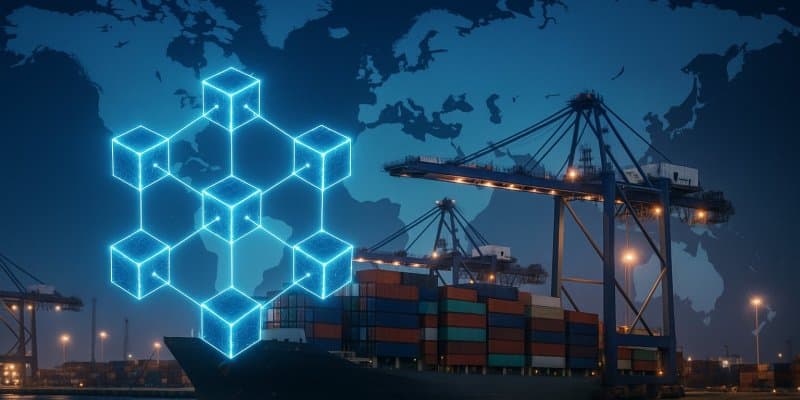

Blockchain in global trade is a strategic transformation area that enables the restructuring of cross-border goods and services flows on the foundations of trust, speed, and transparency. Distributed ledger technology structurally eliminates chronic problems of traditional trade: lack of trust, high transaction costs, and data inconsistencies. Because the global trade ecosystem encompasses numerous stakeholders—banks, logistics firms, customs authorities, insurance companies, and manufacturers—a decentralized and immutable record infrastructure creates direct competitive advantage. ## What Is Blockchain in Global Trade? Blockchain is a distributed ledger system in which transactions are recorded in cryptographically secured blocks without dependence on a central authority. In the context of global trade, this technology enables payment, contract, shipment, and verification processes to be conducted through a single trusted data source. This approach allows parties in different countries to access the same data simultaneously, reducing the risk of disputes. In traditional trade systems, each institution maintains its own database, and these databases are often inconsistent with each other. In blockchain-based trade networks, however, data is validated by all authorized participants and cannot be altered retroactively. This characteristic increases operational efficiency, particularly in high-volume and multi-party commercial transactions. ### Distributed Ledger Logic in Trade Distributed ledger structure means that commercial documents are stored across the entire network, not in a single center. Critical documents such as bills of lading, invoices, certificates of origin, and insurance policies are represented as digital assets on the blockchain. This eliminates the risk of document fraud and loss. ### Immutability and Auditability The immutability of blockchain records prevents subsequent manipulation of trade transactions. Audit processes accelerate because auditors can verify time-stamped records on the chain individually. This significantly reduces compliance and regulatory costs in international trade. ## How Blockchain Transforms Global Trade Blockchain transforms global trade along three fundamental axes: speed, cost, and trust. Reconciliation processes that take days in cross-border transactions are reduced to minutes through smart contracts. The reduction in intermediaries lowers per-transaction costs, while transparent data sharing strengthens trust among parties. According to the United Nations Conference on Trade and Development, digitalization and automation of commercial documents have the potential to reduce global trade costs by an average of 15 percent. Blockchain provides the technical infrastructure for this potential. ### The Role of Smart Contracts Smart contracts are code segments that execute automatically when specified conditions are met. For example, payment can be automatically released when a shipment arrives at its destination port. This mechanism minimizes human error and delays. ### Real-Time Data Sharing Blockchain networks integrated with IoT sensors record product data such as location, temperature, and humidity in real time. This transparency is critical for quality assurance, especially in food and pharmaceutical trade. ## Blockchain Applications in Supply Chain Supply chain forms the backbone of global trade, and blockchain offers the most concrete benefits in this area. All stages from raw materials to end consumers become traceable on a single digital ledger. This traceability is strategically valuable for brands in today's environment of increasing sustainability and ethical production demands. Consumers can verify the source of products they purchase, while companies can proactively manage supply risks. ### Product Traceability and Origin Verification Blockchain-based traceability systems transparently show in which country, which facility, and under what conditions a product was manufactured. This approach is an effective tool in combating counterfeit products. ### Logistics and Inventory Management In logistics processes, blockchain enables real-time sharing of shipment status. Inventory levels are automatically updated, and problems such as excess or shortage of stock are minimized. ## Financial Transactions and Payments Financial transactions in global trade are conducted through complex banking networks and high commissions. Blockchain-based payment systems simplify and accelerate this process. Particularly stablecoins and central bank digital currencies have the potential to establish new standards in cross-border payments. World Bank data shows that the average cost of traditional cross-border payments ranges from 6–7 percent. Blockchain-based solutions can reduce this rate to below 1 percent. ### Trade Finance and Letters of Credit Letter of credit processes are document-heavy and time-consuming. Digital letters of credit operating on blockchain reduce document verification time from days to hours. Trust between banks is automated through shared data on the chain. ### Reducing Foreign Exchange Risk Instant settlement and rapid payment mechanisms reduce risks arising from currency fluctuations. Parties obtain a finalized financial outcome at the moment they initiate the transaction. ## Blockchain in Customs and Regulatory Processes Customs procedures are among the slowest links in global trade. Blockchain enables secure data sharing between customs authorities and the private sector. This allows faster document inspection and risk analysis. The World Customs Organization reports that digital customs applications can reduce border crossing times by up to 30 percent. Blockchain provides a comprehensive infrastructure for this digitalization. ### Ease of Compliance and Audit Tax, quota, and sanctions controls can be automated on blockchain. Transactions that fail to comply with rules are detected instantly on the chain, and intervention time is shortened. ### Public and Private Sector Integration Blockchain networks enable public institutions and private companies to work on the same data set. This integration eliminates bureaucratic delays and data inconsistencies. ## Security, Transparency, and Risk Management Security in global trade is not limited to cyber threats. Fraud, document manipulation, and operational errors can lead to serious financial losses. Blockchain's cryptographic architecture systematically reduces these risks. Because each transaction is validated by the majority of the network, compromise of a single point does not jeopardize the system. This distributed security model makes trade networks more resilient. ### Cybersecurity Perspective Blockchain networks have a smaller attack surface compared to traditional centralized systems. Data integrity is protected by cryptographic signatures, and unauthorized changes are detected instantly. ### Reducing Operational Risks Automation and standardization minimize human error. Making processes predictable facilitates risk management. ## Sectoral Use Cases Blockchain in global trade is implemented with different priorities across different sectors. Each sector derives strategic benefit from a specific aspect of the technology. | Sector | Primary Blockchain Benefit | Concrete Impact |
| Agriculture | Traceability | Increased food safety |
|---|---|---|
| Energy | Transparent trade | Carbon footprint tracking |
| Pharmaceuticals | Counterfeit prevention | Patient safety |
| Automotive | Parts tracking | Quality control |
| Textiles | Ethical production | Brand trust |
This table demonstrates that blockchain is not a one-size-fits-all solution; it is tailored to sector-specific needs.
Challenges and Limitations
Like any technological transformation, blockchain integration involves challenges. Scalability, energy consumption, and regulatory uncertainty are the most commonly encountered issues. Additionally, the lack of standards between different blockchain networks can lead to interoperability problems.
Nevertheless, consortium blockchain models and layer-two solutions are rapidly developing to overcome these challenges. The adoption of energy-efficient algorithms in enterprise applications alleviates sustainability concerns.
Legal and Regulatory Framework
Legal validity is critically important in international trade. The legal status of blockchain-based documents may vary from country to country. This situation increases the need for global standards.
Cultural and Operational Adaptation
The human factor is as important as technological infrastructure. Organizations must redesign their processes and adapt their employees to this new model.
Future Perspectives and Strategic Implications
Blockchain in global trade not only improves current processes but also opens the door to new business models. Tokenization, micropayments, and automated trade networks will become increasingly common in the coming years.
According to McKinsey's projections, blockchain-based trade solutions are expected to create trillions of dollars in additional value to global trade volumes by 2030. This outlook clearly demonstrates the strategic importance of the technology.
Competitive Advantage and Early Adoption
Companies that adopt early will gain an edge over their competitors in terms of operational efficiency and customer trust. Blockchain becomes one of the fundamental components of long-term competitive strategy.
Digital Sovereignty and Data Control
In an age where data is a strategic asset, blockchain-based systems give organizations greater control over their data. This redefines the concept of digital sovereignty in the context of commerce.
As the complexity of global trade increases, the need for reliable and transparent infrastructure grows accordingly. Blockchain in global trade provides not just a technological answer to this need, but a structural one. In the long term, for all actors conducting business across borders, this transformation is becoming not an option but an inevitable necessity.